Supreme Court Strikes Down Key Tribunal Reforms Provisions, Directs Formation of National Tribunals Commission Within Four Months
 Copy Link
 Share
Share Save
Save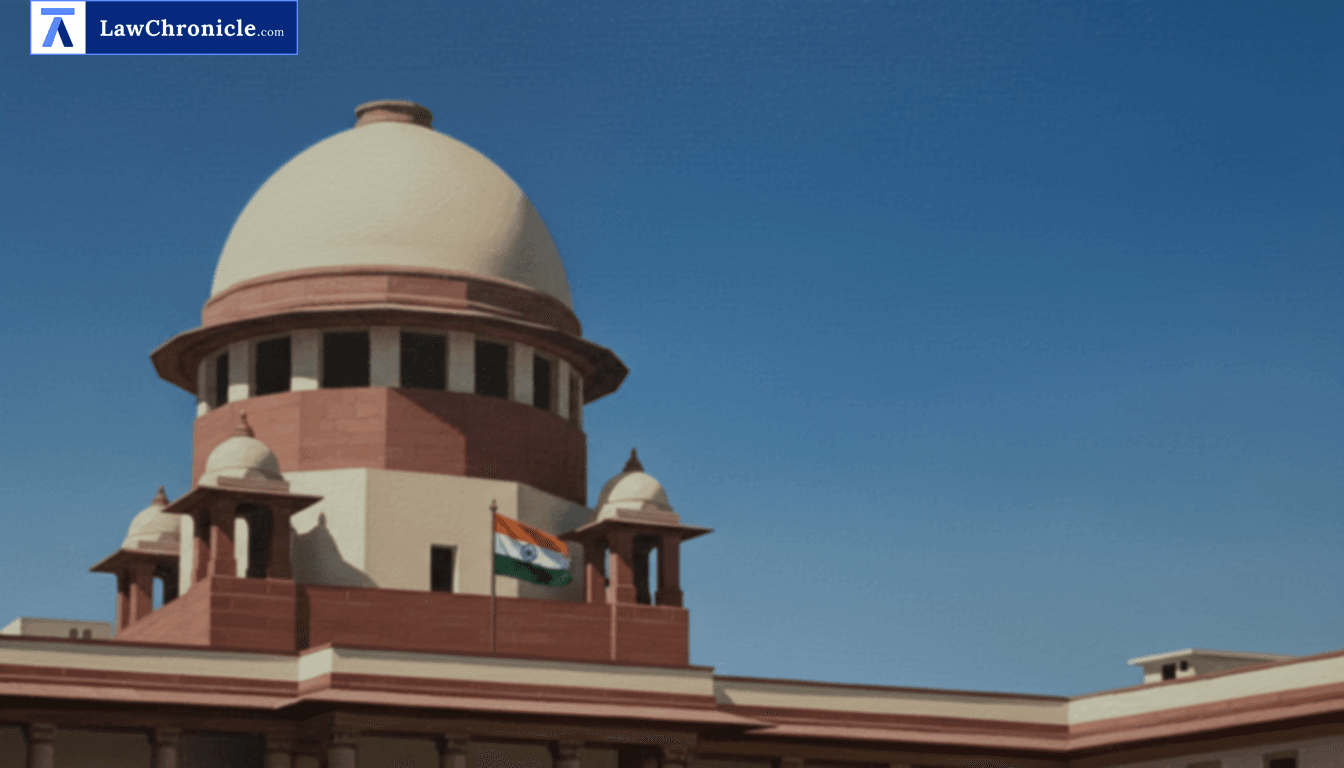
A bench of Chief Justice B.R. Gavai and Justice K. Vinod Chandran heard challenges to the validity of the Tribunal Reforms Act, 2021 (Impugned Act) and allied amendments that reworked appointment, tenure and service conditions of tribunal chairpersons and members. The petitions arose from a long line of litigation concerning the Finance Act, 2017, the 2017 and 2020 Rules and the 2021 Ordinance; the Madras Bar Association and others assailed the statute as undermining judicial independence and the separation of powers.
The Court held that multiple provisions of the Impugned Act were unconstitutional because they reproduced, without curing, measures earlier struck down by this Court and thus amounted to an impermissible legislative override of binding judicial directions. The Court struck down the minimum-age bar of 50 years for appointment, the requirement that the Search‑cum‑Selection Committee recommend a panel of two names with the executive to decide “preferably within three months”, and the four‑year tenure cap (with age ceilings) insofar as they conflicted with earlier judgments. The Court rejected the Union’s plea to refer the matter to a larger Bench. The Court directed the Central Government to constitute a National Tribunals Commission within four months and ordered that certain appointments made pursuant to earlier interim directions remain governed by the parent statutes and prior Rules.
The Court, in its reasoning, observed: “Merely shifting the same content from the amended Section 184 of the Finance Act, 2017 into Sections 3, 5 and 7 of a stand‑alone statute, while using the non obstante formula ‘notwithstanding anything contained in any judgment or order’, does not cure the constitutional defects. It simply re‑enacts them in another avatar. The Impugned Act, therefore, does not ‘cure’ the law declared earlier, but consciously defies it.” The judgment reiterated that “the Constitution is supreme” and that legislative measures that attempt to nullify binding judicial pronouncements without removing their constitutional defects are impermissible.
Background The dispute traced more than three decades of tribunal jurisprudence beginning with S.P. Sampath Kumar and continued through L. Chandra Kumar, Union of India v. R. Gandhi (Madras Bar Association I), the National Tax Tribunal litigation, and Rojer Mathew v. South Indian Bank. This Court repeatedly held that tribunals exercising judicial or quasi‑judicial functions must preserve independence through appropriate selection processes, adequate tenure, insulation from executive control and appropriate qualifications for judicial and technical members. The Finance Act, 2017 and the rules framed under it sought to centralise and harmonise tribunal appointments; the 2017 Rules and 2020 Rules were judicially examined and parts struck down. The Union promulgated the 2021 Ordinance and then enacted the Tribunal Reforms Act, 2021, which reintroduced minimum age thresholds, curtailed tenures, prescribed panels of two names and equated allowances with equivalent central posts.
Petitioners argued these features violated Articles 14, 32 and the basic structure (separation of powers and judicial independence) and amounted to excessive delegation and executive encroachment. The Attorney General advanced parliamentary competence to restructure tribunals as a policy matter and contended courts could not compel Parliament to legislate in a particular form. The Court rejected the contention that structural constitutional principles were non‑justiciable and held that judicial review must ensure that tribunal design met constitutionally required standards. The Court also protected incumbents and certain appointments made pursuant to earlier judicial directions: members whose selections were completed before the Act but whose notifications issued after it came into force were held to be governed by pre‑existing statutes and rules. The Court directed the Centre to implement the judgment’s directions, including setting up the National Tribunals Commission to secure institutional independence.
Case Details: Case No.: REPORTABLE 2025 INSC 1330; Writ Petition (C) No. 1018 of 2021 (with Writ Petition (C) No. 626 of 2021) Case Title: Madras Bar Association v. Union of India and Another Appearances: For the Petitioner(s): Shri Arvind P. Datar, Sr. Counsel; Shri C.S. Vaidyanathan, Sr. Counsel; Shri Sidharth Luthra, Shri P.S. Patwalia, Shri Sanjay Jain, Shri Porus F. Kaka, Shri Gopal Sankaranarayanan, Shri Balbir Singh, Shri Gagan Gupta, Shri Puneet Mittal, Shri Sachit Jolly, Shri B.M. Chatterji, Shri Ninad Laud (counsel as per record) For the Respondent(s): Shri R. Venkataramani, Attorney General for India; Ms. Aishwarya Bhati, Additional Solicitor General (for Union of India)
(Report based on the judgment authored by Chief Justice B.R. Gavai with Justice K. Vinod Chandran concurring, delivered November 19, 2025.)
 Breaking News