Supreme Court Upholds Acid Attack Convictions but Reduces Sentence of One Accused
 Copy Link
 Share
Share Save
Save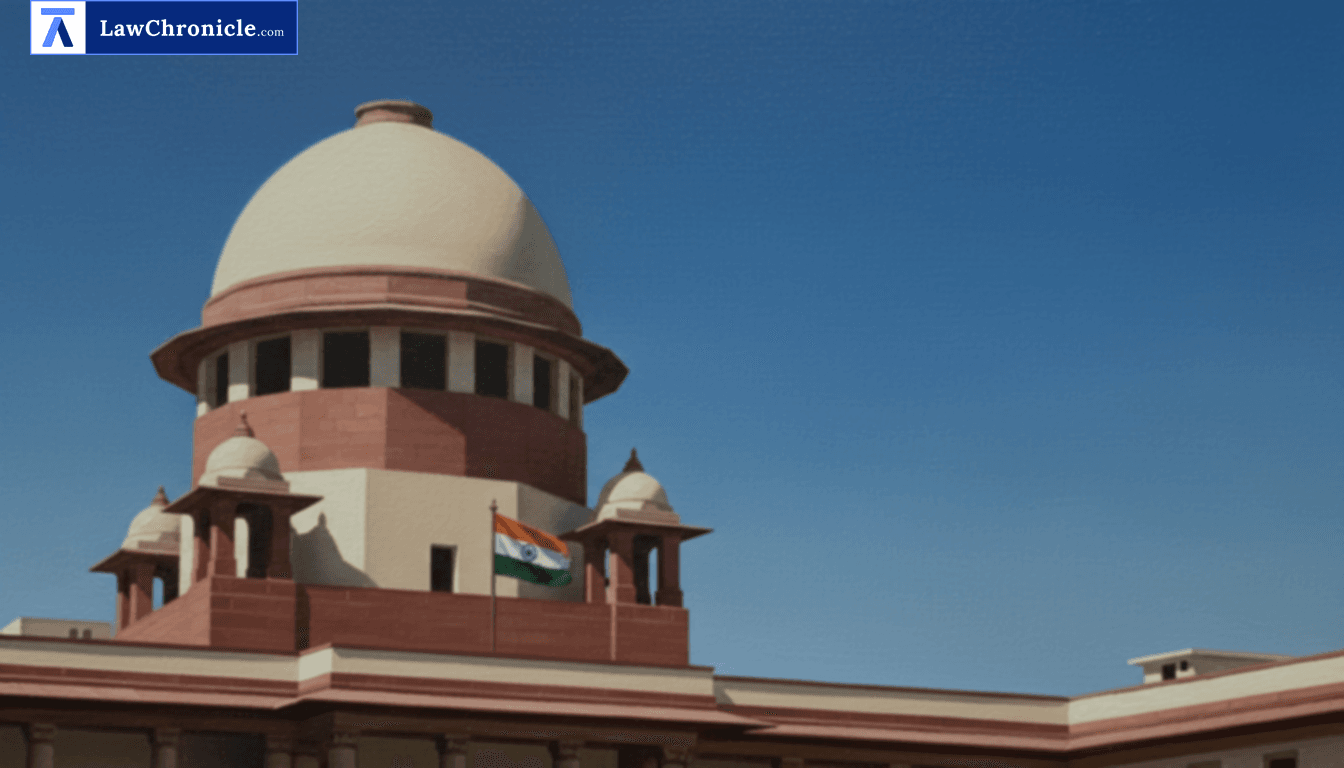
A bench of Justices Abhay S. Oka and Augustine George Masih heard two criminal appeals challenging concurrent findings of conviction under Section 326A IPC and life sentences imposed by the trial court and affirmed by the Delhi High Court. The appeals arose out of an acid attack on a woman near a railway crossing in Mathura on June 8, 2014; the matters reached the Court by Special Leave where the notice was limited to quantum but leave to appeal was ultimately granted.
The Court upheld the convictions of the two appellants for offences under Section 326A read with Section 34 IPC but exercised limited interference on sentence. While the conviction and life sentence of Umesh (Accused No.2) stood affirmed, the Court reduced the life sentence of Hakim (Accused No.1) to rigorous imprisonment for 10 years with a fine of INR 50,000 (in default six months’ simple imprisonment) on account of his age and serious medical ailments and by parity with the third accused’s sentence. The Court reiterated established limits on its interference in special leave petitions and explained its approach to concurrent findings. The Court, in its reasoning, observed: "This Court in Mst Dalbir Kaur and Others v. State of Punjab, while dealing with a petition under Article 136 of the Constitution of India, seeking interference in concurrent findings of conviction, reassessment of evidence and credibility of witnesses, reiterated the ratio as laid down by this Court in Pritam Singh v. State and observed that this Court would interfere only when exceptional and special circumstances exist, which result in substantial and grave injustice having done to the accused. Furthermore, also relying on other decisions of this Court, the Bench went on to summarize the principles governing interference of this Court in a criminal appeal by special leave as follows: (1) it does not interfere with concurrent findings based solely on evidence appreciation, even if another view is possible; (2) it avoids reappraisal unless there’s legal or procedural error, misreading or inconsistency in evidence, e.g., clear contradiction between ocular and medical evidence; (3) it refrains from re-evaluating credibility of witnesses; (4) interference occurs where judicial process or natural justice is violated, causing prejudice; (5) it intervenes if findings are perverse or based on no evidence. Adding to the same, it clarified that this Court only ensures that the High Court has correctly applied these principles."
Background The prosecution alleged that on June 8, 2014 the respondent-victim was accosted near the Govind Nagar railway crossing in Mathura by the three accused; two held her and the third poured an acid-like chemical on her, causing serious chemical burns and near-total loss of vision in the left eye. The complainant lodged an FIR the same night and the case proceeded to trial for offences including Section 326A IPC. The trial court convicted all three and sentenced Hakim and Umesh to life imprisonment with fines; the third accused received ten years. The High Court of Delhi affirmed the convictions, confirmed life sentences for the two appellants, reduced the third accused’s sentence to 10 years, and directed compensation of at least INR 5,00,000 to the victim, with the State of Uttar Pradesh to bear the balance under its victim compensation scheme.
On appeal, the appellants challenged the proof of eye injury and the nature/source of the substance, delay in recording statements, non-compliance with investigational Standard Operating Procedures, and the improbability of participation by the elderly accused. The State and the victim supported the courts below. The Supreme Court reviewed relevant jurisprudence on interference in concurrent findings, examined medical evidence and multiple treating doctors’ testimony confirming chemical burns and substantial loss of vision, and found the delay and procedural lapses explained by medical treatment and threats to the family. The Court held that the evidence supported the conclusions of the courts below and did not warrant interference on conviction. It found mitigating circumstances for Accused No.1 (age and serious illnesses) sufficient to reduce sentence to parity with the third accused but declined to reduce the sentence of Accused No.2, noting his professional role as an advocate. Criminal Appeal No. 5304 of 2024 (Hakim) was partly allowed to the extent of altering sentence; Criminal Appeal No. 5303 of 2024 (Umesh) was dismissed.
Case Details: Case No.: Criminal Appeal Nos. 5304 & 5303 of 2024; 2025 INSC 728 Case Title: Hakim v. State of NCT of Delhi and Anr. Appearances: For the Petitioner(s): Senior Advocates / Counsel (names not indicated in the judgment) For the Respondent(s): Counsel for State and for Respondent-Victim (names not indicated in the judgment)
 Breaking News