Supreme Court upholds arrest powers under Customs and GST Acts subject to strict safeguards and judicial review
 Copy Link
 Share
Share Save
Save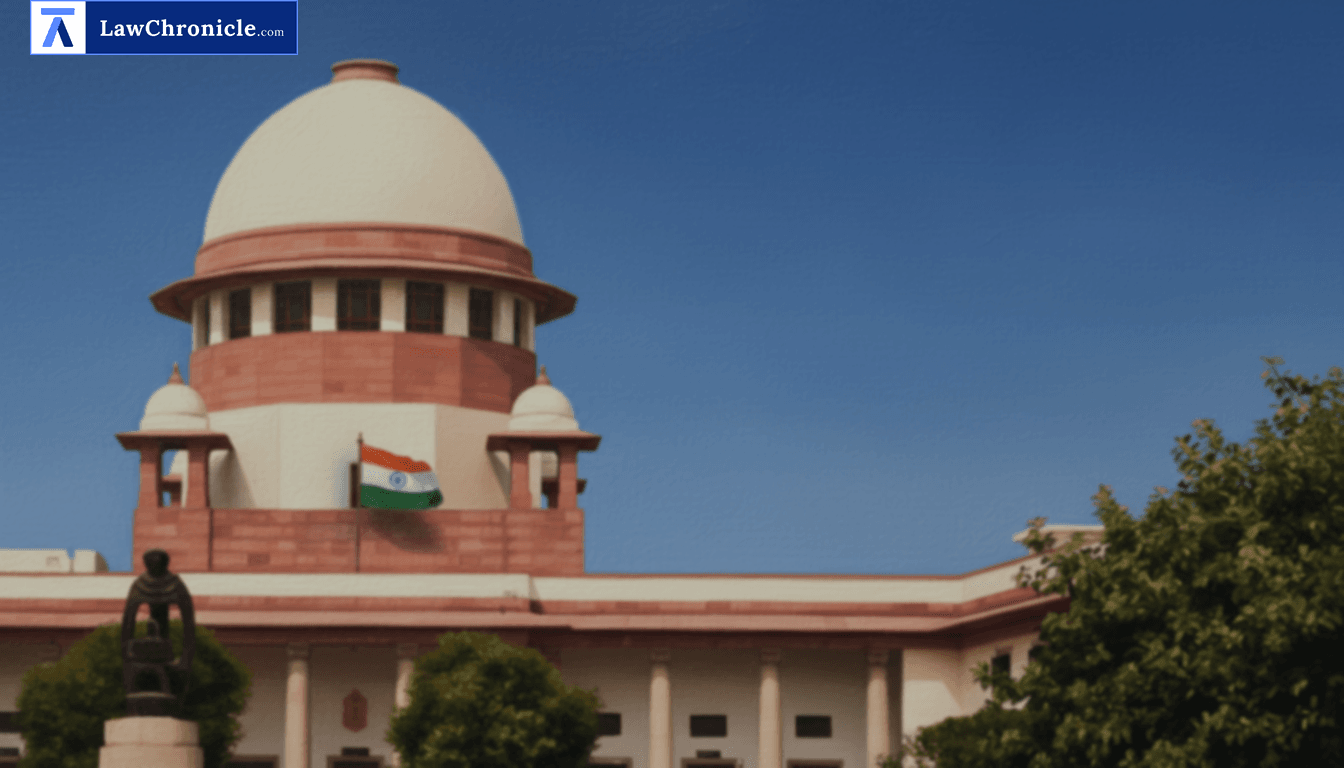
A Bench of Chief Justice Sanjiv Khanna and Justice M.M. Sundresh heard challenges to the scope and exercise of arrest powers conferred on customs and GST officers, including attacks on the continued applicability of Om Prakash and on the vires of Sections 69–70 of the GST Acts; Justice Bela M. Trivedi gave a concurring note on the scope of judicial review. The matters arose from Writ Petition (Criminal) No.336 of 2018 and numerous connected petitions and appeals testing amendments to the Customs Act and the Central/State GST framework that designated certain offences as cognizable and some as non-bailable.
The Court held that the post‑Om Prakash amendments to the Customs Act (2012, 2013, 2019) and provisions of the GST Acts validly designated specified offences as cognizable and in some cases non‑bailable, but it read those powers down by imposing procedural safeguards and direct judicial oversight. It affirmed that customs/GST officers were not police officers in the Evidence Act sense, yet their statutory arrest powers must satisfy pre‑conditions akin to those explained in Arvind Kejriwal v. DoE: an authorised officer must have material and record “reasons to believe” before effecting arrest, and the arrestee must be informed of the grounds. The Court directed strict adherence to Code provisions such as Sections 41‑D, 50A and 55A, D.K. Basu guidelines, maintenance of paginated diaries and provision of arrest memos with written grounds. The Court observed: “For the aforesaid reasons, we do not find any inconsistency between Section 19(1) of the PML Act and Section 104(1) of the Customs Act. We are of the opinion that principles and ratio developed in the case of Arvind Kejriwal (supra), and the principles specifically discussed and delineated in paragraphs 30 to 45 of this judgment, are equally applicable to the power of arrest under Section 104 of the Customs Act. The respondent authorities are, therefore, directed to comply with the mandate of this judgment and that of Arvind Kejriwal (supra).” The Court further held that “the ‘reasons to believe’ should be furnished to the arrestee to enable him to exercise his right to challenge the validity of arrest.”
Background The petitions challenged the legal foundation and practice of arrests under the Customs Act and GST Acts after a three‑Judge decision in Om Prakash had earlier treated customs/excise offences as non‑cognizable. Parliament thereafter amended the statutes to create specified cognizable offences and to make certain categories non‑bailable. Petitioners submitted that Om Prakash continued to govern and that customs/GST officers lacked police‑like arrest powers, leading to arbitrary arrests and coercive recoveries. The revenue relied on the amended statutory scheme and existing administrative instructions.
The Court reviewed the statutory scheme (Sections 104(4)–(7) and 104(6) of the Customs Act; Sections 69 and 132 of the GST Acts), and precedents including Om Prakash, Deepak Mahajan, Ashok Kumar Sharma, and the Constitution Bench line in Tofan Singh and A.R. Antulay. It held that the amendments reflected legislative intent to authorise arrests for specified offences but imposed statutory and constitutional safeguards. Drawing on Arvind Kejriwal, the Court required that authorised officers possess material, record reasons to believe in writing (with limited scope for redaction only on court scrutiny), and communicate written grounds of arrest to the arrestee before production to Magistrate. The judgment mandated compliance with Section 41‑D (right to meet advocate during interrogation), Section 50A (inform nominated person), Section 55A (care of health), maintenance of paginated diaries (Section 172), and adherence to D.K. Basu directions. The Court rejected the vires challenge to Sections 69–70 of the GST Acts under Article 246‑A and held that arrest powers were ancillary to the effective levy and collection of GST. It warned against coercive recovery by threat of arrest, endorsed CBIC/GST Investigation Wing instructions and circulars (including formats for arrest memos), and directed strict compliance; petitioners’ reliance on Om Prakash was held misplaced. The petitions were disposed with these elucidations and the matters were listed for final hearing before an appropriate Bench.
Case Details: Case No.: Writ Petition (Criminal) No.336 of 2018 & Connected Matters (2025 INSC 272) Case Title: Radhika Agarwal v. Union of India and Others (with connected appeals/petitions) Appearances: For the Petitioner(s): Not indicated in the reported judgment For the Respondent(s): Not indicated in the reported judgment
 Breaking News