Supreme Court Upholds Cancellation of 2016 West Bengal School Recruitment Process; Directs Fresh Selection and Continued CBI Probe
 Copy Link
 Share
Share Save
Save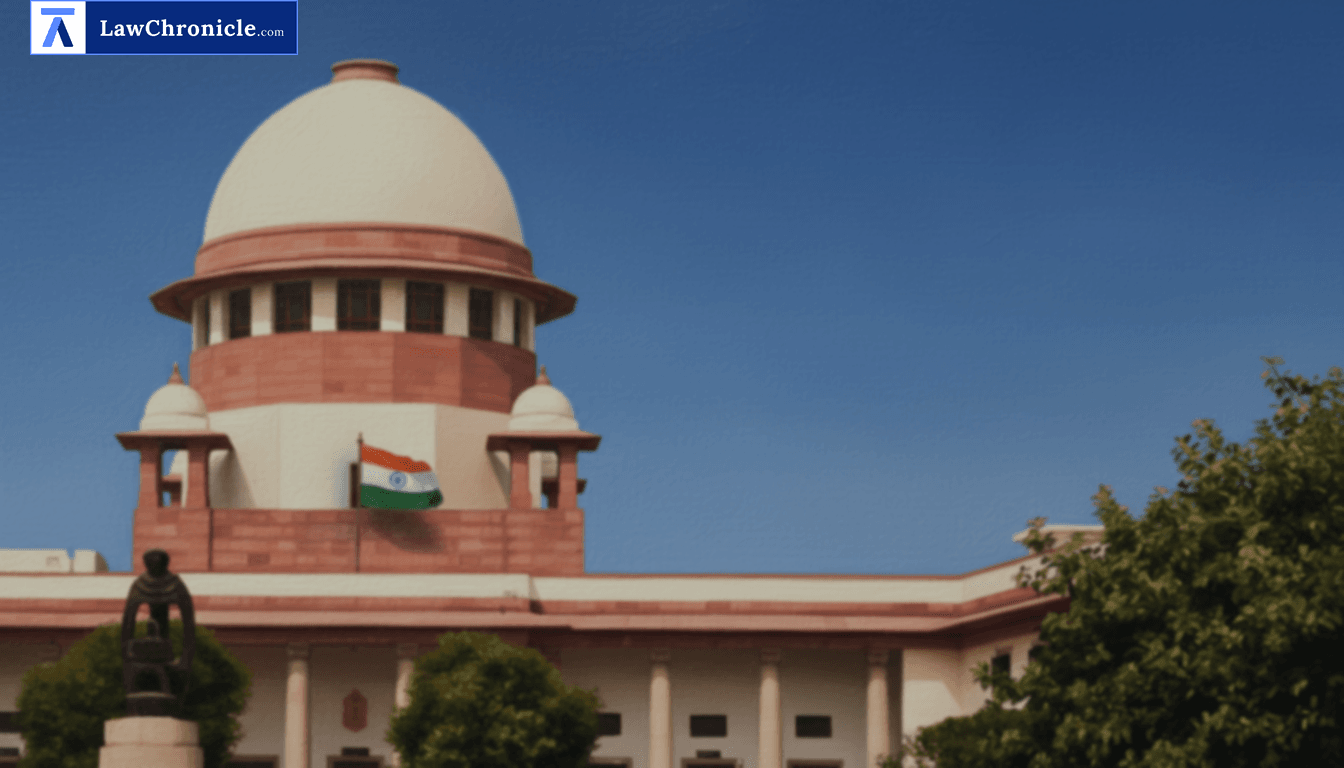
A Bench of Chief Justice Sanjiv Khanna and Justice Sanjay Kumar heard a batch of appeals arising out of the Calcutta High Court’s April 22, 2024 judgment that set aside the 2016 selection process conducted by the West Bengal Central School Service Commission (WBSSC) for Group C and D non‑teaching staff and Assistant Teachers for Classes IX–X and XI–XII. The appeals were filed by selectees, the State of West Bengal and the WBSSC, while writ petitioners and the CBI were respondents.
The Court upheld the High Court’s primary relief that "all appointments granted in the selection processes involved being violative of Articles 14 and 16 of the Constitution of India, are declared null and void and cancelled," while modifying certain directions relating to restitution, continuation of some incumbents, and modalities for a fresh selection. The Court affirmed that large‑scale manipulations, systematic irregularities, destruction of evidence and attempts at cover‑up denuded the recruitment process of credibility. The Court, in its reasoning, observed: “The following principles emerge from the aforesaid discussion: • When an in‑depth factual inquiry reveals systemic irregularities, such as malaise or fraud, that undermine the integrity of the entire selection process, the result should be cancelled in its entirety. However, if and when possible, segregation of tainted and untainted candidates should be done in consonance with fairness and equity. • The decision to cancel the selection en masse must be based on the satisfaction derived from sufficient material collected through a fair and thorough investigation. It is not necessary for the material collected to conclusively prove malpractice beyond a reasonable doubt. The standard of evidence should be reasonable certainty of systemic malaise. The probability test is applicable. • Despite the inconvenience caused to untainted candidates, when broad and deep manipulation in the selection process is proven, due weightage has to be given to maintaining the purity of the selection process. • Individual notice and hearing may not be necessary in all cases for practical reasons when the facts establish that the entire selection process is vitiated with illegalities at a large scale.” The Court also quoted investigative findings that identified extensive manipulation: the CBI reported “manipulation in 952 nos. of candidates of IX‑X, 907 nos. of XI‑XII, 3,481 nos. of Gr. C candidates and 2,823 nos. of Gr. D candidates.”
Background The dispute arose from the WBSSC’s 2016 recruitment for some 12,905 Assistant Teachers (IX–X), 5,712 (XI–XII) and several thousand Group C/D posts. WBSSC outsourced OMR scanning and evaluation to M/s Nysa Communications Pvt. Ltd., which sub‑contracted scanning to M/s Data Scantech; candidates later found discrepancies between OMR marks and WBSSC records. A host of writ petitions alleged rank‑jumping, out‑of‑panel appointments, appointments to candidates who submitted blank OMRs, non‑publication of marks and destruction of OMRs. A Justice (Retd.) Ranjit Kumar Bag committee and subsequent CBI probes identified systemic failures, manipulation and potential criminality; the CBI seized three hard disks and quantified large numbers of mismatches and manipulations. WBSSC conceded rank‑jumping, out‑of‑panel appointments and some manipulation but contended segregation of tainted and untainted candidates was possible.
The Calcutta High Court annulled the entire selection process and directed production/uploading of OMR data, refund/recovery from those appointed outside panels, further CBI investigations (including interrogation and custodial steps where necessary), and a fresh selection by SSC. The Supreme Court reviewed precedents on cancellation versus selective annulment (including Sachin Kumar v. DSSSB, Inderpreet Singh Kahlon, A. Kalaimani and others), concluded that the scale and cover‑up here rendered the process “vitiated beyond resolution,” and upheld cancellation en bloc with modifications: tainted appointees’ services were to be terminated and they must refund salaries/benefits; untainted but appointed candidates’ services were to be terminated without restitution of past wages; employed candidates who are not tainted were allowed limited reliefs (for example, applications to revert to prior public employment to preserve seniority and entitlements). The Court left criminal admissibility questions and detailed criminal proceedings to trial courts, permitted disabled candidates some interim humanitarian continuance (noting one instance where continuation was directed), and directed WBSSC to conduct a fresh, open‑tendered selection following rules and to make policy decisions public. The Court also kept alive a plea by the State seeking reconsideration of the CBI’s probe into creation of supernumerary posts, which it listed for hearing on April 8, 2025. All pending impleadment applications stood disposed; no costs were imposed.
Case Details: Case No.: 2025 INSC 437 Case Title: State of West Bengal v. Baishakhi Bhattacharyya & Ors. (arising out of SLP (C) No. 9586 of 2024) Appearances: For the Petitioner(s): Not indicated in the judgment For the Respondent(s): Not indicated in the judgment
 Breaking News