Supreme Court Upholds Conviction in Familicide But Commutes Death Sentence to Life Imprisonment
 Copy Link
 Share
Share Save
Save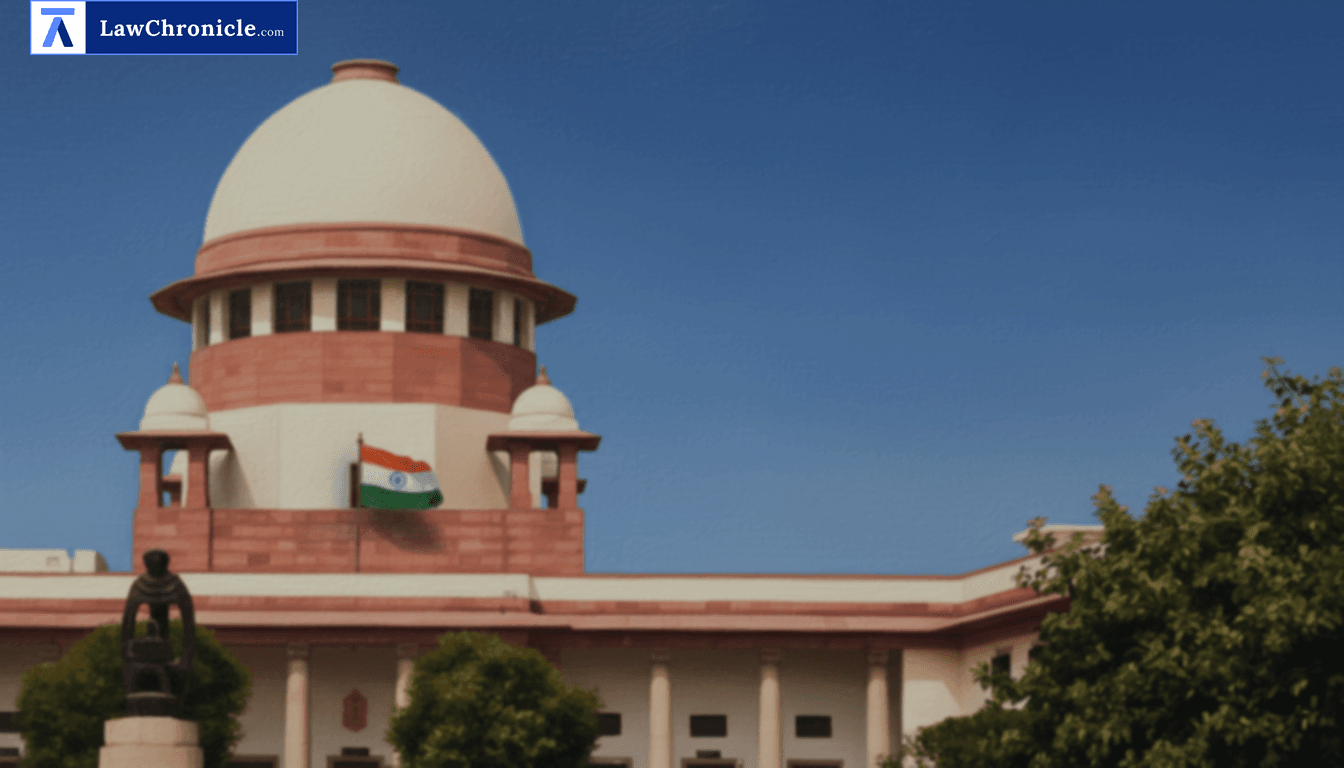
A bench of Justices Vikram Nath, Sanjay Karol and Sandeep Mehta heard appeals against the Allahabad High Court’s confirmation of a death sentence imposed on the accused for the killings of his wife and four minor daughters. The appeals challenged both conviction under Section 302 IPC and the sentence of death imposed by the trial court and affirmed by the High Court.
The Court upheld the conviction but exercised its appellate jurisdiction to commute the death penalty to imprisonment for the remainder of the convict’s natural life. The Bench concluded that the prosecution had established guilt beyond reasonable doubt by an unbroken chain of circumstantial evidence, while mitigation on the offender’s antecedents and prison conduct weighed against capital punishment. The Court, in its reasoning, observed: “It is not in dispute that the prosecution case rests predominantly on circumstantial evidence. The law on conviction based on circumstantial evidence is well-settled: the prosecution must establish each circumstance forming a complete chain that unerringly points to the guilt of the accused and excludes every other hypothesis of innocence. We have therefore tested the circumstances put forth by the prosecution to determine whether the chain of events proves the guilt of the Appellant beyond reasonable doubt.” The Court further held that “while the crime is undoubtedly brutal, it does not meet the threshold of ‘the rarest of rare’ so as to irrevocably foreclose the option of life imprisonment.”
Background: The dispute arose from the murders committed in the intervening night of 11/12 November 2011 in Faizabad (now Ayodhya), where five members of a family — the accused’s spouse and four minor daughters — were found dead in a room of the accused’s house. PW‑1 (the accused’s brother), PW‑2 (his sister‑in‑law) and PW‑3 reached the scene after hearing cries; the door was reported locked from inside, and the accused allegedly emerged briefly holding a blood‑stained axe. Police reached, forced the door open and found the accused still inside with the axe; two knives were later recovered. Post‑mortem reports recorded multiple incised and lacerated injuries and death from haemorrhage and shock.
At trial the accused denied guilt, claimed an alibi that he had slept in a barn, and alleged false implication. He challenged the timing and authenticity of the FIR, the admissibility of any confession, the recoveries and the absence of conclusive serological linkage. The trial court convicted and sentenced him to death, declaring the case “rarest of rare.” The High Court dismissed the appeal and confirmed the sentence.
Before the Supreme Court, the accused reiterated challenges to the circumstantial case, witness contradictions, alleged ante‑timing of the FIR, infirmities in recoveries and lack of forensic proof. The State relied on ocular testimony, contemporaneous recoveries, and medical corroboration; it urged that the brutality, multiplicity of victims and position of trust warranted the death penalty. The Bench analysed the chain of circumstances, held that the accused was found in exclusive custody of the victims’ house with a blood‑stained axe, that post‑mortem findings matched the weapons recovered, and that the accused failed to discharge the burden under Section 106 of the Evidence Act. Minor contradictions were held not to vitiate the core narrative. Applying precedents including Bachan Singh and Machhi Singh and considering the jurisprudence on commutation, the Court weighed aggravating factors against mitigating factors such as absence of prior convictions and prison conduct reports indicating scope for reformation. The Court therefore affirmed conviction under Section 302 IPC but commuted the death sentence to life imprisonment for the remainder of the convict’s natural life. The appeals were partly allowed.
Case No.: Criminal Appeal Nos. 2220-2221 of 2022; Citation 2025 INSC 111 Case Title: Deen Dayal Tiwari v. State of Uttar Pradesh Appearances: For the Petitioner(s): Mr. Shree Singh (Counsel for the Appellant) For the Respondent(s): Counsel for the State of Uttar Pradesh
 Breaking News