Supreme Court upholds High Court order restoring copyright suit and sets test to distinguish designs from artistic works
 Copy Link
 Share
Share Save
Save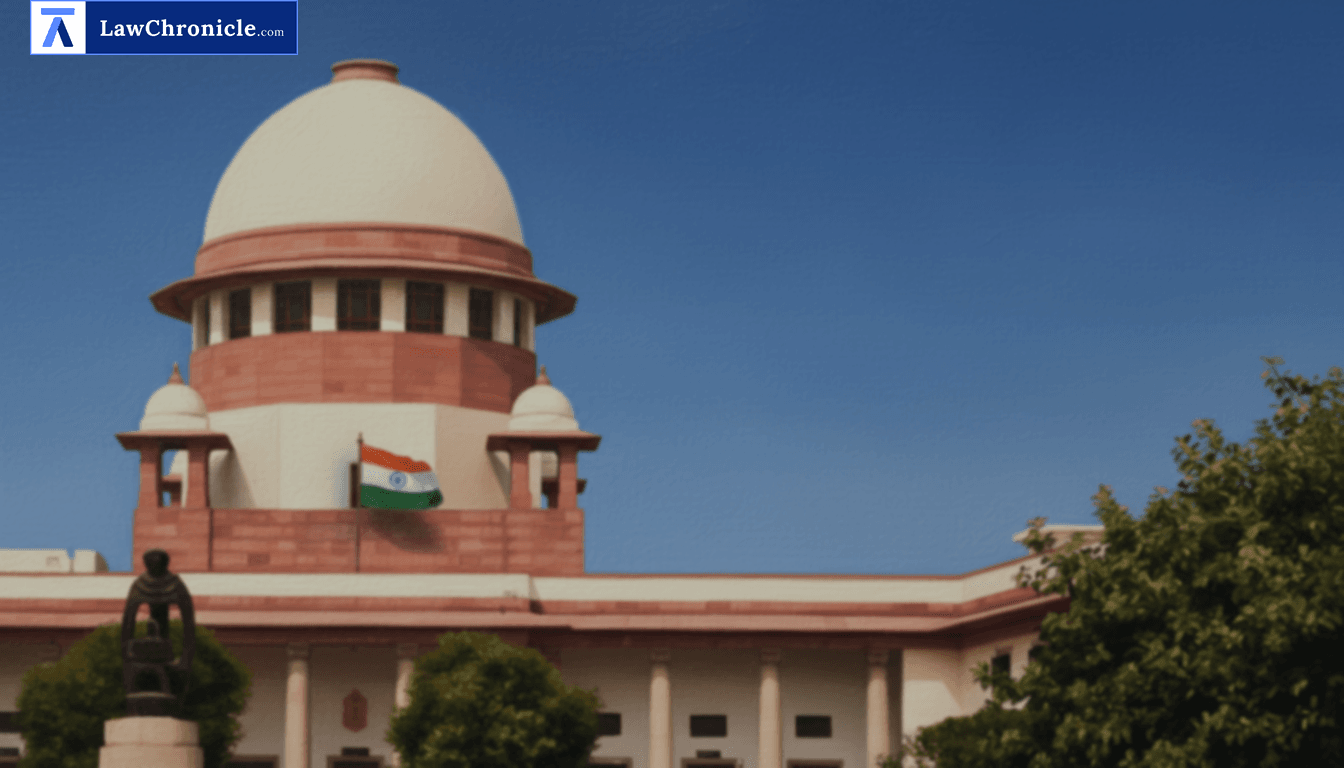
A bench of Justices Surya Kant and Nongmeikapam Kotiswar Singh heard appeals arising from a Gujarat High Court judgment concerning the maintainability of a copyright suit. The appeals arose from litigation in the Commercial Court at Vadodara in which Inox India Limited sued Cryogas Equipment Pvt. Ltd. and LNG Express India Pvt. Ltd. for alleged copyright infringement of proprietary engineering drawings and associated literary works used in cryogenic semi‑trailers.
The court affirmed the High Court’s conclusion that the Commercial Court erred in non‑suing Inox at the threshold under Order VII Rule 11 CPC and upheld the High Court’s order restoring the plaint and reinstating the interim injunction application. The Court observed that the key question—whether a drawing is an “artistic work” under the Copyright Act or a “design” under the Designs Act—is a mixed question of law and fact not amenable to summary rejection. The Court emphasised statutory interaction, quoting that “copyright in any design, which is capable of being registered under the Designs Act, 2000 but which has not been so registered, shall cease as soon as any article to which the design has been applied has been reproduced more than fifty times by an industrial process…” The Court, in its reasoning, observed: “It would therefore be appropriate to espouse the approach already undertaken by the courts in India, as it not only emulates the best practices employed by US courts and the principles enshrined in International Conventions but it also gives due consideration to contemporaneous laws and legislations. We have thus formulated a two‑pronged approach in order to crack open the conundrum caused by Section 15(2) of the Copyright Act so as to ascertain whether a work is qualified to be protected by the Designs Act. This test shall consider: (i) whether the work in question is purely an ‘artistic work’ entitled to protection under the Copyright Act or whether it is a ‘design’ derived from such original artistic work and subjected to an industrial process based upon the language in Section 15(2) of the Copyright Act; (ii) if such a work does not qualify for copyright protection, then the test of ‘functional utility’ will have to be applied so as to determine its dominant purpose, and then ascertain whether it would qualify for design protection under the Design Act.”
Background The dispute began when Inox filed Suit No. 3/2019 in the Commercial Court alleging copyright infringement of two categories of works: (i) Proprietary Engineering Drawings for LNG semi‑trailers and (ii) Literary Works comprising processes and descriptions prepared by its employees. Inox sought declaratory relief, permanent injunctions, delivery up and damages. LNG Express moved to reject the plaint under Order VII Rule 11 CPC, invoking Section 15(2) of the Copyright Act and contending that the drawings were “designs” capable of registration under the Designs Act and, if reproduced industrially beyond fifty times, lost copyright protection.
The Commercial Court initially allowed LNG Express’s Order VII application and dismissed Inox’s plaint and interim injunction plea. The Gujarat High Court set aside that order, restored the suit and remitted the matter for fresh consideration; when the Commercial Court again allowed LNG Express’s plea on remand, the High Court set aside that order as well and reinstated Inox’s interim injunction application. Inox challenged the High Court’s second order before the Supreme Court.
The Supreme Court analysed the statutory framework and comparative jurisprudence, noting precedents from Indian High Courts and foreign law on the interface between copyright and design protection and the role of “functional utility.” It held that the question whether the drawings amounted to registrable designs or remained protected artistic works required trial‑level adjudication and could not be resolved on a prima facie threshold test of Order VII Rule 11. The Court dismissed the appeals, directed the Commercial Court to decide Inox’s interim injunction application within two months and to conduct trial on the substantive IP and related claims within one year, and disposed of pending applications.
Case Details: Case No.: 2025 INSC 483 Case Title: Cryogas Equipment Private Limited & Anr. v. Inox India Limited & Ors. WITH LNG Express India Private Limited v. Inox India Limited & Ors. Appearances: For the Petitioner(s): Mr. Shyam Divan, Senior Counsel (for Cryogas and LNG Express) For the Respondent(s): Mr. Chander M. Lall, Senior Counsel; Mr. J. Sai Deepak, Senior Counsel (for Inox India Limited)
 Breaking News