


Supreme Court Upholds Murder Convictions Despite Non-Recovery of Weapons and Section 313 Objections
 Copy Link
 Share
 Save
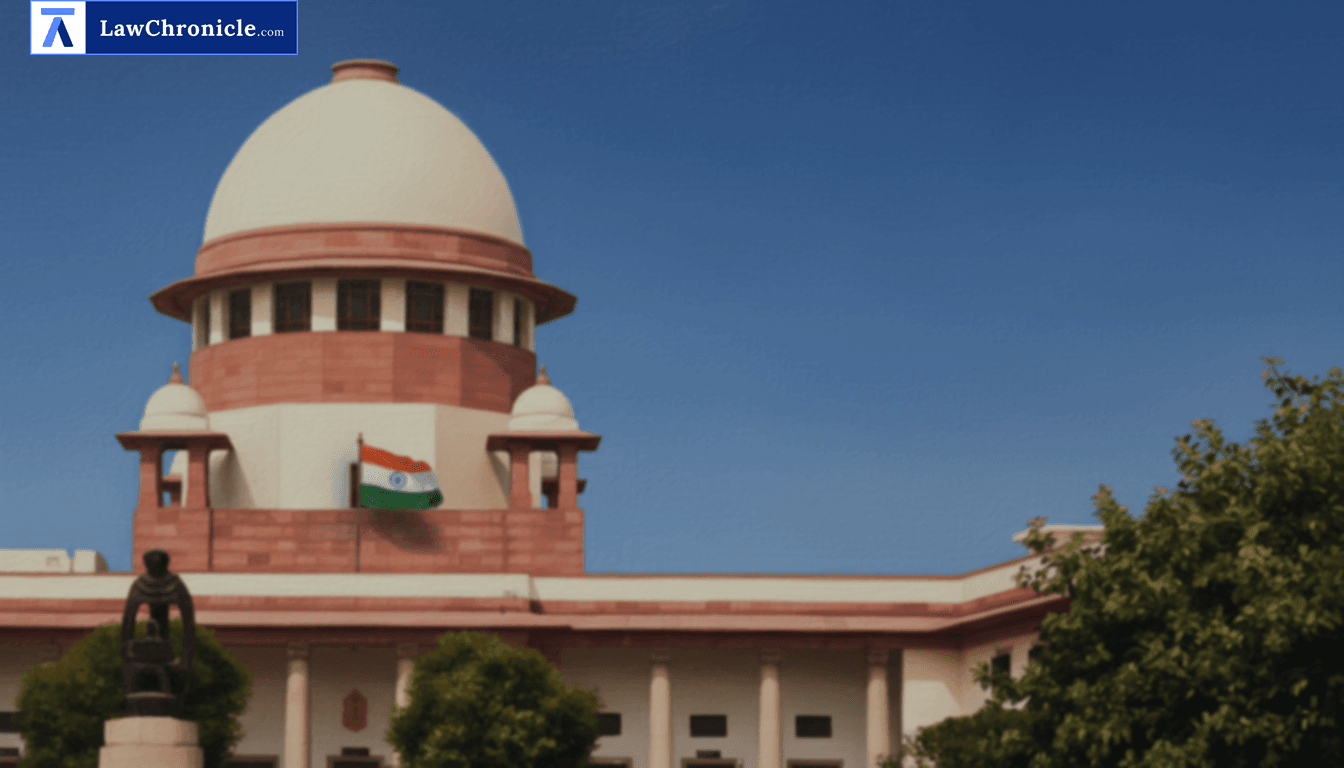
A bench of Justice J.K. Maheshwari and Justice Atul S. Chandurkar heard Criminal Appeal No. 3105 of 2025 arising from convictions under Section 302 read with Section 34 of the Indian Penal Code and reviewed challenges to the Jharkhand High Court’s judgment which had affirmed life sentences imposed by the Sessions Court.
The Court dismissed the appeal and upheld the conviction and life sentences of the appellants, holding that the ocular and medical evidence proved the murders beyond reasonable doubt. The Court noted that the four eyewitnesses’ accounts were “consistent” and that minor inconsistencies did not “weaken the prosecution case.” The Court, in its reasoning, observed: “It is true that the Investigating Officer failed to bring on record any material indicating recovery of the weapons of assault that were described by the eye-witnesses. However, this aspect cannot enable the appellants to seek any benefit in the light of the fact that the version of the eye-witnesses as regards the assault has been found to be reliable. It may be observed that recovery of the weapons of assault is not the sine qua non for convicting an accused as the entire evidence on record is required to be taken into consideration.” The Court further recorded that “such examination by itself cannot be the basis for upholding the contention of the appellants … unless it is shown that prejudice was caused to them.”
Background The prosecution case arose from an incident on 15 August 1985 in which Bulaki Mandal and his nephew Hriday were assaulted allegedly by a group of persons armed with sticks, axes, a sword and a pistol, and died on the spot. The informant and other villagers identified several accused as participants. The Sessions Court convicted the appellants under Section 302/34 IPC and sentenced them to life imprisonment. The Jharkhand High Court, on reappraisal of the evidence, upheld the convictions, finding the testimony of four eyewitnesses reliable and motive established.
Before the Supreme Court, the appellants challenged the credibility of the eyewitnesses on the ground that they were related to the deceased and that independent witnesses were available but not examined. They argued that material contradictions in the deposition, non-recovery of the weapons, reliance on a copy of the post-mortem report rather than the original, a made-out plea of alibi supported by defence witnesses, and defects in examination under Section 313 CrPC vitiated the trial and entitled them to acquittal. Senior counsel for the State contended that the ocular testimony was consistent, the medical evidence corroborated homicidal injuries, and that incriminating circumstances had been put to the appellants under Section 313.
The Court examined the record, observed that the eyewitnesses acknowledged each other’s presence and were cross-examined without disclosure of material contradictions that would undermine their core narrative. Relying on precedent, the Court held that non-recovery of weapons did not automatically weaken a prosecution where reliable ocular and medical evidence existed. The Court also held that mere similarity in questions posed under Section 313 did not vitiate the trial unless specific prejudice was shown; the appellants did not demonstrate such prejudice. The Court referred to earlier decisions including Rakesh v. State of U.P., Om Pal v. State of U.P., and Fainul Khan v. State of Jharkhand in support of these principles. The appeal was dismissed and the convictions and sentences were maintained.
Case Details: Case No.: CRIMINAL APPEAL NO. 3105 OF 2025 (2026 INSC 194) Case Title: Ghanshyam Mandal and Ors. v. The State of Bihar (now Jharkhand) Appearances: For the Petitioner(s): Ms. Anjana Parkash, Senior Advocate For the Respondent(s): Mr. Vishnu Sharma, Advocate
Similar Articles



 Breaking News


