


Supreme Court Upholds Share Capital Reduction; Holds DLOM Permissible If Valuation Is Reasonable
 Copy Link
 Share
 Save
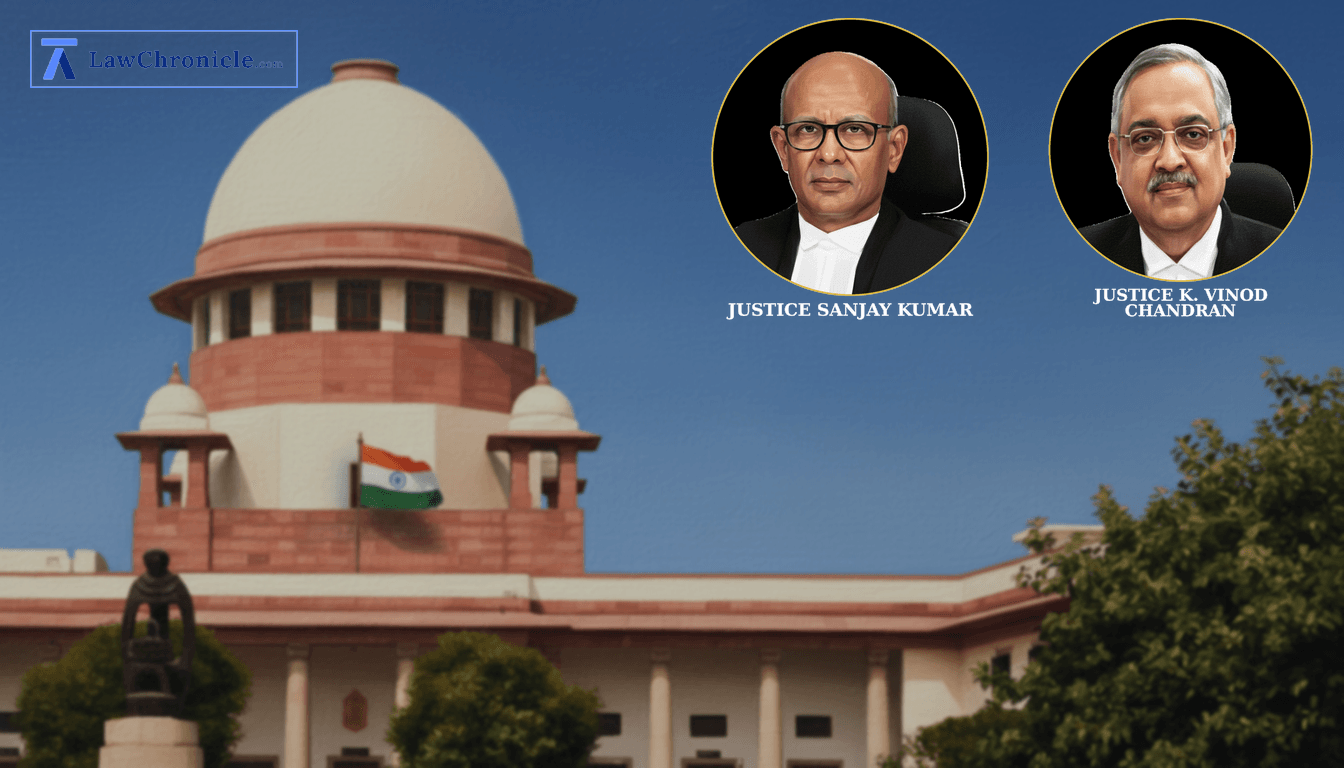
A bench of Justices Sanjay Kumar and K. Vinod Chandran heard appeals by minority investors challenging the reduction of share capital by a closely held company which cancelled identified minority shareholdings and paid an exit price. The appeals contested the procedure, the valuation methodology and the quantum of consideration fixed by Bharti Telecom Limited (BTL) under Section 66 of the Companies Act, 2013.
The Court summarised that the pleadings raised three strands — the Manner, the Method and the Matter — namely alleged procedural infirmity in notice and disclosure, alleged bias in the valuer, and that the price fixed was unreasonably low. It held that the jurisdictional and procedural safeguards under Section 66 had been observed, that the valuer’s independence and the fairness report were not shown to be tainted, and that application of a Discount for Lack of Marketability (DLOM) was not per se invalid. The Court, in its reasoning, observed: “In the totality of the circumstances, the applicability of DLOM cannot be held invalid and in any event, what has to be looked at by the Tribunal in scrutinising the scheme of reduction of capital is only as to whether there was a fair measure employed which cannot be termed unreasonable or prejudicial to the individual shareholders.” The Court further noted that accounting standards defined fair value as “the price that would be received to sell an asset or paid to transfer a liability in an orderly transaction between market participants at the measurement date.” Emphasising limited appellate scope under Section 423, the Court recorded that concurrent factual findings by NCLT and NCLAT did not warrant reappraisal, and concluded: “we reject the appeals.”
Background:
The dispute arose when BTL, a holding company whose sole business was investment in Bharti Airtel Limited (BAL), passed a special resolution to reduce share capital and cancel 28,457,840 equity shares held by identified minority holders. The company fixed an exit price (initially after deduction of Dividend Distribution Tax) and placed valuation and a fairness report on record. The NCLT directed payment without the tax deduction (Rs.196.80 per share); BTL complied. A subset of public shareholders (including eleven appellants before this Court) challenged the reduction before NCLAT and this Court contending (i) the notice to shareholders was “tricky” and did not supply valuation materials; (ii) the valuation was conducted by an entity related to the company’s internal auditor, creating bias; and (iii) the valuation methodology impermissibly applied DLOM, producing an unreasonably low price compared to past offers and transactions (including a rights issue and a strategic allotment to SingTel).
Counsel for BTL contended that Section 66 did not mandate a valuation report, that the procedure for reduction—special resolution, regulatory notices and Tribunal sanction—had been followed, and that valuation and fairness reports had been placed at the registered office and vetted by independent agencies. The company submitted that the valuation employed market-linked measures (including reference to BAL), applied Ind AS and ICAI valuation standards, and that DLOM was appropriate given delisting, lack of marketability and absence of dividends.
The Court analysed precedent (including Foss v. Harbottle principles, decisions on “tricky notices”, Re: Reckitt Benckiser, Kiri Industries and authorities on tribunal composition), and statutory scheme under Section 66 and Ind AS 113. It found no jurisdictional defect in the composition of the NCLAT bench, rejected the contention that retention of valuation documents at the registered office amounted to misleading disclosure, and held that mere association between a valuer and the internal auditor did not demonstrate real bias. On valuation, the Court observed that DLOM was an accepted adjustment under Indian valuation standards where marketability was absent and that the NCLT/NCLAT had not acted perversely in approving the scheme. Applying established tests for fairness and reasonableness in capital reduction, the Court dismissed the appeals and disposed of pending applications.
Case Details:
Case No.: Civil Appeal No. 7655 of 2025 (with connected appeals)
NeutralCitation: 2026 INSC 213
Case Title: Pannalal Bhansali v. Bharti Telecom Limited & Ors.
Appearances:
For the Petitioner(s): K. Parmeshwar (Senior Counsel); Masoom K. Shah (Counsel); Sumit Kumar (Counsel)
For the Respondent(s): Ramji Srinivasan (Senior Counsel); Shyam Divan (Senior Counsel)
Source: 2026 CaseBase(SC) 189
Similar Articles



 Breaking News


