Supreme Court upholds State power to levy purchase tax where sales tax payment is exempted
 Copy Link
 Share
Share Save
Save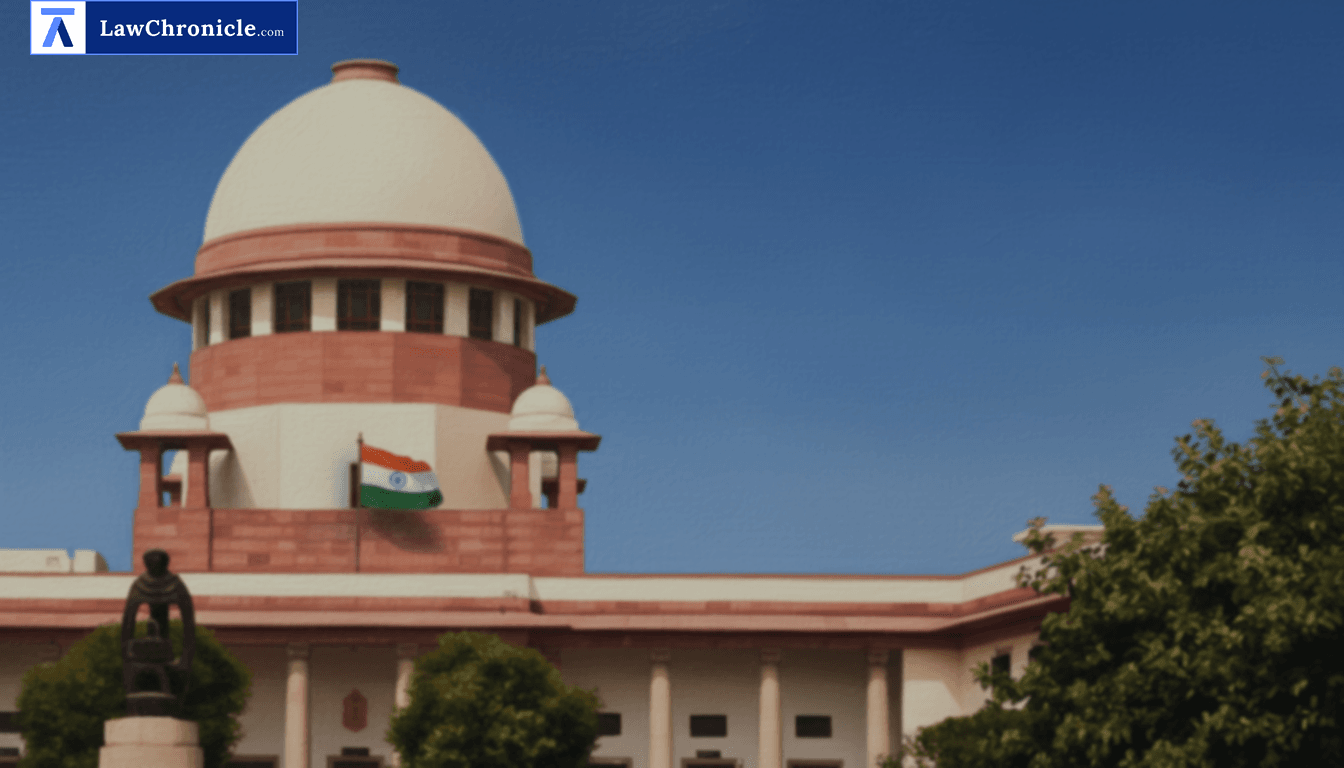
A three-judge Bench comprising Chief Justice Sanjiv Khanna and Justices Sanjay Kumar and R. Mahadevan heard an appeal concerning the interpretation and constitutional validity of Section 5A of the Kerala General Sales Tax Act, 1963 and the pari materia provision of Section 7A of the Tamil Nadu General Sales Tax Act, 1959. The appeals tested whether purchases of goods from dealers exempted from payment of sales tax could attract purchase tax, and whether such a levy intruded upon the Centre’s legislative domain.
The Bench held that Sections 5A and 7A validly imposed purchase tax on purchasers where the seller enjoyed exemption from payment of sales tax, and that the provisions were constitutionally sustainable. The Court rejected the contention that an exemption granted to the seller from payment of sales tax necessarily insulated the purchaser from liability under the purchase-tax provisions. The Court noted “there is a clear dichotomy between liability to tax [taxability] on the one hand and ‘payability’ on the other.” The Court, in its reasoning, observed: “Sections 5A or 7A, as the case may be, impose purchase tax specifically in situations where the seller is granted exemption from payment of tax. The legal position is that exemption from payment of tax at the time of sale is a pre-condition for attracting Sections 5A and 7A respectively. … They are independent and in a way constitute charging sections. Purchase tax is leviable on and payable by the purchaser. However, the legislations do not levy the purchase tax to tax the transaction of the sale and purchase twice. Instead, it levies purchase tax only where no sales tax was payable on the sale. Further, purchase tax has not been made leviable in all situations, except in three situations, namely, (a) where the goods on which no tax is paid were used in manufacture; or (b) where the goods were despatched out of the State other than by way of inter-State trade or commerce; or (c) where the goods are disposed of in a manner other than sale within the State.”
Background
The batch arose from challenges to the levy of purchase tax under Section 5A (Kerala) and Section 7A (Tamil Nadu), enacted to “plug leakage and prevent evasion of tax” where goods that were prima facie taxable were sold without payment of sales tax by virtue of exemptions or notifications. The disputes were legacy matters predating the introduction of VAT and GST. Question I asked whether purchases from dealers exempted by notification were “goods the sale or purchase of which is liable to tax” under the Acts; Question II asked whether purchasers were liable to pay purchase tax; Question III raised whether the levy was an impermissible consignment or inter‑state levy beyond State power.
The Court reviewed an extensive jurisprudence: the three-Judge decision in State of Tamil Nadu v. M.K. Kandaswami (1975) which construed Section 7A as a charging provision; Goodyear India Ltd. v. State of Haryana (1990) which read purchase tax as arising only upon subsequent events of despatch or consignment; Hotel Balaji (1993) and Devi Dass (1994) which favoured the view that purchase tax is a valid levy on the purchase of raw materials where sales tax was not paid and upheld constitutionality; and other intermediate decisions including Mukerian Papers and Peekay Re‑Rolling Mills, the latter creating interpretative complexity regarding “levy” and “collection.” The Bench noted an earlier referral to a larger Bench and explained that Hotel Balaji and Devi Dass had correctly upheld the State enactments.
Applying those precedents and statutory language, the Court held the Acts validly imposed purchase tax where (i) the purchaser was a dealer, (ii) the purchase was in the course of business from a registered dealer or other person, (iii) the goods were otherwise taxable under the Act though no tax was payable at the time of sale, and (iv) one of clauses (a)–(c) of Sections 5A/7A applied. The Court dismissed the assessees’ constitutional challenge, observed that the levy targeted prevention of revenue leakage and did not amount to double taxation, and recorded that “Section 7‑A is at once a charging as well as a remedial provision.” The appeals were dismissed, High Court orders were upheld, existing stay orders were vacated, pending applications were disposed of, and there was no order as to costs.
Case Details: Case No.: Civil Appeal Nos. 941 – 945 of 2004 & Ors.; REPORTABLE 2025 INSC 661 Case Title: C.T. Kochouseph v. State of Kerala and Another & connected matters (arising out of SLP (C) Nos. 9420-9422 of 2012) Appearances: For the Petitioner(s): Not indicated in the reported judgment For the Respondent(s): Not indicated in the reported judgment
 Breaking News