


Suspicion Cannot Replace Legal Proof: Patna High Court Acquits Woman in Murder Case
 Copy Link
 Share
 Save
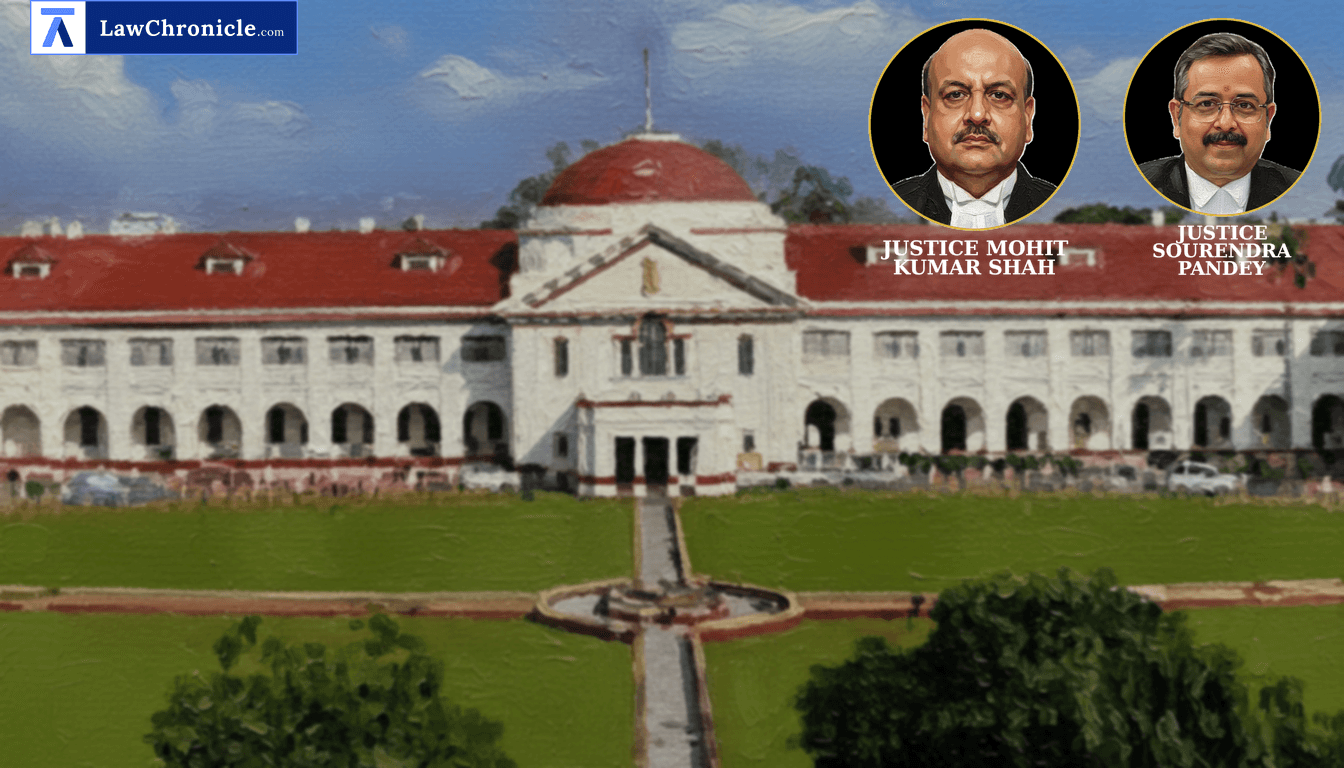
The Patna High Court has overturned a life sentence in a brutal murder case, reinforcing the constitutional mandate that criminal conviction requires 'must be proved' certainty rather than 'may be' suspicion. In a sharp rebuke of the lower court’s reliance on fractured circumstantial evidence, the Bench clarified that the mental distance between vague conjectures and sure conclusions must be bridged by unimpeachable legal proof.
A Division Bench comprising Justice Mohit Kumar Shah and Justice Sourendra Pandey set aside the conviction of a woman accused of murdering her grandson. The Court found that the prosecution's failure to seize incriminating evidence like blood-stained clothes or the alleged murder weapon, coupled with glaring inconsistencies in the 'last seen' theory, rendered the entire trial unsustainable under the Code of Criminal Procedure, 1973.
Key Takeaways
Proof Beyond Reasonable Doubt Mandatory
The Court reaffirmed that no matter how shocking a crime may be to the conscience, suspicion alone regardless of its strength cannot substitute for legal proof.
Circumstantial Evidence Chain Must Be Unbroken
For a conviction based on circumstantial evidence, the prosecution must establish a complete chain of events that excludes every possible hypothesis except the guilt of the accused.
Section 313 CrPC Compliance is Non-Negotiable
Failure to put specific incriminating circumstances to an accused during their examination under Section 313 of the Code of Criminal Procedure, 1973 constitutes a serious irregularity that can vitiate the trial.
Child Witness Scrutiny
Testimony from child witnesses must be treated with extreme caution and subjected to preliminary examination by the Trial Court to rule out tutoring and ensure the minor understands the importance of truth.
Fatal Lapses in Prosecution and Trial Court Rationale
The Court observed that the trial judge erred by convicting the appellant based on disjointed testimonies and property dispute motives that were never fully investigated. While the prosecution relied on the last seen theory, the Bench noted that the witnesses gave conflicting versions of the timeline and events, failing the rigorous standards set by the Supreme Court in Sharad Birdhichand Sarda vs State of Maharashtra ( "AIR 1984 SC 1622": 1984 CaseBase(SC) 194) and Rambraksh alias Jalim vs. State of Chhatisgarh.
Furthermore, the Bench highlighted a significant procedural failure regarding Section 313 of the Code of Criminal Procedure, 1973. The Trial Court failed to put material circumstances such as the specific testimonies of witnesses to the accused, thereby depriving her of a fair chance to explain her side. The Bench cited Suresh Sahu and Anr. vs. State of Bihar to emphasize that material circumstances not put to the accused must be eschewed from consideration.
The Court has following directions:
"Accordingly, the finding of conviction recorded by the learned Trial Judge, in our opinion, is not sustainable and requires to be interfered with. Therefore, judgment of conviction and order of sentence dated 04.09.2019 and 05.09.2019, respectively passed by the learned Court of Additional District and Sessions Judge-III, Jamui in Sessions Trial no. 295 of 2014 (arising out of Jamui P.S. Case No. 166 of 2014) are set aside. The appellant of the aforesaid appeal is acquitted of the charges levelled against her. The appellant is already on bail, hence she is discharged from the liability of her bail bonds. The aforesaid Criminal Appeal i.e. Cr. Appeal (DB) No.158 of 2020 stands allowed. Let the lower court records be sent to the learned Trial Court forthwith."
The Court, in its reasoning, observed: "Certainly, it is a primary principle that the accused must be and not merely may be guilty before a court can convict and the mental distance between ‘may be’ and ‘must be’ is long and divides vague conjectures from sure conclusions. The large mental difference between 'may be proved' or 'must be proved' must be covered by way of clear, cogent and unimpeachable evidence produced by the prosecution before an accused is condemned as a convict."
Ratio
In cases involving circumstantial evidence, the prosecution must satisfy the five-fold 'Panchsheel' criteria: the circumstances must be fully established, consistent only with guilt, conclusive in nature, exclude every other hypothesis, and form a complete chain. Furthermore, judicial officers have a mandatory duty under Section 313 Code of Criminal Procedure, 1973 to put each material incriminating circumstance specifically and separately to the accused; failure to do so, especially when it causes prejudice, renders the conviction bad in law. Finally, 'Graviora delicta gravioribus probationibus indigent' the graver the offence, the stricter the scrutiny of evidence.
Background
The case originated from the death of a young boy whose body was found near a pond with head injuries and a fractured nasal bone. The informant (P.W.2) initially suspected the appellant and his son-in-law due to a property dispute. The appellant was charged under Sections 302 and 201 of the Indian Penal Code. The prosecution relied heavily on the 'last seen' theory, claiming the appellant was seen with the boy shortly before his disappearance, and on the alleged presence of bloodstains on her clothes.
However, during the appeal, the High Court noted that the Indian Evidence Act, 1872 requires facts within a person's knowledge to be proved, yet the police failed to seize the blood-stained saree or any murder weapon for forensic examination. The Court also scrutinized the testimony of P.W.3, a child witness, noting the trial court failed to conduct a preliminary examination as required by the law settled in Pradeep versus The State of Haryana ( "(2023) 19 SCC 221": 2023 CaseBase(SC) 614). Finding that the chain of circumstances was broken and that suspicion had displaced legal proof, the High Court allowed the appeal and acquitted the woman.
Case Details:
Case No.: CRIMINAL APPEAL (DB) No.158 of 2020
Case Title: Nasima Khatoon @ Md.Nasima Khatoon vs The State of Bihar
Appearances:
For the Petitioner(s): Mr. Satya Prakash Parasar, Advocate; Mr. Ashish Kumar, Advocate; Ms. Ayushi, Advocate
For the Respondent(s): Mr. Sujeet Kumar Singh, APP
Source: 2026 CaseBase(PAT) 3333
Similar Articles



 Breaking News


