


Tax Receipts and Licenses Do Not Legalize Illegal Structures: Bombay HC
 Copy Link
 Share
 Save
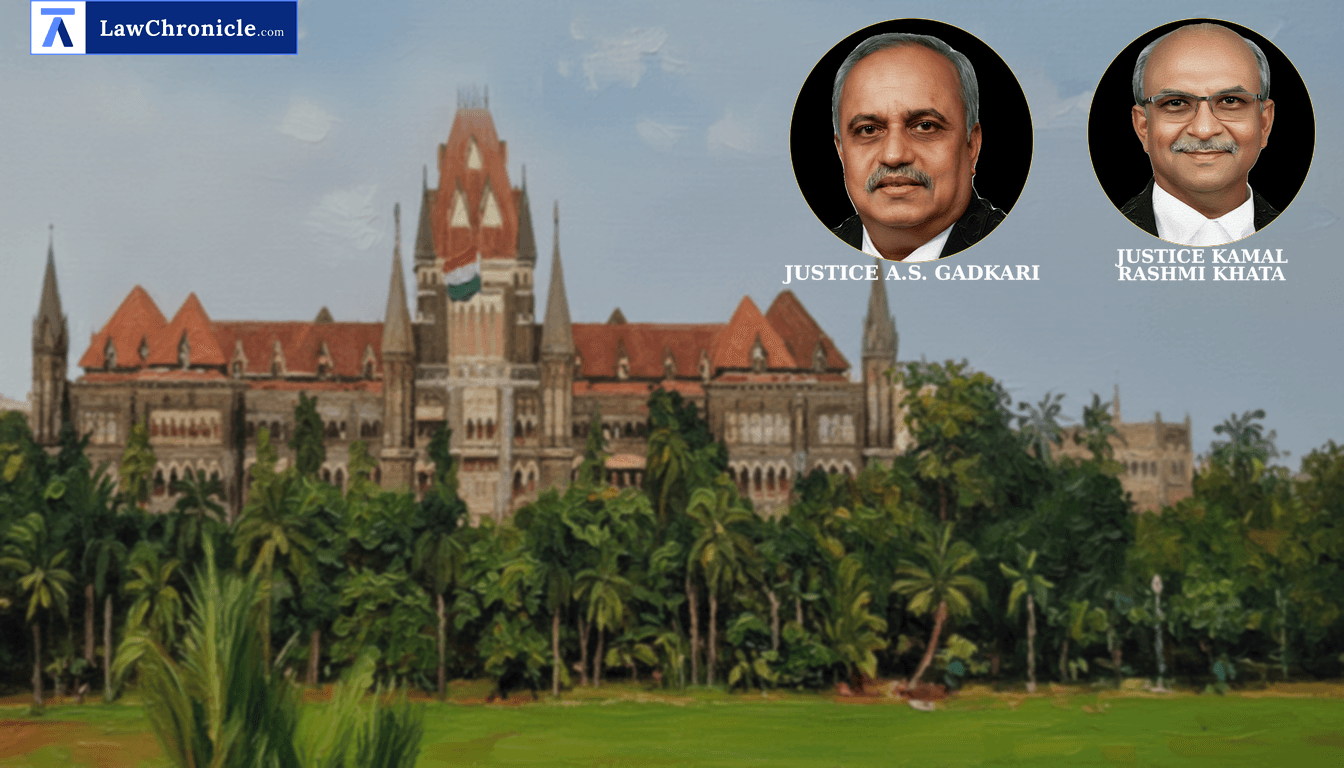
In a stern rebuke to the culture of post-facto regularisation of illegal constructions, the Bombay High Court ruled that property tax assessments, municipal licenses, and repair permissions cannot bestow legality on unauthorised structures. Cracking down on rampant unauthorized developments, the Division Bench affirmed that courts cannot grant equitable relief or protection to litigants who breach statutory building regulations.
A Division Bench comprising Justice A. S. Gadkari and Justice Kamal Khata delivered the ruling while dismissing a pair of writ petitions challenging demolition notices issued under Section 351 of the Brihanmumbai Municipal Corporation Act, 1888.
Key Takeaways
Tax Records No Proof of Legality
Assessment to property tax or payment of municipal outgoings does not alter the unauthorised character of a structure or validate its existence prior to the datum line.
Auxiliary Licenses Cannot Grant Building Sanction
Trade licenses, electricity bills, and shop registrations validate business activities but do not establish the legal status, nature, or size of a physical structure.
Repair Permissions Are Not Regularisation
Under the garb of repair permissions, unauthorised structures cannot be expanded or shielded from statutory demolition proceedings.
Deterrent Costs for Unauthorised Construction
Litigants attempting to retain extensive illegal developments through selective demolition undertakings face heavy exemplary costs.
The High Court scrutinized the petitioner's reliance on historical municipal repair letters, business licenses, and tax records, emphasizing that none of these documents substituted a validly sanctioned building plan.
The Court, in its reasoning, observed: "A mere entry in the assessment bills of later years, stating that the structure predates 1st April, 1962 (the datum line), does not by itself lend credibility to either the nature or the size of the structure built... The reliance placed on assessment bills, repair permissions, property tax receipts, electricity bills and licence issued by B.M.C. is wholly misplaced and cannot be used to prove the structure to be authorised."
Addressing the broader societal impact of unauthorized urban sprawl, the Court further noted: "Permitting its continuance would send out a wrong message that illegalities are pardoned if backed by money. This would send a wrong signal to all the law-abiding citizens, who strive hard to follow the law of the land. Thriving lawlessness not only discourages the law-abiding citizen but also encourages him to turn into a law-breaker."
Ratio
Assessment of an unauthorized structure to property tax, the grant of trade licenses, utility connections, or municipal repair permissions do not confer authorization or legal status on the structure, nor do they operate as res judicata against statutory demolition notices.
Background
The petitioner, Shah Constructions Co. Ltd., challenged notices issued on 13th May 2026 under Section 351 of the Brihanmumbai Municipal Corporation Act, 1888 and subsequent orders dated 1st July 2026 issued by the Designated Officer of K/West Ward, Municipal Corporation of Greater Mumbai. The notices sought the removal of nine large commercial structures including porta cabins, banquet halls, and workshops spanning roughly 34,000 square feet on property located in Andheri West, Mumbai.
The petitioner argued that the structures were tolerated commercial constructions built prior to the 1st April 1962 datum line fixed under municipal policy. To substantiate its claims, the petitioner produced an array of documents, including a 1961 stone-cutting license, 1978 and 1982 repair permissions, property assessment bills, and a 1983 communication where earlier Section 351 notices had been dropped. They urged that the fresh notices were barred by the principle of res judicata.
The Corporation opposed the petitions, asserting that the petitioner failed to submit any sanctioned plans or prove the existence, size, or nature of the original structures prior to the datum line.
The High Court held that the documentation relied upon by the petitioner was wholly inadequate. Following the legal principles settled in Ashok Tukaram Ramugade vs. M.C.G.M., Sidharam M. Yanagandul vs. State of Maharashtra, and Laxmi Gopinath Shetye vs. MHADA, the Court reiterated that property tax assessments and utility connections cannot legalise an illegal construction. The Court further placed reliance on the binding mandates of the Supreme Court in Rajendra Kumar Barjatya & Anr. vs. U.P. Avas Evam Vikas Parishad & Ors. ( "2024 SCC OnLine SC 3767": 2024 CaseBase(SC) 761) and Kaniz Ahmed vs. Sabuddin & Ors. ( "2025 SCC OnLine SC 995": 2025 CaseBase(SC) 929).
Consequently, the High Court dismissed both writ petitions and imposed exemplary costs of Rs. 5 lakhs per petition (totaling Rs. 10 lakhs) on the petitioner, payable to the Bar Council of Maharashtra and Goa’s Advocate Academy and Research Center within two weeks. The Court also refused to entertain an undertaking offered by the petitioner to voluntarily demolish a portion of the structure to retain the rest.
Case Details:
Case No.: WRIT PETITION (L) NO.22853 OF 2026 WITH WRIT PETITION (L) NO.22860 OF 2026
Case Title: Shah Constructions Co. Ltd. V/s. Municipal Corporation of Greater Mumbai & Ors.
Appearances:
For the Petitioner(s): Mr. Girish Godbole, Senior Advocate i/by Mr. Sumit Kothari
For the Respondent(s): Ms. Smita Tondwalkar for BMC, Mr. Pawan Kulkarni, Sub Engg (B & F) K/W Ward
Source: 2026 CaseBase(BOM) 4692
Similar Articles



 Breaking News


