Temporary Access on Govt Land does not attract right to erect Exclusive Gates: Bombay HC
 Copy Link
 Share
Share Save
Save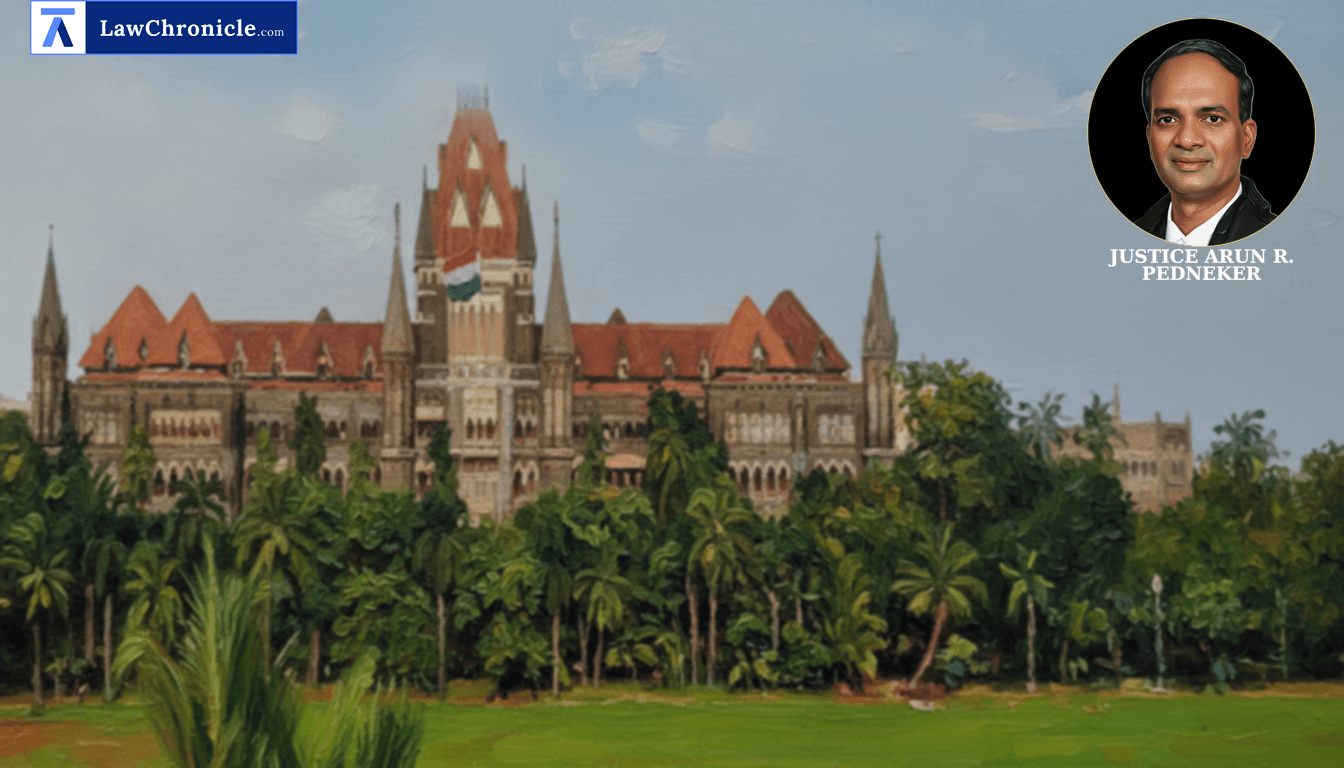
The Bombay High Court has reinforced the principle that temporary access permissions over government land cannot be converted into exclusive proprietary rights by erecting permanent structures like gates. In a significant ruling, the Bench held that while a party may retain the right of passage, they cannot obstruct the general public or claim sole possession of state-owned land used for connectivity.
In a verdict delivered by Justice Arun R. Pedneker, the Bombay High Court balanced the rights of a housing society to access its property with the State's duty to keep public pathways open. The bench clarified that government land, even when used as a bitumen road constructed at private cost, remains public property if it serves as a link between development plan roads and public streets.
Key Takeaways
Public Nature of Access
Government land used for access cannot be converted into private property through the installation of gates or security personnel.
Limited Scope of Adverse Possession
Pending litigation regarding adverse possession of one area (like a garden) does not automatically extend protection to adjacent access strips not covered by specific prayers.
State's Power of Removal
The Collector possesses the authority to remove unauthorized obstructions on government land to ensure "Right of Way" for all stakeholders, including neighboring slum rehabilitation projects.
Preservation of Passage Rights
While the State can remove gates, it cannot arbitrarily block the existing access of a party who has used it with prior permissions, until a final legal determination is made.
Collector's Mandate and Procedural Propriety
The Bombay High Court examined whether the Resident Deputy Collector had the jurisdiction to direct the removal of iron gates without a full-scale eviction inquiry. The Bench noted that since the Petitioner's access was not being terminated, but merely made non-exclusive, the rigorous summary eviction procedures were not entirely applicable in the same way as a total dispossession.
The Bombay High Court cautiously directed that "The action of the State, by the impugned order directing removal of the gates, is not interfered. However, the State shall not be entitled to grant exclusive use of the road/access to any other party, as the said access connects the D.P. Road on one side with the public road on the other side. Accordingly, the said access shall remain open to the Petitioner as well as to others."
The Bench observed that "The Petitioner has no right to put up a gate on a access road. The land belongs to the Government and connects to the D.P. road. The impugned order indicates that the Petitioner had put up iron gates. The order also indicates that the said road has not been allotted to any person and that gates having been unauthorisedly erected. The Petitioner has no right to erect a gate on the access granted by the Corporation over the Government’s land."
Ratio
Private parties permitted to use government land as a temporary or non-exclusive access road do not acquire the right to exclude the general public or other stakeholders by installing physical barriers. The State retains the authority to remove such obstructions to maintain the land's character as a public thoroughfare, provided the primary right of passage of the original permitted user is not completely obstructed without due process.
Background
The Petitioner, The Deccan Co-operative Housing Society Limited, challenged an order dated March 17, 2026, issued by the Resident Deputy Collector directing the removal of gates on a 9.15-meter wide strip of land. The Society claimed it had been in uninterrupted possession of the land for over 45 years and had constructed a bitumen road at its own cost. They argued that the action was taken at the behest of a developer, Jasani Realty Private Limited, who sought access for a Slum Rehabilitation Scheme.
The Petitioner contended that the access was part of an original 1959 grant and was currently subject to a civil suit involving claims of adverse possession under the Limitation Act, 1963. However, the State and the Intervenor argued that the land was government property and that the society was granted only temporary access until a 44-feet D.P. road was completed.
While the Petitioner cited Shakuntalabai w/o Shrinivas Dhoot & Ors. V. The State of Maharashtra & Anr. to argue that a notice under Section 53 of the Maharashtra Land Revenue Code was mandatory before any removal, the Bombay High Court distinguished the facts, noting that the Society was not being evicted from its allotted land, but was merely being stopped from monopolizing a public access strip. The Bench ultimately partly allowed the petition, upholding the removal of the gates but ensuring the Society's continued right to use the path along with the public.
Case Details:
Case No.: WRIT PETITION NO.7981 OF 2026
Case Title: The Deccan Co-operative Housing Society Limited vs. The State of Maharashtra & Anr.
Appearances:
For the Petitioner(s): Mr. Pravin Kumar Samdani, Senior Advocate a/w Mr. Bhushan Deshmukh, Ms. Neha Mehta, Mr. Aditya Miskita, Mr. Umair Merchant, Ms. Aayushi Gohil, Ms. Rima Ajmerwalla and Daryl Alemao i/b M.T. Miskita & Co.
For the Respondent(s): Mr. Yuvraj D. Patil, AGP for Respondent Nos. 1 and 2 – State; Mr. Mayur Khandeparkar a/w Mr. Amogh Singh, Mr. Devansh Shah, Mr. Santosh Pathak, Mr. Nimish Lotlikar, Ms. Archana Karmakar, Ms. Khushi Jain i/b Law Origin for Applicant in IA.
Source: 2026 CaseBase(BOM) 5652
 Breaking News