


Total Non-Compliance of Section 42 NDPS Act Entitles Accused to Suspension of Sentence: Himachal Pradesh HC
 Copy Link
 Share
 Save
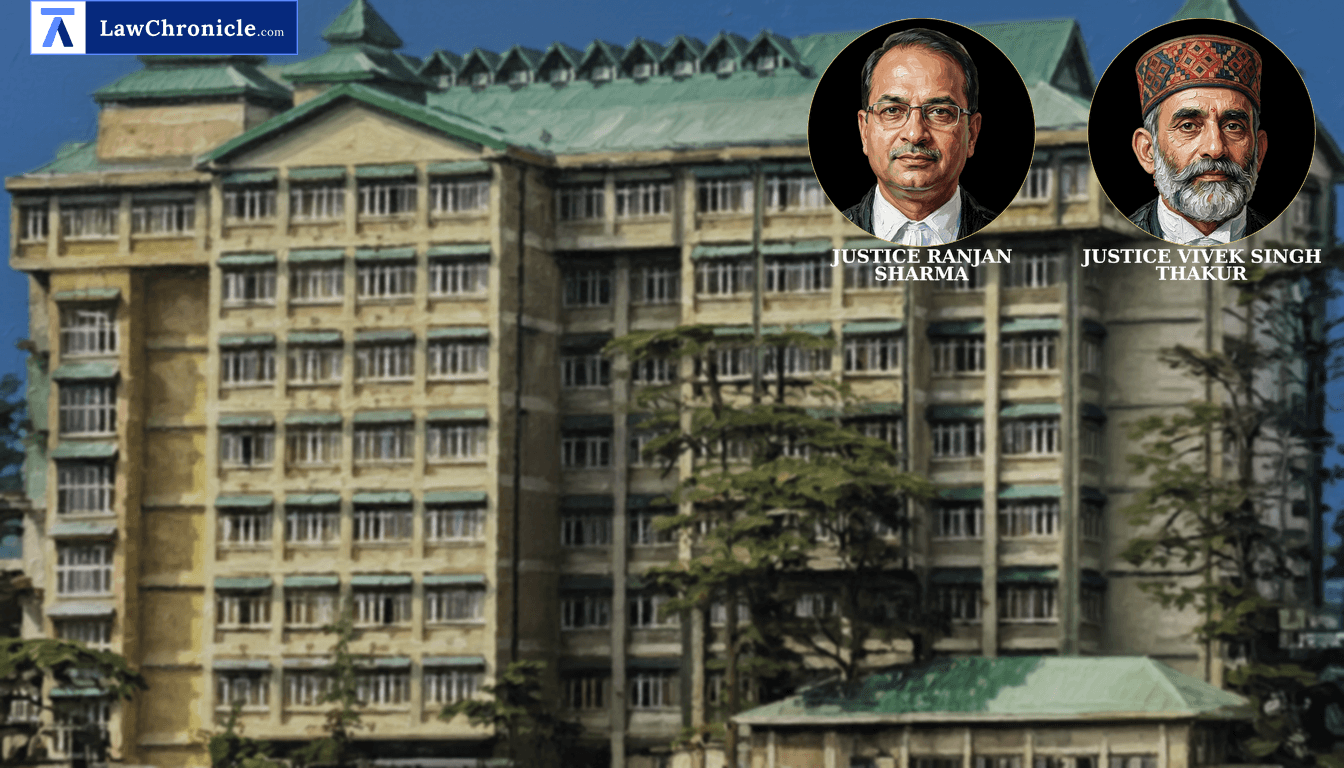
Setting a firm boundary against procedural lapses in drug seizure cases, the High Court of Himachal Pradesh held that searching a private vehicle during the night without recording 'reasons to believe' under Section 42 of the Narcotic Drugs and Psychotropic Substances Act constitutes a fatal procedural violation that creates a strong likelihood of acquittal.
In an application for suspension of sentence, a Division Bench comprising Justice Vivek Singh Thakur and Justice Ranjan Sharma granted bail to an appellant convicted under the narcotics law, observing that total non-compliance with statutory safeguards cannot be bypassed under the guise of routine suspicion.
Key Takeaways
- Private Vehicles vs. Public Places: Searching a private vehicle at night attracts Section 42 rather than Section 43 of the Narcotic Drugs and Psychotropic Substances Act, requiring mandatory recording of reasons to believe.
- Total Non-Compliance is Fatal: Complete failure to record reasons for a nighttime search without a warrant undermines the prosecution's case and creates a fair chance of acquittal.
- Suspension of Sentence Granted: Substantive sentence suspended for the appellant who had served nearly half of his ten-year imprisonment sentence.
Court's Observations and Legal Principles
The High Court carefully evaluated the statutory distinction between Section 42 and Section 43 of the Narcotic Drugs and Psychotropic Substances Act. The Court highlighted that while Section 43 applies to public conveyances and public places, the search of a private car during the night strictly mandates compliance with the proviso to Section 42(1) and Section 42(2).
The Court, in its reasoning, observed: "It is not a case where there is some defect in compliance of provisions of Section 42 of NDPS Act, but it is a case of total non-compliance of Section 42 of NDPS Act, which has been held impermissible by the Apex Court in Karnail Singh’s case, Boota Singh’s case and Jagraj Singh’s case. There must be compliance of Section 42 of NDPS Act, at least substantial compliance, which is missing in present case and, therefore, there is a fair chance of acquittal of the applicant-appellant, as per exposition of law existing on date."
The Court issued the following directions:
"Therefore, substantive sentence awarded to the applicant-appellant Sher Singh is ordered to be suspended during pendency of the appeal, subject to furnishing personal bond in the sum of Rs. 1,00,000/- with one surety in the like amount to the satisfaction of Trial Court, with undertaking therein to appear before this Court as and when directed and in the event of the dismissal of the appeal, to surrender before the Court, to serve the remaining sentence."
Ratio
Searching a private conveyance between sunset and sunrise without recording grounds of belief regarding the potential concealment of evidence or risk of escape, as mandated under the proviso to Section 42(1) of the Narcotic Drugs and Psychotropic Substances Act, constitutes total non-compliance with statutory requirements, rendering the recovery inherently questionable and entitling the convicted individual to a suspension of sentence pending appeal.
Background
The prosecution alleged that on November 26, 2021, at around 2:00 AM, a police patrolling party intercepted a private Alto car. Upon searching the vehicle, the police recovered a black-colored stick-shaped substance verified as Charas kept in a carry bag. Consequently, the applicant was convicted under Section 20 read with Section 29 of the Narcotic Drugs and Psychotropic Substances Act by the Special Judge (Family Court), Shimla, and sentenced to ten years of rigorous imprisonment along with a fine of Rs. 1,00,000.
Seeking suspension of sentence during his appeal, the applicant argued that the search took place at midnight in a private car without any compliance with Section 42 of the Narcotic Drugs and Psychotropic Substances Act. Neither the Ruqua, search memo, nor the testimony of the Investigating Officer indicated that grounds of belief were recorded prior to the search. Relying on Supreme Court rulings in Karnail Singh vs. State of Haryana ( "(2009) 8 SCC 539": 2009 CaseBase(SC) 837), State of Rajasthan vs. Jagraj Singh alias Hansa, and Boota Singh and Others vs. State of Haryana ( "AIR Online 2021 SC 198": 2020 CaseBase(PNH) 223), the applicant contended that total non-compliance with Section 42 is impermissible.
Conversely, the State argued that the vehicle was checked on suspicion in a public place, and the search was spontaneous, leaving no time to record reasons to believe. The State relied on State of Haryana vs. Jarnail Singh and Others ( "(2004) 5 SCC 188": 2004 CaseBase(SC) 322) and Kallu Khan vs. State of Rajasthan ( "(2021) 19 SCC 197": 2021 CaseBase(SC) 552) to contend that Section 43 applied instead. However, the High Court distinguished State of Haryana vs. Jarnail Singh and Others ( "(2004) 5 SCC 188": 2004 CaseBase(SC) 322) on the ground that it pertained to a public utility vehicle (tanker), whereas the vehicle in the present case was purely private. Following Boota Singh and Others vs. State of Haryana ( "AIR Online 2021 SC 198": 2020 CaseBase(PNH) 223) and Karnail Singh vs. State of Haryana ( "(2009) 8 SCC 539": 2009 CaseBase(SC) 837), the Court ruled that Section 42 was squarely applicable, and its total non-compliance warranted the suspension of the sentence.
Case Details:
Case No.: Cr.M.P. No. 2166 of 2026 in Cr. Appeal No. 493 of 2024
Neutral Citation: 2026:HHC:35784
Case Title: Sher Singh v. State of Himachal Pradesh
Appearances:
For the Petitioner(s): Mr. George, Advocate.
For the Respondent(s): Mr. Pawan Kumar Nadda, Additional Advocate General.
Source: 2026 CaseBase(HP) 5295
Similar Articles
 Breaking News


