


Trial Court May Permit Typographical Amendment To Section 138 Complaint If No Prejudice To Accused, Supreme Court Holds
 Copy Link
 Share
 Save
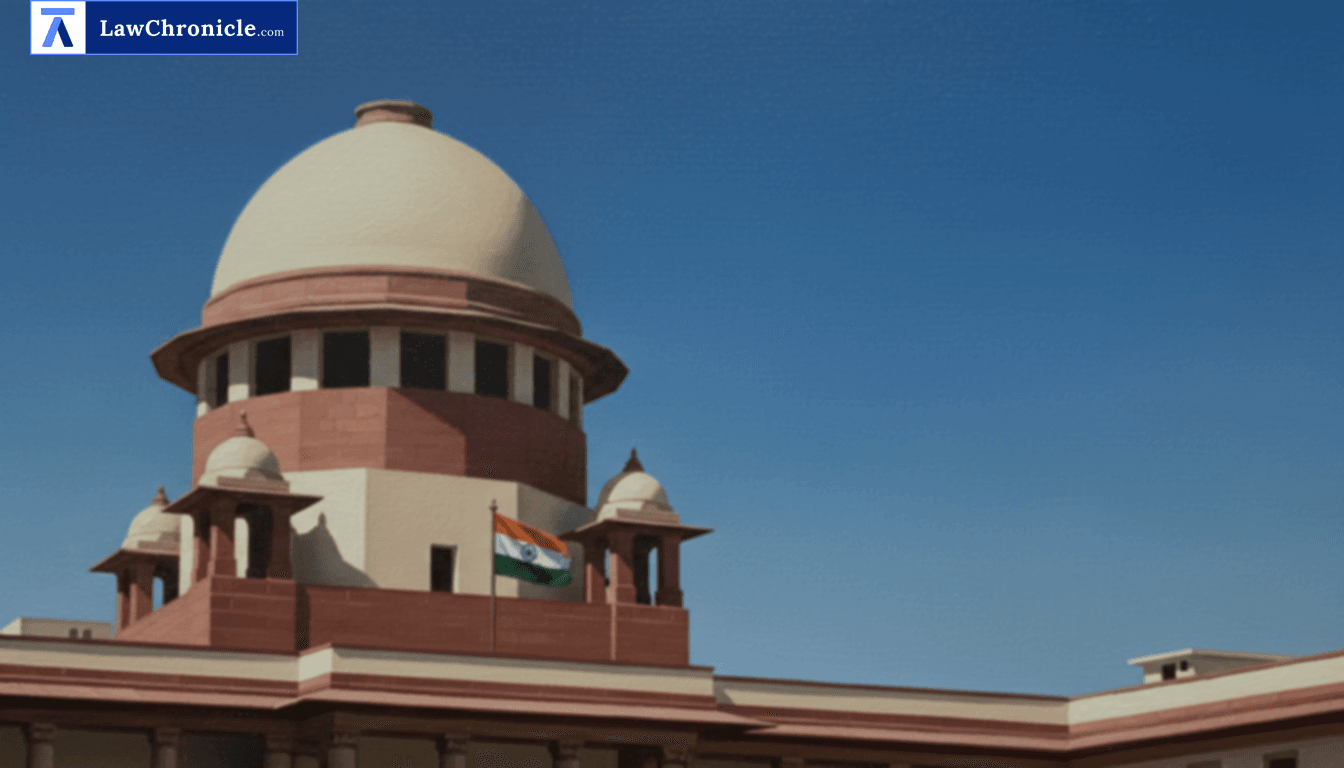
A bench of Justices K.V. Viswanathan and B.V. Nagarathna heard a criminal appeal arising from Special Leave Petition (Crl.) No.15699 of 2024 against an order of the Punjab and Haryana High Court. The appeal challenged the High Court's setting aside of a Magistrate's order that had allowed a complainant to amend a Section 138 Negotiable Instruments Act complaint after summons were issued but before the complainant was cross‑examined.
The Court allowed the appeal, set aside the High Court order and restored the Trial Court order dated 2 September 2023, holding that a court could permit amendment of a written complaint even after cognizance if the amendment corrected a curable infirmity and did not cause prejudice to the accused. The Court noted that "Procedure, it is said, is only a handmaiden and not a mistress of justice." It relied on earlier precedents including U.P. Pollution Control Board v. Modi Distillery and S.R. Sukumar v. S. Sunaad Raghuram to emphasise that where an amendment merely cures a formal or typographical error and no prejudice ensued, the trial should not be frustrated. The Court, in its reasoning, observed: "18. On the facts of the present case and considering the stage of the trial, we find that absolutely no prejudice would be caused to the accused/respondents. The actual facts will have to be thrashed out at the trial. As to what impact the amendment will have on the existence of debt or other liability is for the Trial Court to decide based on the evidence. It was a curable irregularity which the Trial Court rightly addressed by allowing the amendment. It could not be said that by allowing the amendment at a stage when the evidence of the complainant was incomplete, failure of justice would occasion."
Background The dispute arose when the appellant filed a complaint on 8 April 2022 under Section 138 of the Negotiable Instruments Act alleging that three cheques totalling Rs. 14 lakh issued by the respondents were dishonoured. The complaint and a preceding legal notice described the goods as "Desi Ghee (milk products)"; the complainant sought to amend the complaint to state that the supplies were "milk", contending the original description was a typographical error. Summons had been issued and the complainant's chief examination had concluded; cross‑examination was awaited when the amendment application was moved. The Trial Court accepted that no prejudice would be caused and allowed the amendment.
The respondents challenged the order under Section 482 Cr.P.C., and the High Court allowed the petition, finding that the amendment was not a mere typographical correction, that it changed the nature of the complaint, and pointing to the respondents' contention regarding levy of Goods and Services Tax on "Desi Ghee" versus "milk". The Supreme Court heard senior counsel for both sides and examined authorities on the power of criminal courts to permit amendments to complaints. The Court held that the High Court erred in delving into GST leviability, which was a matter for the appropriate authorities, and that the amendment did not alter the nature or character of the complaint. The Court distinguished instances where amendments affected vital matters such as the date of the cheque or the time for issuing notice (citing Munish Kumar Gupta), observing those facts were not present here.
The appeal was allowed; the High Court judgment in CRM‑M No. 53932 of 2023 (O&M) was set aside and the Trial Court's order dated 02.09.2023 was restored. The Trial Court was directed to proceed expeditiously and the parties were given liberty to apply for recall of witnesses already examined.
Case Details: Case No.: 2025 INSC 899 (Criminal Appeal @ SLP (Crl.) No.15699 of 2024) Case Title: Bansal Milk Chilling Centre v. Rana Milk Food Private Ltd. & Anr. Appearances: For the Petitioner(s): Mr. Chritarth Palli (learned Counsel) For the Respondent(s): Mr. Aabhas Kshetarpal (learned Counsel)
Similar Articles
 Breaking News


