Tribunal ‘innovating at pleasure’: Supreme Court reminds Tribunal cannot overstep in Review to defy Binding Precedent
 Copy Link
 Share
 Save
Rebuking judicial overreach and procedural impropriety by lower tribunals, the Supreme Court ruled that quasi-judicial bodies cannot rewrite binding precedents under the guise of exercise of review powers. Severely admonishing Appellate Tribunal for Electricity at New Delhi for ignoring a settled legal position on electricity tariff determination after a five-year delay, the apex court reaffirmed that finality and strict adherence to judicial discipline are fundamental to the rule of law under Constitution of India, 1950.
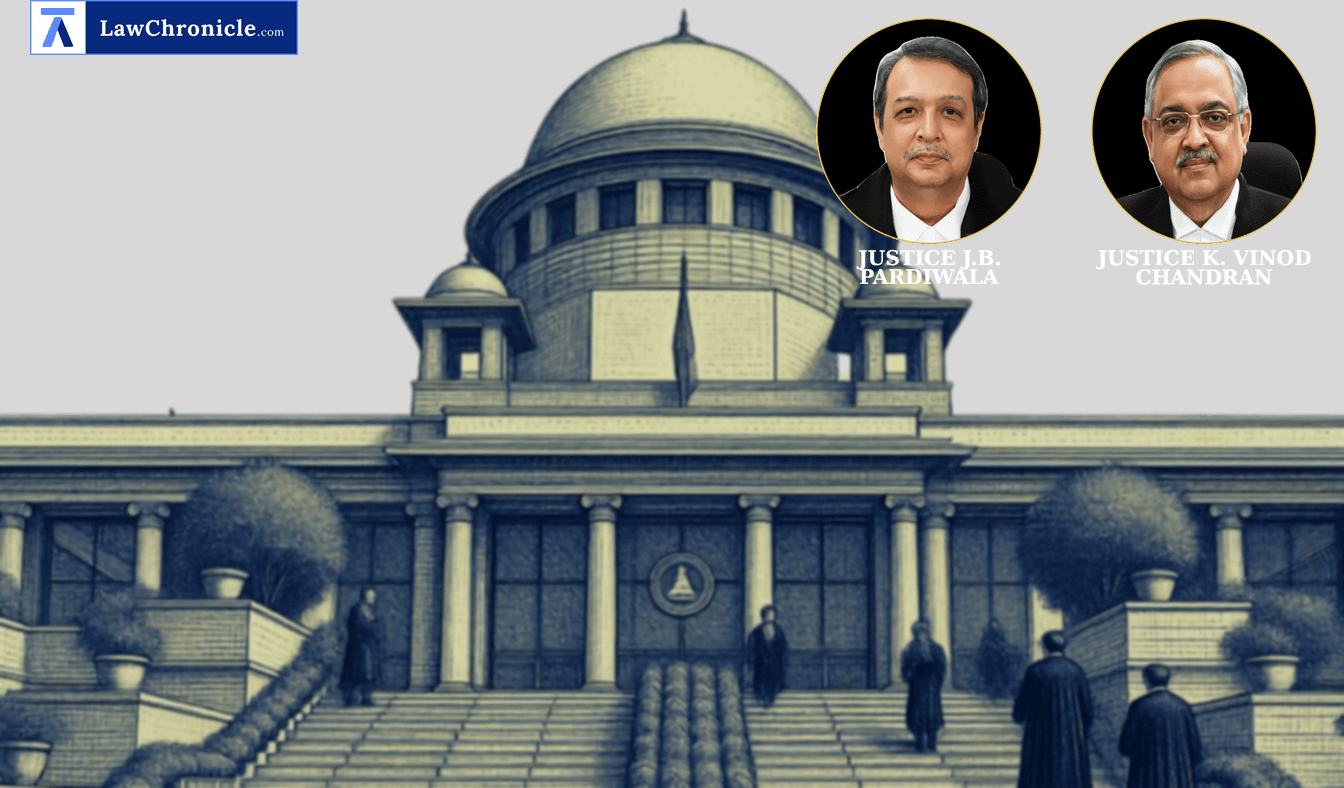
A Division Bench comprising Justice J.B. Pardiwala and Justice K. Vinod Chandran set aside a review order passed by the Appellate Tribunal for Electricity (APTEL), which had overturned a tariff determination framework established five years prior. The Bench expressed deep consternation over the Tribunal's decision to reopen settled questions regarding 'Sinking Fund' allowances and asset depreciation for Damodar Valley Corporation (DVC), reiterating that lower forums cannot sit in appeal over their own orders or circumvent binding rulings of the Supreme Court.
Key Takeaways
Strict Adherence to Judicial Discipline: Quasi-judicial tribunals are strictly bound by Article 141 of the Constitution of India, 1950 and cannot review settled decisions by re-evaluating legal arguments already concluded by higher courts.
Scope of Review Powers Limited: Review jurisdiction under statutory provisions like Section 120 of the Electricity Act, 2003 or Order 47 Rule 1 of the Code of Civil Procedure, 1908 is confined to self-evident errors on the face of the record, not long debates or re-hearings on merits.
Sinking Fund Factored in Tariff: Under Section 40 of the Damodar Valley Corporation Act, 1948, contributions to a Sinking Fund for bond redemption can be legitimately treated as allowable expenditure recovered through tariff alongside asset depreciation.
Deterrence Against Abuse of Process: The Court penalised litigants and participating public sector undertakings with heavy monetary costs for seeking to uphold review orders passed in blatant breach of judicial discipline.
APTEL and Judicial Precedents
The Supreme Court observed that the Appellate Tribunal had completely overstepped its review jurisdiction by attempting to re-examine whether factoring both depreciation and Sinking Fund contributions into power tariffs amounted to a double benefit for DVC. Clarifying that this precise issue was previously settled in Bhaskar Shrachi Alloys Limited & Ors. v. Damodar Valley Corporation & Ors., the Apex Court stressed that an erroneous view or complex re-appraisal of law does not constitute an error apparent on the face of the record.
The Bench observed that "The term 'mistake or error apparent' by its very connotation signifies an error which is evident per se from the record of the case and does not require detailed examination, scrutiny and elucidation either of the facts or the legal position. If an error is not self-evident and detection thereof requires long debate and process of reasoning, it cannot be treated as an error apparent on the face of the record... In any case, while exercising the power of review, the court/tribunal concerned cannot sit in appeal over its judgment/decision."
Addressing the breach of constitutional mandate, the Supreme Court added: "We find the review to be clearly illegal, totally misplaced and blatantly in breach of the principles of judicial discipline. We also have to emphasize the travesty insofar as violation of Article 141 of the Constitution of India. Our judicial system with the hierarchy of Courts thrives on the sanctity of the decisions of the appellate, revisional and supervisory jurisdictions to be given due weightage."
Supreme Court Directions
The Apex Court issued the following directions:
"We set aside the impugned decision and restore the order of the Appellate Tribunal at the first instance dated 17.05.2019. We also observe with some consternation that there were no appeals filed from the earlier order to this Court and one of the appellants before the Appellate Tribunal had filed for a review and waited for five years to get it heard. We find the said action to be clearly an abuse of process of law and impose a cost of Rs.2,00,000/- (Rupees Two Lakh) on the 1st respondent. We cannot also ignore that a Public Sector Undertaking, who claims to be a Maharatna Company, has willingly participated in the attempt to canvas for upholding an order passed clearly in breach of judicial discipline and violating Article 141 of the Constitution of India and sought intervention in the matter. The Public Sector Undertaking has been ill-advised, and in that circumstance, we impose a cost of Rs.1,50,000/- (Rupees One Lakh and Fifty Thousand) on the Steel Authority of India Limited. The cost shall be paid to the Damodar Valley Corporation within a period of one month from today, failing which, interest @18% per annum shall be applied."
Ratio
Power of review under statutory provisions analogous to Order 47 Rule 1 of the Code of Civil Procedure, 1908 cannot be exercised to re-examine or correct an order on merits, nor can a tribunal reconsider binding legal interpretations settled by the Supreme Court; special statutory provisions enabling special financial treatments override general accounting principles when preserved under statutory savings proviso.
Background
The dispute stemmed from the tariff determination of Damodar Valley Corporation for the period 2009 to 2014 by the Central Electricity Regulatory Commission (CERC) under the Electricity Act, 2003, the Damodar Valley Corporation Act, 1948, and the Central Electricity Regulatory Commission (Terms and Conditions of Tariff) Regulations, 2009. The consumers challenged the tariff allowance of DVC's ‘Sinking Fund’ (a fund created to redeem infrastructure bonds) arguing that allowing both Sinking Fund contributions as tariff expenses and asset depreciation conferred an impermissible 'double benefit'.
In 2019, APTEL rejected the consumers' appeal, upholding the tariff by relying on the binding precedent in Bhaskar Shrachi Alloys Limited & Ors. v. Damodar Valley Corporation & Ors.. However, one consumer filed a review petition, which remained pending before APTEL for five years. In 2024, APTEL allowed the review, holding that the 'double benefit' aspect had escaped notice earlier.
DVC approached the Supreme Court against APTEL's review order. Evaluating the principles laid down in State of West Bengal and Others v. Kamal Sengupta and Another ( "(2008) 8 SCC 612": 2008 CaseBase(SC) 741) regarding review powers under Administrative Tribunals Act, 1985 and the Code of Civil Procedure, 1908, the Supreme Court held that APTEL had overstepped its review boundaries. The Apex Court held that Section 40 of the Damodar Valley Corporation Act, 1948 read with Regulation 43 of the Central Electricity Regulatory Commission (Terms and Conditions of Tariff) Regulations, 2009 explicitly permits Sinking Fund contributions as recoverable expenditure, validly saved under the fourth proviso to Section 14 of the Electricity Act, 2003.
Case Details:
Case No.: Civil Appeal No.11106 of 2024
Neutral Citation: 2026 INSC 1178
Case Title: Damodar Valley Corporation v. Maithan Alloys Limited & Ors.
Appearances:
For the Petitioner(s): Sri Vikas Singh, Senior Advocate; Dr. Abhishek Manu Singhvi, Senior Advocate
For the Respondent(s): Sri Rajiv Shakdher, Senior Advocate; Sri Rajiv Yadav, Advocate-on-Record
Source: 2026 CaseBase(SC) 9514
 Breaking News