


Turnover Tie-Breaker In Mega Tenders Not Arbitrary: Bombay High Court
 Copy Link
 Share
 Save
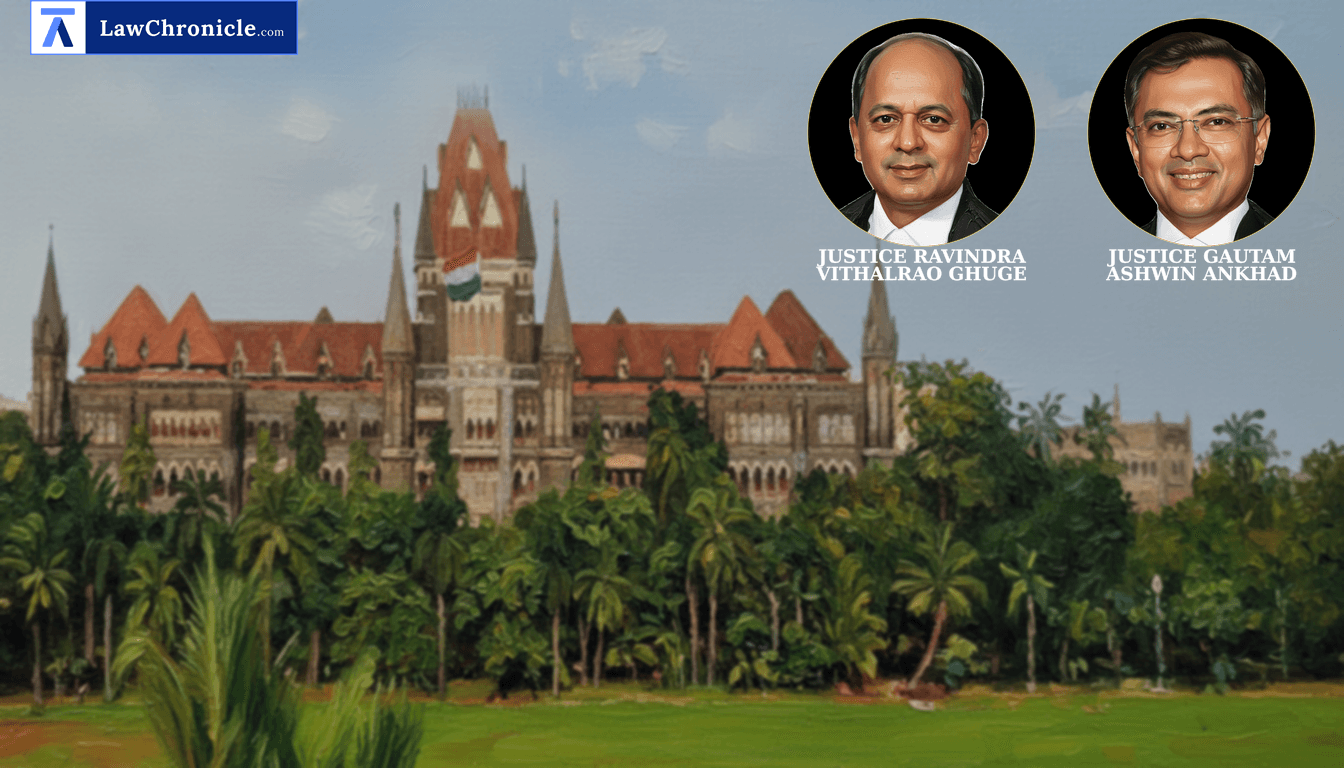
In a decisive affirmation of public procurement autonomy, the Bombay High Court has upheld the Indian Oil Corporation's mega tender framework, ruling that utilizing annual financial turnover as a tie-breaker among identical price bids is a valid, non-arbitrary exercise of commercial wisdom.
A division bench of Acting Chief Justice Ravindra V. Ghuge and Justice Gautam A. Ankhad dismissed writ petitions challenging specific tender conditions for a nation-wide Rate Contract valued at over Rs 1,198 crore. The Court clarified that constitutional courts must defer to the tendering authority's interpretation of its own requirements unless patent perversity or mala fides are established.
Key Takeaways
Turnover as a Valid Tie-Breaker: Utilizing annual turnover to break price ties at the L-1 stage is legally sound and does not inherently discriminate against smaller or MSME entities.
Limited Scope of Judicial Review: Courts will not second-guess complex commercial criteria or rewrite tender conditions in exercise of writ jurisdiction under Constitution of India, 1950.
Non-Mandatory Nature of Guidelines: Procurement guidelines like the CVC circular of 2002 serve as illustrative parameters rather than rigid, mandatory mathematical formulas.
Prevention of Monopolisation: Structuring mega-tenders with state-wise evaluations and capping allocations ensures broad vendor participation without market concentration.
Court's Rationale on Financial Capacity and Tie-Breaking
The High Court observed that the annual turnover criterion challenged by the prospective bidders was not an eligibility filter meant to exclude participants, but merely operated at the final stage of establishing merit order among qualified bidders quoting identical rates. The Court noted that a bidder's overall financial turnover serves as a reliable indicator of its operational and execution capacity when handling projects of vast magnitude.
The Court, in its reasoning, observed: "The scope of judicial review in tender matters is extremely limited. The Court cannot undertake a microscopic examination of the commercial wisdom underlying every component of the tender. In the present case, the impugned criterion has a reasonable connection with the financial capacity of bidders and is employed only as a last-resort mechanism for resolving a tie. The Writ Court cannot rewrite the terms of the tender even if some other terms may appear preferable. It is settled law that the conditions of invitation to Tender falls exclusively within the domain of the Tendering Authority."
Reiterating the principles established by the Supreme Court in Agmatel India Private Limited vs. Resoursys Telecom and Others, the bench emphasized that the author of a tender document is the best judge of its requirements. The Court also referred to settled precedents including Directorate of Education vs. Educomp Datamatis Ltd., Maa Binda Express Carrier v. North-East Frontier Railway ( "(2014) 3 SCC 760": 2013 CaseBase(SC) 44), and Balaji Ventures Pvt. Ltd. v. Maharashtra State Power Generation Company Ltd. & Anr. to reiterate that judicial intervention is warranted only to prevent arbitrariness, irrationality, bias, or mala fides.
Ratio
Prescribing financial turnover as a tie-breaking criterion to rank technically qualified bidders who have submitted identical financial quotes falls within the commercial wisdom of the tendering authority and does not violate Article 14 of the Constitution, provided it is applied uniformly and does not operate as an absolute entry barrier.
Background
Indian Oil Corporation Limited (IOCL) floated an all-India rate contract tender valued at Rs 11,98,82,61,101/- for the supply, fabrication, transportation, installation, and commissioning of Retail Visual Identity (RVI) elements across 16 State Offices, covering 4,730 retail outlets. The petitioners challenged Condition Nos. 22.3(vi), (ix), (x)(c), and (x)(e) of the tender notice.
The petitioners argued that the combination of a price band of (-) 20% to (+) 5% and the reliance on total annual turnover as the sole tie-breaking criterion discriminated against MSME bidders with lower overall turnover. It was contended that turnover from unrelated business activities would unfairly advantage non-specialized entities. Additionally, a challenge was raised against Clause 21(I) requiring a single similar work order of Rs 37.50 lakhs, contending it violated a 2002 Central Vigilance Commission (CVC) circular suggesting an 80% threshold of estimated cost.
IOCL clarified via affidavits that the tender comprised 109 individual work orders across 16 State Offices, and no single bidder could be awarded more than one contract per State Office. Consequently, high-turnover bidders could not monopolize the contract. Accepting IOCL's submission that identical methodologies had been successfully executed in past tenders, the High Court held that the CVC circular was illustrative and dismissed the petitions.
Case Details:
Case No.: WRIT PETITION (LODGING) NO. 16159 OF 2026
Case Title: Denish Jasubhai Sankhala and Anr. v. Union of India and Ors.
Appearances:
For the Petitioner(s): Mr. Ravi Kadam, Senior Advocate with Mr. Jitendra Chaudhary, i/by Shavez Mukri; Mr. Jitendra Chaudhary with Mr. Aaryan Aachra, i/by Ketan Dhavle
For the Respondent(s): Mr. D.N. Mishra, Advocate for R-1; Dr. Milind Sathe, Senior Advocate with Mr. Sunil Gangan, Mr. Swapnil Shikhare, Mr. Manav Chetwani, i/by RMG Law Associates for R-2 and R-3
Source: 2026 CaseBase(BOM) 4463
Similar Articles



 Breaking News


