


Uncommunicated, Adverse ACR Entries Can Be Used for Compulsory Retirement: SC
 Copy Link
 Share
 Save
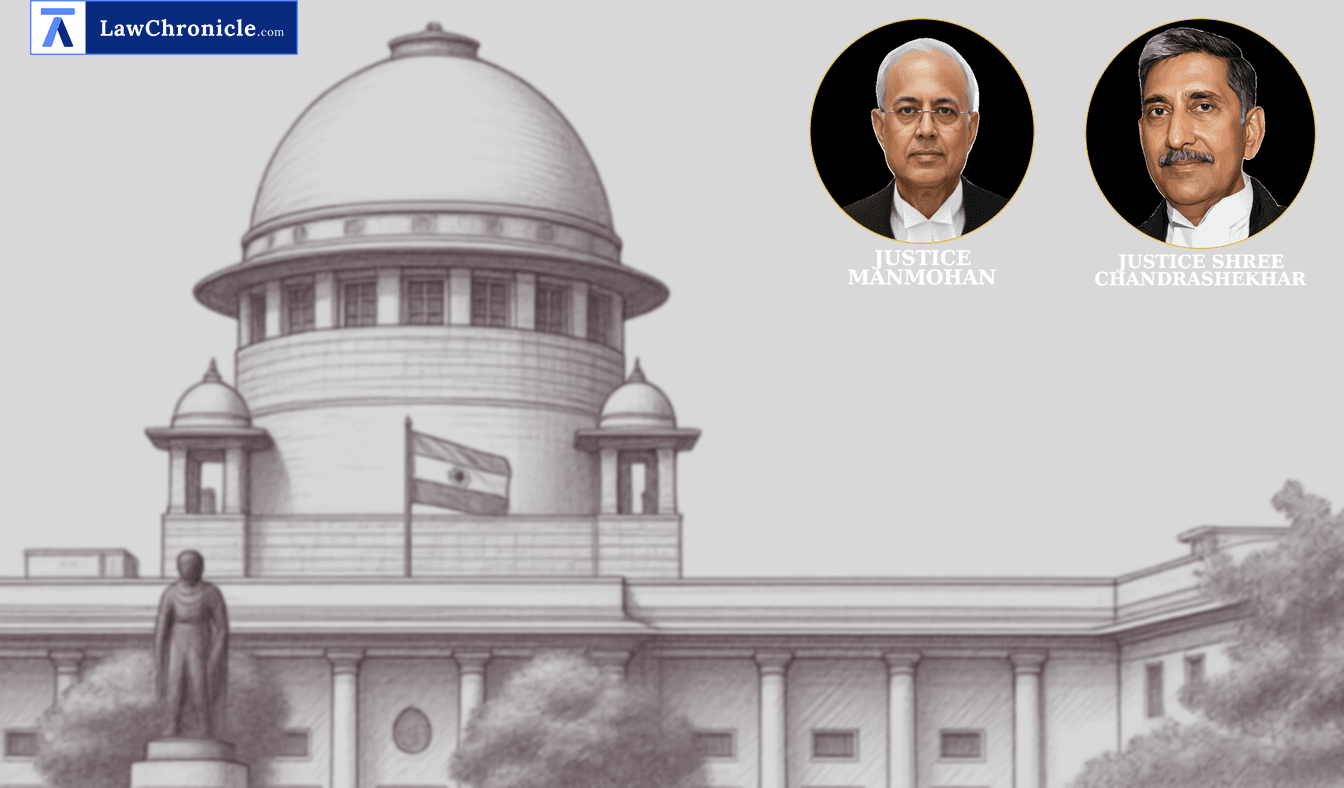
Supreme Court's recent decision affirms that the Executive authorities retain wide powers to compulsorily retire non-performing public servants based on uncommunicated adverse remarks without violating constitutional protections. Reaffirming that compulsory retirement is neither punitive nor stigmatic, the Supreme Court ruled that promotional history does not efface subsequent poor performance in promoted posts.
A Bench of Justice Manmohan and Justice Shree Chandrashekhar affirmed decisions of the Chhattisgarh High Court which upheld orders of compulsory retirement issued against state departmental employees. The Bench underscored that administrative decisions rooted in subjective satisfaction, backed by objective evaluation material, fall well within executive discretion.
Key Takeaways
Uncommunicated ACRs Valid: Non-communication of adverse entries does not bar authorities from considering them for compulsory retirement decisions.
Promotions Don't Efface Later Blemishes: Previous promotions neutralize only prior adverse remarks, not subsequent poor performance recorded in the promoted post.
Negative Equality Rejected: Non-retirement of another similarly placed employee does not grant a legal right to challenge an otherwise valid compulsory retirement order.
Non-Stigmatic Action: Compulsory retirement does not attract Article 311(2) procedures as it carries no stigma or finding of misconduct.
The Supreme Court analysed the applicable law to observe that "It is now trite law that an order of compulsory retirement is neither punitive nor stigmatic in character. Such an order does not cast any aspersion upon the conduct of the employee nor does it imply any finding of misconduct. Consequently, the rule of audi alteram partem, as well as the protection afforded under Article 311(2) of the Constitution, have no application to an order of compulsory retirement made in accordance with the relevant service rules."
Addressing the scope of judicial review, the Apex Court noted that subjective satisfaction must rest upon valid material on record. Relying on Nand Kumar Verma vs. State of Jharkhand & Ors. ( "(2012) 3 SCC 580": 2012 CaseBase(SC) 586), the Bench observed that judicial scrutiny is limited to verifying whether relevant material existed and whether a reasonable person could reach such a conclusion. The Bench further cited Amarjit Singh Ahluwalia (Dr) vs. State of Punjab & Ors. and Ramana Dayaram Shetty vs. International Airport Authority of India & Ors. ( "(1979) 3 SCC 489": 1979 CaseBase(SC) 73) to affirm that the executive is bound to follow its own prescribed standards, while citing Rajasthan State Road Transport Corporation and Posts and Telegraphs Board vs. L.S.N. Murthy ( "(1992) 2 SCC 317": 1992 CaseBase(SC) 114) to emphasize that interference is justified only in cases of manifest arbitrariness, mala fides, or perversity.
Rejecting claims of discrimination, the Supreme Court highlighted that Article 14 does not envisage negative equality, citing Union of India vs. M.K. Sarkar ( "(2010) 2 SCC 59": 2009 CaseBase(SC) 437) and Basawaraj and Anr. vs. Special Land Acquisition Officer ( "(2013) 14 SCC 81": 2013 CaseBase(SC) 411). Explaining why uncommunicated ACRs can be evaluated, the Bench relied on Baikuntha Nath Das & Anr. vs. Chief District Medical Officer, Baripada & Anr. ( "(1992) 2 SCC 299": 1992 CaseBase(SC) 296), distinguishing the principles laid down in Dev Dutt vs. Union of India & Ors. ( "(2008) 8 SCC 725": 2008 CaseBase(SC) 478) and Sukhdev Singh vs. Union of India & Ors. ( "(2013) 9 SCC 566": 2013 CaseBase(SC) 614) as applicable primarily to promotional prospects rather than compulsory retirement.
Ratio
Compulsory retirement based on subjective satisfaction derived from objective evaluation of an employee's overall service record is neither punitive nor stigmatic. Uncommunicated adverse ACR entries may be legitimately considered to weed out inefficient personnel, and a prior promotion does not obliterate adverse performance entries recorded subsequent to such promotion.
Background
The appellants were initially appointed as Class-IV Peons in the Legal Metrology Department, Chhattisgarh, and were later promoted to Assistant Grade-III in 2012 and 2013, with their services regularized in 2015. Pursuant to a State Circular dated April 25, 2017 issued under Fundamental Rule 56 and Rule 42 of the Chhattisgarh Civil Service Pension Rules, 1976, a Screening Committee evaluated clerical staff who completed 50 years of age or 20 years of service.
The Committee established a uniform numerical scoring model to evaluate service records and recent ACRs from 2013 to 2017. Following the evaluation, the appellants were recommended for compulsory retirement in October 2017 as their overall ratings fell below the benchmark 'B' grade, exhibiting declining performance.
The appellants challenged the action in writ petitions, which were dismissed by a Single Judge and subsequently affirmed by a Division Bench of the High Court. On appeal, the Supreme Court upheld the High Court's judgments and dismissed the civil appeals.
Case Details:
Case No.: Civil Appeal No. OF 2026 (Arising out of SLP(C) No. 24392 OF 2023)
Neutral Citation: 2026 INSC 1205
Case Title: Chatur Singh Dhruw v. The State of Chhattisgarh & Ors.
Appearances:
For the Petitioner(s): Mr. Kaustubh Shukla, Advocate
For the Respondent(s): Mr. Rajat Nair, Additional Advocate General
Source: 2026 CaseBase(SC) 9609
 Breaking News


