


Uncorroborated Sole Testimony Of Child Witness Insufficient For Conviction: Delhi HC
 Copy Link
 Share
 Save
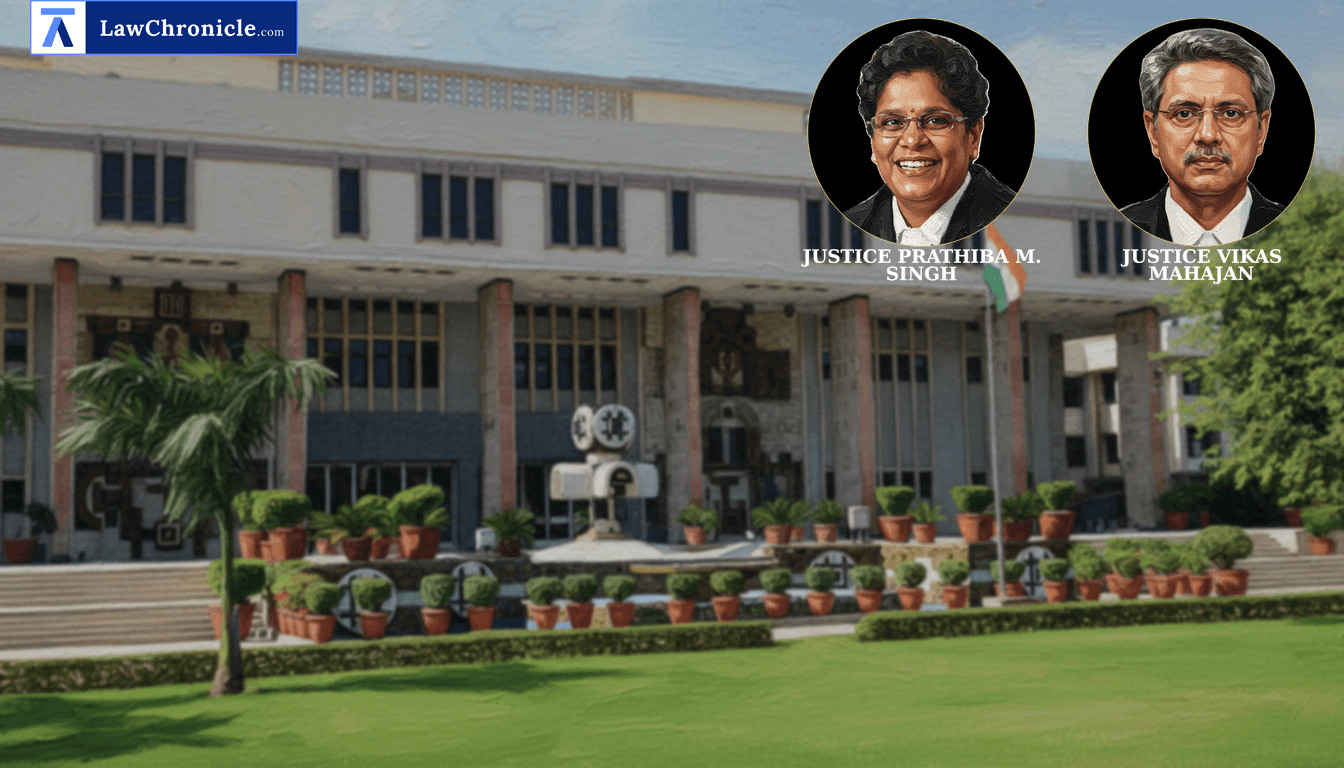
In a crucial intervention on the evidentiary standards in sexual offense trials, the High Court of Delhi has acquitted an accused sentenced to life imprisonment, ruling that the uncorroborated testimony of a child witness riddled with material discrepancies cannot form the sole basis for conviction.
A bench comprising Justice Prathiba M. Singh and Justice Vikas Mahajan set aside the trial court's order convicting the appellant under Section 376AB, Section 341, and Section 323 of the Indian Penal Code, 1860 and Section 6 of the Protection of Children from Sexual Offences Act, 2012. The High Court observed that when a child's testimony lacks consistency regarding the identification of the perpetrator, and forensic evidence contradicts the prosecution's narrative, the benefit of doubt must strictly extend to the accused.
Key Takeaways
- Prudence Over Sole Reliance: Courts must seek material corroboration when a child witness's evidence exhibits contradictions regarding the identity of the assailant.
- Forensic Evidence Overrides Suspicion: A negative FSL report showing non-matching DNA profiles severely undermines the prosecution's case, rendering uncorroborated assertions unreliable.
- Strict Scrutiny of Custodial Disclosures: Implicating an accused already in police custody in a separate FIR based solely on an uncorroborated confessional statement raises strong suspicion of false implication.
The High Court carefully evaluated the reliability of the sole testimony of the child victim in light of established legal principles governing child witnesses. The Court cited the decision in State of Madhya Pradesh v. Balveer Singh ( "(2025) 8 SCC 545": 2025 CaseBase(SC) 47) to re-emphasize that while corroboration is not a mandatory prerequisite for relying on a child witness, it becomes essential as a rule of caution when the testimony is riddled with material discrepancies.
The Court has following directions:
"It is directed that the Appellant be released forthwith if not required in any other case."
The Court, in its reasoning, observed: "Clearly, the sole testimony of the child victim, if found reliable and trustworthy requires no corroboration and may be sufficient to sustain the conviction of the accused. The Court must rule out the possibility of tutoring before it proceeds to determine the guilt or innocence of the accused on the basis of the testimony of a child witness. However, where the evidence of the child is found to be either tutored or riddled with material discrepancies or contradictions, the Court has to be circumspect and look for corroboration of material particulars as a requirement of the rule of prudence, for the child witnesses are liable to be influenced easily."
Ratio
Where the sole testimony of a child victim regarding the identification of the perpetrator lacks coherence and is fraught with material contradictions, it is unsafe to base a conviction on such uncorroborated evidence, particularly when negative forensic results and doubtful recovery procedures contradict the prosecution's case.
Background
The prosecution alleged that on August 22, 2018, the 10-year-old victim was assaulted in a pit near a public toilet in Rangpuri Pahari, New Delhi. An FIR was subsequently registered under the Indian Penal Code, 1860 and the Protection of Children from Sexual Offences Act, 2012. The appellant was arrested in connection with another case and allegedly confessed to the present crime while in police custody.
The Trial Court convicted the appellant on September 4, 2025, primarily relying on the victim's identification of the accused in court and her emotional reaction when seeing him on screen. He was sentenced to life imprisonment for the remainder of his natural life.
On appeal, the High Court noted that the victim's testimony contained manifest contradictions regarding whether it was dark or if there was sufficient light to see the perpetrator's face. The site plans showed no source of light nearby. Moreover, the FSL report explicitly concluded that the semen stains found on the victim's microslides did not match the blood sample of the appellant. Additionally, the alleged recovery of the blindfolding cloth from an open space without independent witnesses appeared planted.
Finding the prosecution's case surrounded by reasonable doubt, the High Court allowed the appeal, set aside the conviction and sentence, and acquitted the appellant.
Case Details:
Case No.: CRL.A. 1742/2025 and CRL.M.(BAIL) 2557/2025
CNR No.: DLHC011065602025
Case Title: P (IDENTITY REDACTED) v. STATE (NCT OF DELHI)
Appearances:
For the Petitioner(s): Mr. Shivek Trehan, Mr. Akash Chandna and Ms. Manika Pandey, Advocates.
For the Respondent(s): Mr. Ritesh Kumar Bahri, APP for State with Mr. Lalit Luthra and Mr. Randeep Kumar, Advocates with SI Preeti. Ms. Arushi Anthwal, Advocate for the victim.
Source: 2026 CaseBase(DEL) 3839
Similar Articles


 Breaking News


