

Unjust Enrichment | Supreme Court directs Refund Only of Funds Spent by Buyer
 Copy Link
 Share
Share Save
Save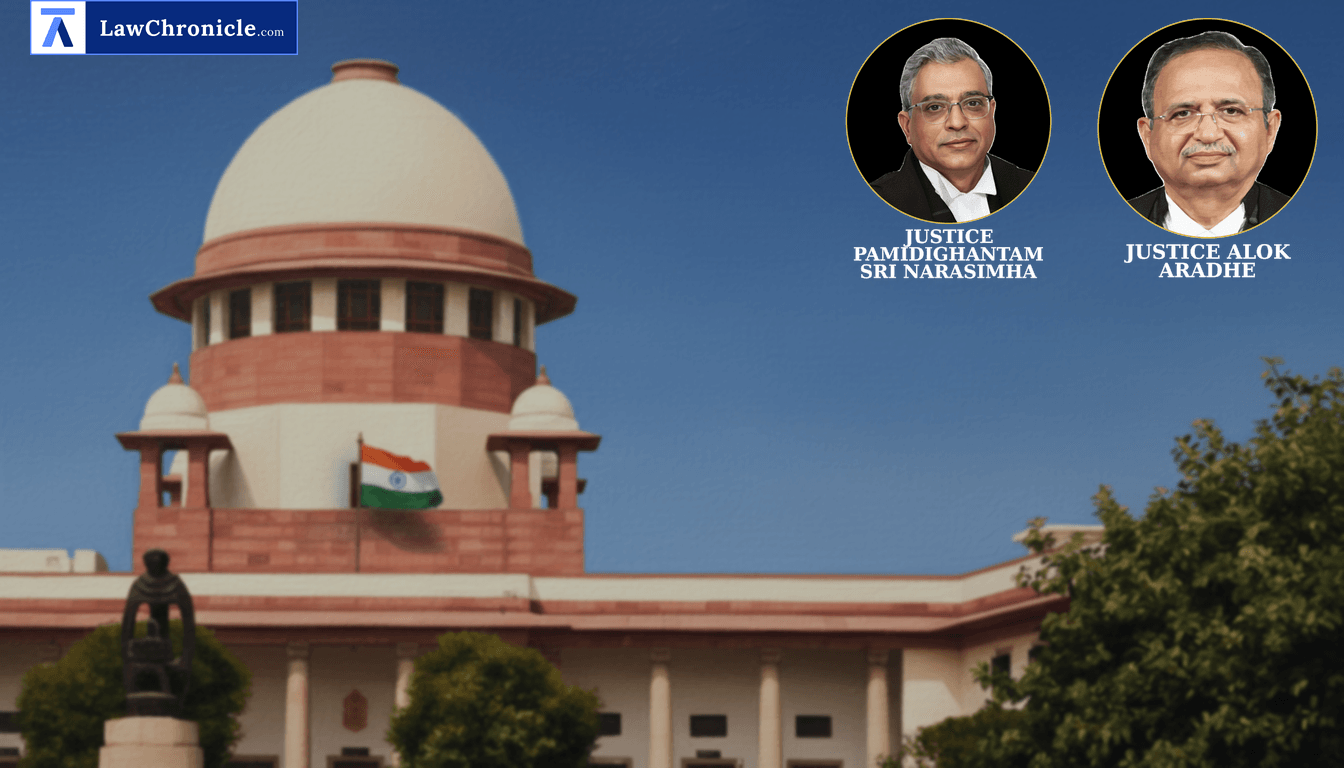
A Bench of Justice Pamidighantam Sri Narasimha and Justice Alok Aradhe modified an order of the National Consumer Disputes Redressal Commission (NCDRC), addressing the complex financial equities involved in tri-partite housing loan arrangements when a real estate developer defaults on handing over possession. The Supreme Court has ruled that a homebuyer seeking a refund due to construction delays can only recover the funds paid out of their own pocket, warning that disbursing lender-financed loan amounts to the buyer amounts to unjust enrichment. The Bench discussed the elements of a claim for unjust enrichment, and ordered compensation for delayed possession to the homebuyer.
Key Takeaways
- Protection Against Unjust Enrichment: Homebuyers cannot claim refunds for loan amounts directly disbursed by banks to developers unless the borrower has repaid that principal.
- Strict Interest Enforcement: Interest on refunds will strictly adhere to contractual default clauses rather than serving as an arbitrary financial penalty against builders.
- Prohibition of Double Compensation: Buyers choosing to rescind contracts and obtain interest-backed refunds cannot simultaneously claim rent expenses, as interest covers the loss of monetary use.
- Bank Accountability for Disbursals: Lenders are liable for deficiency of service if they disburse loan tranches without independently verifying the actual physical progress of construction.
Doctrine of Unjust Enrichment and Interest
The Supreme Court emphasized the foundational legal principle of restitution under Chapter V of the Indian Contract Act, 1872. Explaining the limits of remedies for unjust enrichment under consumer law, the Apex Court in its reasoning observed that "The law of contract compensates, it does not enrich. Even while enhancing the rate of interest payable to a buyer, this Court in Rajnesh Sharma v. Business Park Town Planners Ltd. cautioned that the objective of granting compensation cannot be altered such that it amounts to a windfall gain to the other party... Payment of the entire amount to the Borrower, while the loan remains outstanding and the claim of the Bank is in dispute, would place in his hands a sum which he has not paid. It amounts to unjust enrichment, which is impermissible in law."
The Supreme Court relied on Mahabir Kishore v. State of Madhya Pradesh ( "(1989) 4 SCC 1": 1989 CaseBase(SC) 6), Sahakari Khand Udyog Mandal Ltd. v. Commissioner of Central Excise, Indian Council for Enviro-Legal Action v. Union of India ( "(2011) 8 SCC 161": 2011 CaseBase(SC) 50), and Mafatlal Industries Ltd. v. Union of India to underscore that the doctrine of unjust enrichment is anchored in both equity and statute, aimed at restoring value rather than redistributing windfall gains.
Addressing the rate of interest, the Bench held that the agreed contractual terms must prevail over generic claims. Pointing to Ghaziabad Development Authority v. Balbir Singh ( "(2004) 5 SCC 65": 2004 CaseBase(SC) 138), DLF Homes Panchkula (P) Ltd. v. D.S. Dhanda, and Greater Mohali Area Development Authority v. Anupam Garg, the Bench restricted the simple interest rate to 12% per annum as prescribed in Clause 24 of the Agreement for Sale, rejecting the buyer's demand for 18% interest.
Regarding the rejection of separate rental reimbursements, the Court invoked Irrigation Department, Government of Orissa v. G.C. Roy to hold that awarding both rent and interest on the full refund amounts to impermissible double compensation. The Court also referred to Lucknow Development Authority v. M.K. Gupta ( "(1994) 1 SCC 243": 1993 CaseBase(SC) 331) on evaluating actual proven loss, Bangalore Development Authority v. Syndicate Bank ( "(2007) 6 SCC 711": 2007 CaseBase(SC) 1271) regarding the scope of consumer remedies, and Fortune Infrastructure v. Trevor D’lima concerning compensation for contractual breach.
Addressing the bank's failure to monitor construction progress before releasing money, the Bench cited Ravneet Singh Bagga v. KLM Royal Dutch Airlines ( "(2000) 1 SCC 66": 1999 CaseBase(SC) 1234) and SGS (India) Ltd. v. Dolphin International Ltd. on the burden of proof in deficiency of service, upholding the finding of deficiency against the bank for failing to produce inspection reports.
The Supreme Court issued the following directions:
"(i) The Commission shall release to the Borrower, a sum of Rs.1,27,34,726/- (Rupees One Crore Twenty Seven Lakh Thirty Four Thousand Seven Hundred Twenty Six only) along with interest at the rate of 12% per annum from the date of respective deposits made by the Borrower to the Builder and the Bank till the date of payment.
(ii) The Commission shall release a further sum of Rs.15,00,000/- (Rupees Fifteen Lakh only) to the Borrower as compensation out of the said deposit, within a period of one month from today.
(iii) The remaining amount shall be kept by the Commission in an interest bearing account which shall abide by the decision of the appeal filed by the Bank.
(iv) The High Court shall decide the appeal pending before it without being influenced by any of the observations made herein, on its own merits."
Ratio
Under a tripartite housing finance arrangement, upon rescission of an agreement due to builder default, a homebuyer is entitled to a direct refund only of the sums paid out of their own personal funds. Refunding loan amounts disbursed directly by a financial institution to the builder, which remain unpaid by the borrower, to the homebuyer constitutes unjust enrichment under Section 70 and Section 72 of the Indian Contract Act, 1872. Furthermore, where contractual terms stipulate a specific interest rate for delay and refund, consumer forums cannot depart from agreed terms to award windfall gains or double compensation under the head of rent.
Background
In 2009, an NRI buyer booked an apartment in the "Lodha Bellezza" project at Kukatpally, Hyderabad, launched by M/s Lodha Healthy Constructions and Developers Private Limited, for Rs 2,30,73,876. The buyer paid Rs 51,11,576 (22% of consideration) from personal funds and secured a Rs 2 Crore housing loan from HDFC Limited under a tripartite arrangement. Between 2010 and 2011, HDFC disbursed Rs 1,68,80,531 directly to the builder across thirteen tranches. The buyer additionally paid Rs 76,23,150 to the bank towards interest and loan accounts, taking his total out-of-pocket payment to Rs 1,27,34,726.
Despite receiving 95% of the total consideration, the builder failed to deliver possession by the agreed June 2011 date or the extended April 2012 deadline. The buyer filed a complaint under Section 23 of the Consumer Protection Act, 1986 before the NCDRC in May 2013, seeking a full refund with compound interest, rent reimbursement, and compensation.
On July 1, 2022, the NCDRC found the builder deficient and directed a full refund of Rs 2,19,92,107 with interest to the buyer. It also held HDFC deficient for disbursing tranches without verifying actual construction progress, fining the bank Rs 2,00,000. Aggrieved by the full refund to the buyer while loan recovery proceedings were pending, HDFC appealed to the Supreme Court. The buyer also appealed seeking higher interest, rent, and enhanced compensation.
Disposing of the appeals, the Supreme Court modified the NCDRC order, restricting the buyer's refund to Rs 1,27,34,726 with 12% interest, awarding Rs 15,00,000 as composite compensation, and directing that the remaining deposited funds be held in an interest-bearing account pending the resolution of the bank's recovery appeal before the High Court.
Case Details:
Case No.: Civil Appeal No. 8994 of 2022 with Civil Appeal Nos. 4622-4623 of 2023
Neutral Citation: 2026 INSC 1131
Case Title: Madhu Kudapa (Formerly known as K. Madhusudhan Rao) v. M/s Lodha Healthy Constructions and Developer Private Limited (LHCPL) & Anr.
Appearances:
For the Petitioner(s): Mr. Amit Anand Tiwari, Senior Advocate
For the Respondent(s): Mr. Gaurav Agarwal, Senior Advocate; Mr. Rahul Kripalani, Advocate; Ms. Suhasini Sen, Counsel
Source: 2026 CaseBase(SC) 8271
 Breaking News