Unutilized FSI Premium Must Be Refunded Despite Statutory Silence: SC
 Copy Link
 Share
Share Save
Save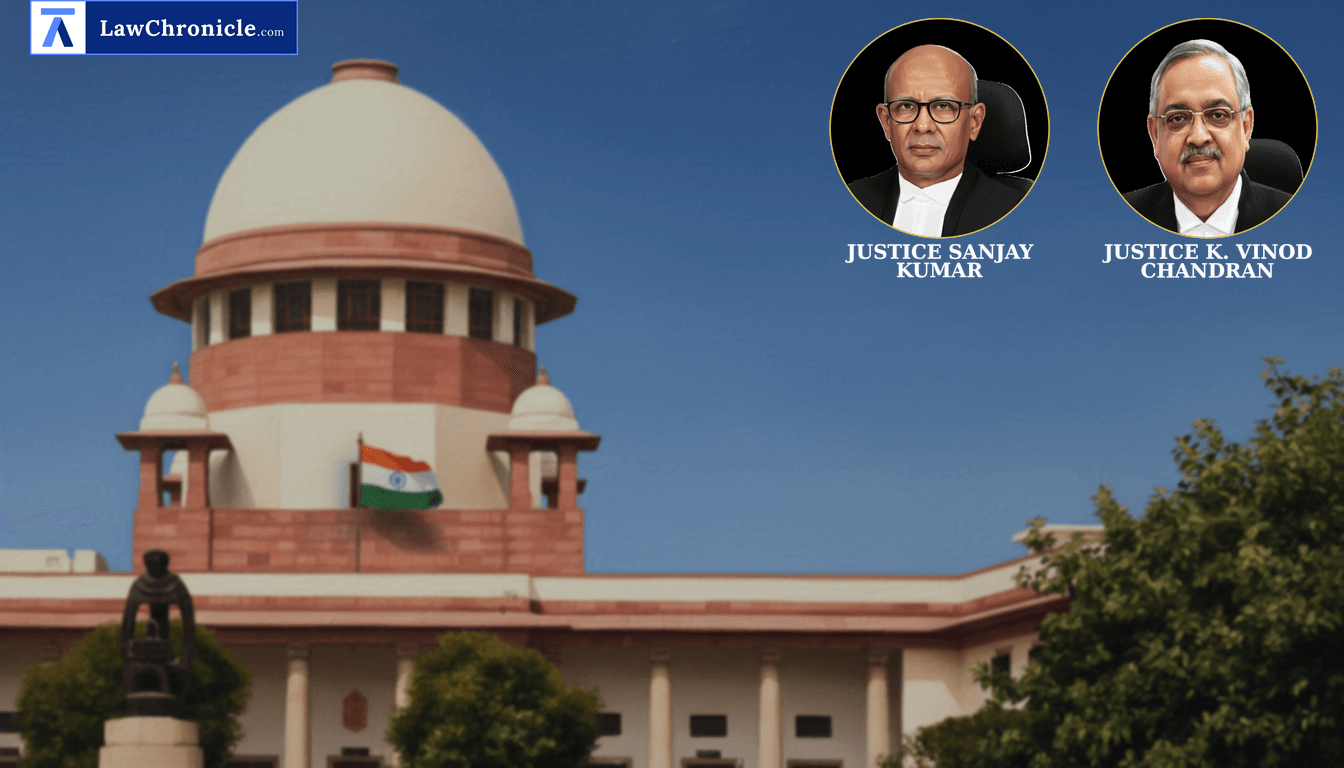
The Supreme Court has slammed the door on state arbitrariness, ruling that the Government cannot pocket premium payments for additional Floor Space Index (FSI) that remains unutilized, regardless of whether a specific refund provision exists in the statutory scheme. In a significant win for urban developers and homebuyers, the Court held that denying refunds for residential projects while allowing them for commercial institutions is a 'patently arbitrary' violation of the right to equality.
Driving home the principles of fairness in administrative action, a Bench comprising Justice Sanjay Kumar and Justice K. Vinod Chandran set aside a Bombay High Court judgment that had previously blocked the refund. The Court emphasized that when the State permits a change in land use that renders previously purchased extra FSI useless, retaining the premium amounts to an unjust enrichment at the cost of the citizen.
The Doctrine of Non-Arbitrariness and Article 14
The Court observed that the distinction drawn by the State between residential projects and other institutions (like star hotels or hospitals) regarding refund eligibility defied logic. It relied on E.P. Royappa vs. State of Tamil Nadu and another ( "(1974) 4 SCC 3": 1973 CaseBase(SC) 114) to reiterate that equality is antithetical to arbitrariness. The Bench noted that the requirement to act fairly and reasonably, as per Constitution of India, 1950, extends even to the State's administrative and contractual spheres, as highlighted in Kumari Shrilekha Vidyarthi and others vs. State of U.P. and others ( "(1991) 1 SCC 212": 1990 CaseBase(SC) 412).
Referencing Ajay Hasia and others vs. Khalid Mujib Sehravardi and others ( "(1981) 1 SCC 722": 1980 CaseBase(SC) 356) and Dwarkadas Marfatia and Sons vs. Board of Trustees of the Port of Bombay, the Court reminded the authorities that every executive action must be informed by reason. It further noted, per Securities and Exchange Board of India vs. Sunil Krishna Khaitan and others ( "(2023) 2 SCC 643": 2022 CaseBase(SC) 598), that the mandate of Constitution of India, 1950 requires fairness in essence and substance.
Court's Rationale on Unutilized Privilege
The Court, in its reasoning, observed: "The distinction sought to be drawn by the authorities between a case of unutilized additional FSI for educational institutions, medical institutions, institutional buildings and star category hotels as opposed to unutilized additional FSI for residential/group housing projects is bereft of rationale. There is no reason as to why unutilized additional FSI in the former case should be placed on a higher pedestal when compared to unutilized additional FSI in the latter one, in the context of refund of the premium paid for such unutilized additional FSI."
Directions Issued to Authorities
The Court has the following directions:
"The appeal is allowed and the impugned judgment dated 17.11.2022 passed by the Bombay High Court as well as the rejection order dated 15.02.2020 passed by the Assistant Director, Town Planning, Pune Branch, Pune, are set aside. The appellants are held entitled to refund of the premium paid by them towards additional FSI, which was never utilized by them. However, in terms of the norms applicable to other similar refunds, 10% out of the sum of ₹30,46,290/-, i.e., ₹3,04,629/-, shall be deductible towards administration charges. Interest shall also be payable to the appellants upon the amount that is refundable to them, which was retained by the authorities for more than a decade and a half. The sum of ₹27,41,661/- shall, accordingly, be refunded to the appellants with simple interest thereon @ 7% per annum, from the date of deposit till the date of actual payment, within two months from today."
Key Takeaways:
End of Discriminatory Refund Policies
State authorities cannot distinguish between types of construction (residential vs. commercial) when refunding unutilized FSI premium if the underlying legal effect is identical.
Statutory Silence is No Shield for Injustice
Even if the Maharashtra Regional and Town Planning Act, 1966 or specific Development Control Regulations lack an explicit refund clause, the constitutional mandate of fairness under Article 14 overrides such omissions.
Protection for Homebuyers
The Court recognized that FSI costs are eventually passed on to homebuyers, making the refund of unutilized premiums a matter of significant public interest.
Rejection of 'Verbal Jugglery'
The Court dismissed technical distinctions between 'charge for exemption' and 'premium for purchase' as mere wordplay when the tangible benefit (extra FSI) remains unobtained.
Ratio Decidendi:
Where the State collects a premium for a privilege (like additional FSI) which is subsequently relinquished or unutilized due to a change in project plans permitted by the State, the refusal to refund such premium in the absence of any accrued tangible benefit to the applicant is a violation of the principle of non-arbitrariness and fairness enshrined in Article 14 of the Constitution of India, notwithstanding the lack of a specific provision for refund in the governing regional planning statutes.
Background:
The appellants sought to develop agricultural land in Pune for group housing and paid ₹30,46,290/- for extra FSI in 2012. Later, they abandoned the housing plan in favor of plotting the land. Although the authorities permitted the change, they refused to refund the FSI premium on the grounds that the Maharashtra Regional and Town Planning Act, 1966 and applicable regulations contained no refund provision for residential projects. The Bombay High Court dismissed the challenge, citing delay and the lack of statutory backing. However, the Supreme Court found the state's stance discriminatory, noting that similar refunds were being granted for educational and medical institutions in Mumbai under Section 37 and Section 154 of the Maharashtra Regional and Town Planning Act, 1966. The Court concluded that such a distinction was whimsical and directed the refund with 7% interest.
Case Details:
Case No.: Civil Appeal No. ……….. of 2026 (@ Special Leave Petition (Civil) No.9666 of 2023)
Case Title: Prasad Pandurang Tapkir and another versus The Assistant Director of Town Planning, Pune District, Pune and others
Source: 2026 CaseBase(SC) 638
 Breaking News