Vague Harassment Claims Insufficient for Abetment of Suicide Charge: Madras HC
 Copy Link
 Share
Share Save
Save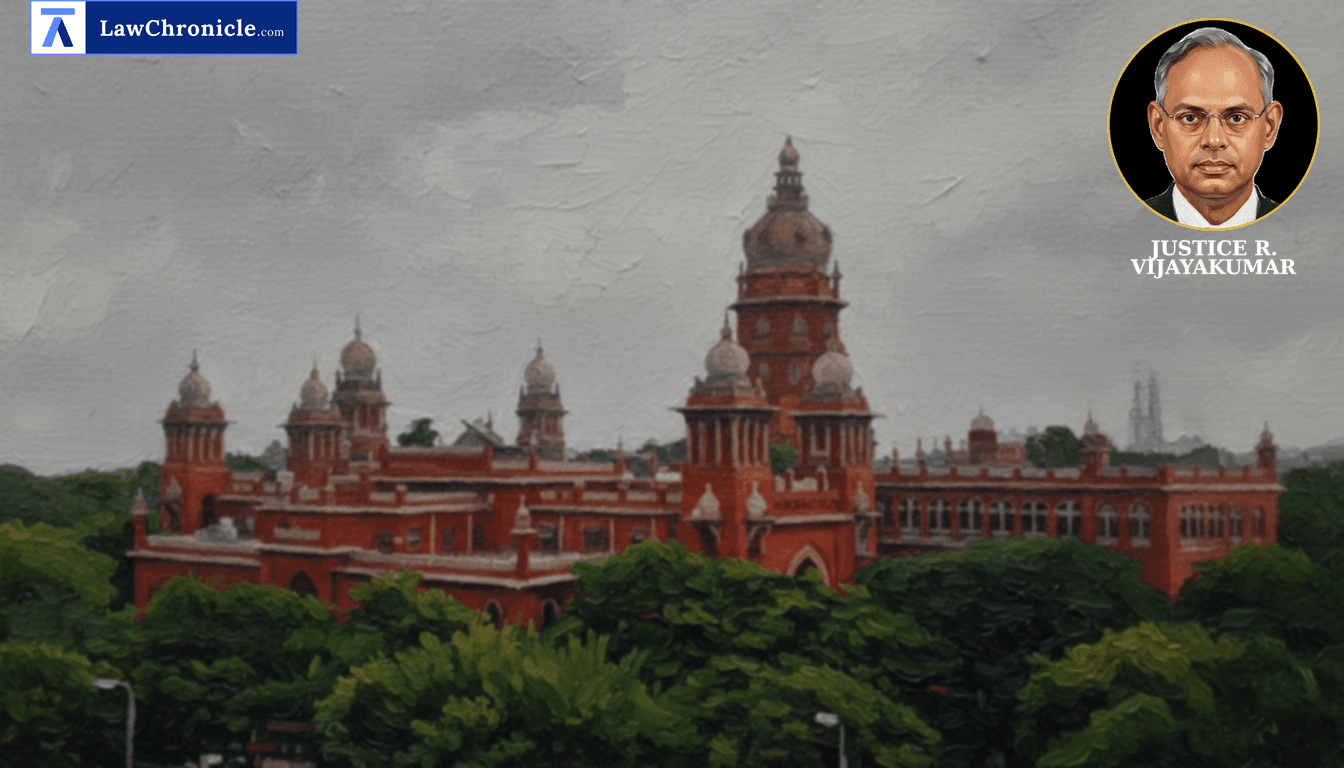
The Madras High Court has quashed criminal proceedings against the in-laws of a deceased woman, ruling that vague, undated allegations of harassment without a proximate link to the act of suicide cannot sustain a prosecution under the penal code.
In a significant clarification of the boundaries of matrimonial criminal liability, Justice R. Vijayakumar, sitting at the Madurai Bench, held that for a charge of abetment to survive, there must be a demonstrative act of instigation coupled with a specific intent to drive the victim to the extreme step.
Court Scrutinizes Allegations Against In-Laws
The petitioners, arrayed as accused Nos. 2 to 5, sought the quashing of a charge sheet filed under Section 306 of the Indian Penal Code. The prosecution alleged that the deceased, who married the first accused in 2018, committed suicide due to harassment regarding customary gifts and financial demands from her in-laws. However, the court observed that the couple had been residing in a separate matrimonial home since 2020, and the primary dispute on the day of the incident was between the husband and wife alone.
Key Takeaways
Requirement of Proximate Nexus
Continuous harassment alone is insufficient for a conviction; there must be a specific, proximate act that directly triggers the suicide.
Intent as a Pre-requisite
Charges under Section 306 require evidence of mens rea, showing the accused intended for the victim to take their own life.
Vague Allegations Invalidated
General assertions regarding matrimonial gifts or financial disputes, lacking specific dates or times, cannot form the basis of a criminal trial.
Medical Evidence Paramount
In cases of alleged abetment, the cause of death must be clearly established as suicide through post-mortem and viscera reports.
The Absence of Instigation and Intent
The Madras High Court noted that the only recorded conflict occurred on 21.01.2022, involving the husband (A1) who allegedly told the deceased to "go and die." The petitioners were not present during this encounter. The bench emphasized that the allegations against the in-laws were "vague, undated and unlocalised," involving the refusal of festival gifts and remarks about the family's status. The Madras High Court explained the law pertaining to abetment of suicide that "Merely because the victim was continuously harassed and at one point, he or she succumbed to the extreme act of taking his life cannot by itself result in finding a positive instigation constituting abetment. Mens rea cannot be gleaned merely by what goes on in the mind of the victim."
Furthermore, the Court pointed out that the medical evidence was inconclusive. The post-mortem and viscera reports did not confirm suicide, suggesting instead that the deceased passed away due to complications from a throat infection and cardiac arrest six months after the initial attempt.
Ratio
To attract the ingredients of abetment of suicide under Section 306 of the Indian Penal Code, there must be a proximate prior act that clearly establishes the suicide was a direct consequence of the accused's actions. Vague and general allegations of harassment, in the absence of evidence showing a positive instigation or the intention that the victim should commit suicide, are insufficient to sustain a criminal charge.
Background
The dispute began following the death of the second respondent's daughter on 12.07.2022. The prosecution claimed that the deceased attempted suicide on 21.01.2022 following a quarrel with her husband (A1) and subsequent harassment by his family. She survived the attempt but suffered from recurring throat infections, ultimately dying in a hospital. The petitioners (the father-in-law, uncle, and siblings-in-law) argued that they lived separately and had no nexus to the marital discord. They relied on the precedent set in Abhinav Mohan Delkar Vs. The State of Maharashtra & others ( "(2026) 6 SCC 233": 2025 CaseBase(SC) 684) to argue that harassment without proximity does not constitute abetment. The Madras High Court agreed, finding that the continuation of proceedings would be an abuse of the process of law, especially since the cause of death was not medically confirmed as suicide.
Case Details:
Case No.: Crl.OP(MD).No.8025 of 2025
Case Title: Boopalan and others Vs. State of Tamil Nadu and another
Appearances:
For the Petitioner(s): Mr.M.Suresh for M/s.P.Edin Brough
For the Respondent(s): Mr.P.Samuel Gunasingh, Additional Public Prosecutor for R1; Mr.A.Saravanan for R2
Source: 2026 CaseBase(MAD) 21492
 Breaking News