


Victim's Sole Testimony Sufficient For Rape Conviction: Allahabad HC
 Copy Link
 Share
 Save
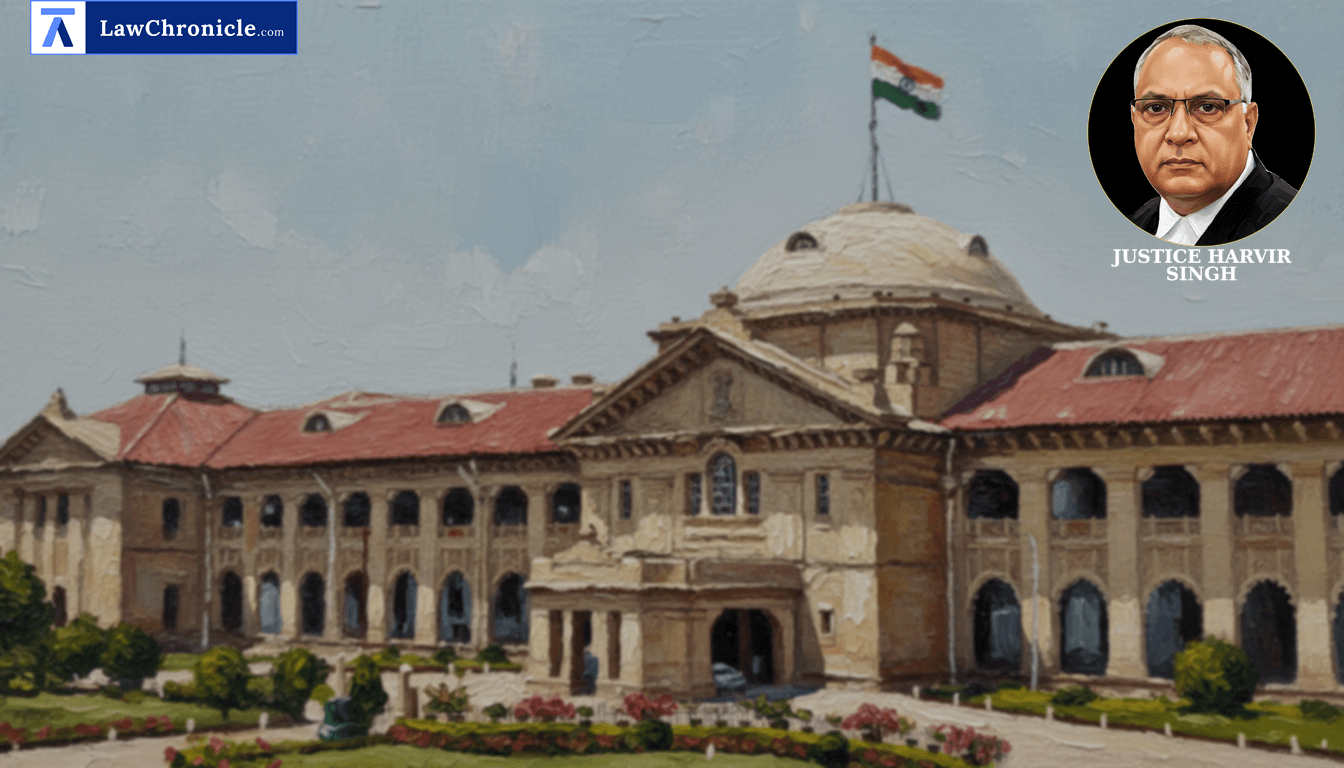
The Allahabad High Court has reinforced the legal bedrock that a victim of sexual assault stands on par with an injured witness, ruling that her sole, uncorroborated testimony can sustain a conviction if it inspires judicial confidence. Affirming the five-year sentence of a man who raped a minor four decades ago, the Bench observed that “No minor child of 14 or 15 years would invent a story of ravishment and genital bleeding, simply to settle a purported dispute between her father and the accused or anybody else.”
Justice Harvir Singh upheld the conviction of Ram Charan emphasized that minor discrepancies in witness memory regarding clothing or peripheral details cannot dismantle the core substratum of a heinous charge. The bench was hearing a 1983 criminal appeal filed under Section 374(2) of the Code of Criminal Procedure, 1973 against a judgment passed by the Additional Sessions Judge, Mainpuri.
Key Takeaways
Primacy of Ocular Evidence
Ocular testimony is considered the best evidence unless gross contradictions with medical reports make the oral version improbable.
Victim as Injured Witness
A prosecutrix of a sex offence is not an accomplice but a victim; her evidence does not require the same suspicion as a co-accused.
Social Context in Credibility
Indian courts must recognize that girls are unlikely to invent stories of ravishment due to the risk of being ostracized by a conservative society.
Memory Lapse Neutralized
Minor discrepancies in descriptions of clothes or fleeing behavior after trauma do not invalidate consistent testimonies of sexual assault.
Judicial Scrutiny of Witness Consistency and Medical Corroboration
The Allahabad High Court observed that the testimony of the minor victim (PW-2) was consistent, coherent, and unshaken despite cross-examination. It noted that the victim vividly recounted being dragged into a ditch and subjected to assault, a narrative fortified by the medical evidence of Vijay vs. State of M.P. ( "(2010) 8 SCC 191": 2010 CaseBase(SC) 867) and the testimony of an independent rescuer (PW-3).
The Bench particularly explained that "A prosecutrix of a sex offence cannot be put on a par with an accomplice. She is in fact a victim of the crime. The Evidence Act nowhere says that her evidence cannot be accepted unless it is corroborated in material particulars. She is undoubtedly a competent witness under Section 118 and her evidence must receive the same weight as is attached to an injured in cases of physical violence."
Addressing the defense's argument regarding the lack of physical injuries, the Allahhabad High Court highlighted that the victim was lifted and placed in a ditch rather than dragged, and internal injuries confirmed by medical experts ruled out the possibility of consent or accidental injury.
Ratio
In cases involving sexual violence, the testimony of the prosecutrix is equivalent to that of an injured witness and can form the sole basis of conviction under Indian Penal Code if it appears credible. Corroboration is a rule of prudence, not an absolute rule of law under Section 134 of the Indian Evidence Act, 1872. Ocular evidence prevails over medical evidence unless the latter completely rules out the possibility of the prosecution's version.
Background
The incident dates back to June 30, 1982, when the victim, then a minor, was going to her father's field to deliver water. The appellant, Ram Charan, intercepted her, dragged her into a ditch, and committed rape. The screams of the victim attracted her father and neighbors, causing the accused to flee. The defense argued that the case was a result of land rivalry and suggested a 'homosexual version' involving a third party, which the Court dismissed as "hollow and unsubstantiated." Citing precedents like Pruthiviraj Jayantibhai Vanol vs. Dinesh Dayabhai Vala and Ors. ( "MANU/SC/0475/2021": 2021 CaseBase(SC) 1322), Wahid Khan vs. State of Madhya Pradesh, and Phool Singh vs The State Of Madhya Pradesh ( "1 December, 2021": 2021 CaseBase(SC) 405), the Allahabad High Court concluded that the prompt FIR and medical findings of a fresh hymenal tear left no room for doubt regarding the appellant's guilt.
Case Details:
Case No.: CRIMINAL APPEAL No. - 121 of 1983
Case Title: Ram Charan Versus State
Appearances:
For the Petitioner(s): Akhilesh Singh, Deeksha Singh, Janardan Yadav, Ramji Saxena, Shivam Yadav
For the Respondent(s): A.G.A.
Source: 2026 CaseBase(ALL) 1204
Similar Articles

 Breaking News


