


Violation of Natural Justice: Allahabad High Court decides in favour of Dismissed Bank Employee
 Copy Link
 Share
 Save
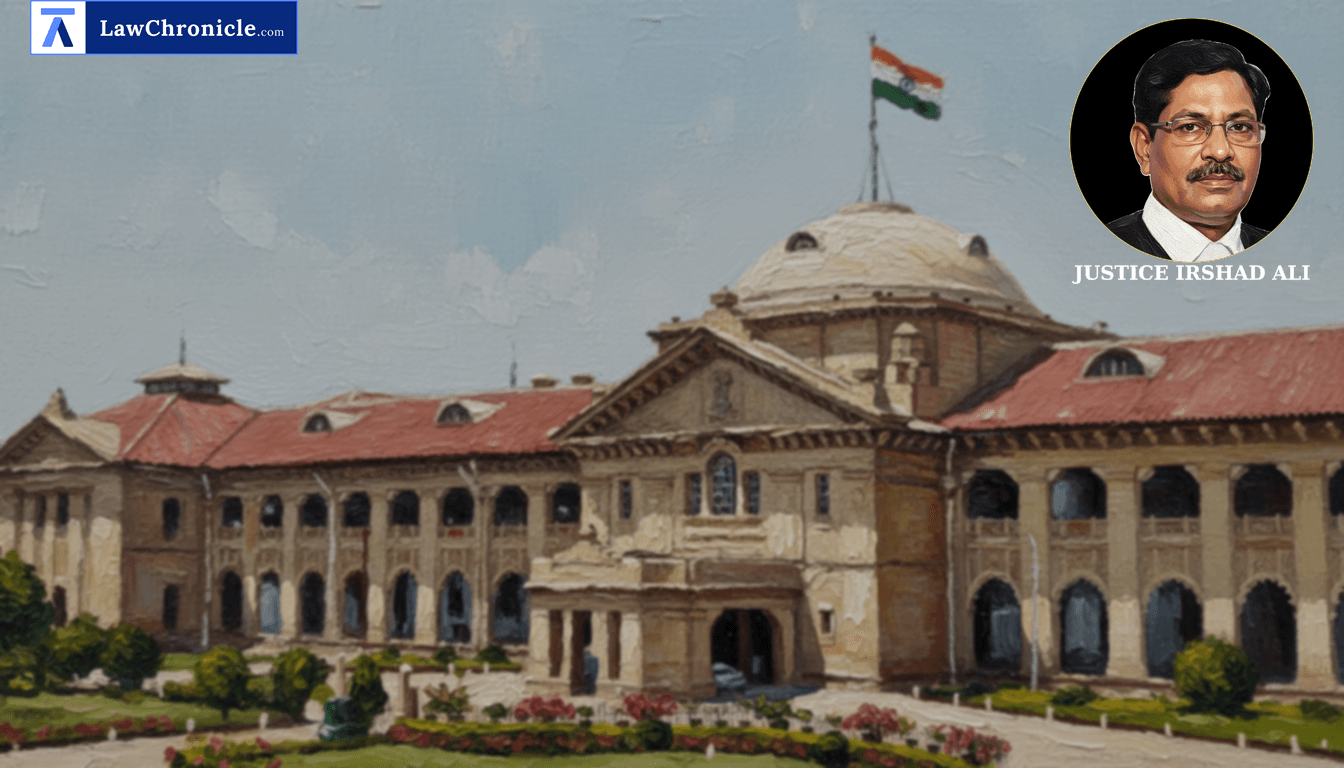
In a very latest decision by high court in favour of dismissed bank employee, the Allahabad High Court has annulled the dismissal of a bank officer, ruling that disciplinary actions founded on unproven 'foundational facts' and the denial of primary documents constitute a fatal violation of natural justice.
Justice Irshad Ali, presiding over the Lucknow Bench, delivered a meticulous judgment setting aside the termination of a Punjab National Bank employee that had spanned over two decades of litigation. The Allahabad High Court found that the bank had failed to establish the officer's designation as a 'System Administrator', a status that served as the very basis for the charges of financial irregularity.
Flawed Disciplinary Proceedings
The Allahabad High Court observed that the disciplinary proceedings were conducted with a pre-determined approach, effectively reversing the burden of proof onto the employee. It was noted that despite specific judicial directions in earlier rounds of litigation, the bank failed to provide original documents for inspection, relying instead on disputed photocopies.
Key Takeaways
- Foundational Facts Must Be Proved: Charges based on a specific official status (e.g., System Administrator) cannot survive if the employer fails to produce the formal appointment order for that post.
- Prejudice from Non-Supply of Documents: Withholding primary records when their authenticity is disputed is not a mere technicality but a substantial denial of the right to defense.
- Limits of Quasi-Judicial Power: An Enquiry Officer cannot fill evidentiary gaps in the management's case by drawing presumptions or shifting the burden to the delinquent employee to prove their innocence.
- Binding Nature of Civil Court Findings: Factual issues already adjudicated by a competent Civil Court between the same parties cannot be ignored in subsequent departmental proceedings.
Judicial Rationale on Burden of Proof
In this decision by Allahabad High Court in favour of dismissed bank employee, it was observed that "Suspicion, assumption or conjecture cannot be substituted for evidence. The Enquiry Officer cannot fill the gaps in the management's case by shifting the burden upon the delinquent employee... the findings are such as could not reasonably have been arrived at by a duly constituted disciplinary authority."
The Bench emphasized that while strict rules of the Indian Evidence Act, 1872 do not apply to departmental inquiries, the findings must be based on material having probative value. In this case, the bank's reliance on witnesses with no direct knowledge of the incidents and its failure to examine the material complainant rendered the findings perverse.
Ratio
A disciplinary proceeding is a quasi-judicial process where the management bears the initial burden of establishing misconduct through legally relevant evidence. Findings based on unproved foundational assumptions, the denial of original records for verification, and the exclusion of material defense witnesses vitiate the entire inquiry as being in violation of Constitution of India, 1950 and the principles of natural justice.
Background
The petitioner, who joined Punjab National Bank in 1978, was accused of serious financial irregularities and unauthorized transactions while allegedly serving as a 'System Administrator' between 1994 and 1998. The bank initiated disciplinary action in 2002, leading to his dismissal in 2012 under the Punjab National Bank Officer Employees' (Discipline & Appeal) Regulations, 1977.
The petitioner challenged the proceedings, arguing he was never appointed as a System Administrator: a fact supported by a Civil Court judgment in Regular Suit No. 117/1999 and the bank’s own internal handbooks. Relying on precedents like Kashinath Dikshita Versus Union of India, Government of A.P. and others Versus A. Venkata Naidu, and Roop Singh Negi Versus Punjab National Bank and others ( "2009 (2) SCC 570": 2008 CaseBase(SC) 713), the petitioner argued that the non-supply of 48 critical documents and the rejection of defense witnesses like the balancing team members caused actual prejudice. The Allahabad High Court agreed, noting that the bank’s witnesses admitted they did not know the signatures on the disputed vouchers. Consequently, the Allahabad High Court quashed the dismissal and ordered full reinstatement with all service benefits.
Case Details:
Case No.: WRIT - A No. - 2001422 of 2014
Neutral Citation: 2026:AHC-LKO:66340
Case Title: Mangnoo Jha Versus Punjab National Bank Through Chairman Cum Managing Director
Appearances:
For the Petitioner(s): Virendra Kumar Dubey, Shobhit Mohan Shukla
For the Respondent(s): D.K. Pathak, Gopal Kumar Srivastava
Source: 2026 CaseBase(ALL) 1005
Similar Articles




 Breaking News


