Voluntary Investments Like ESPP & PF Cannot Reduce Income For Maintenance: SC
 Copy Link
 Share
Share Save
Save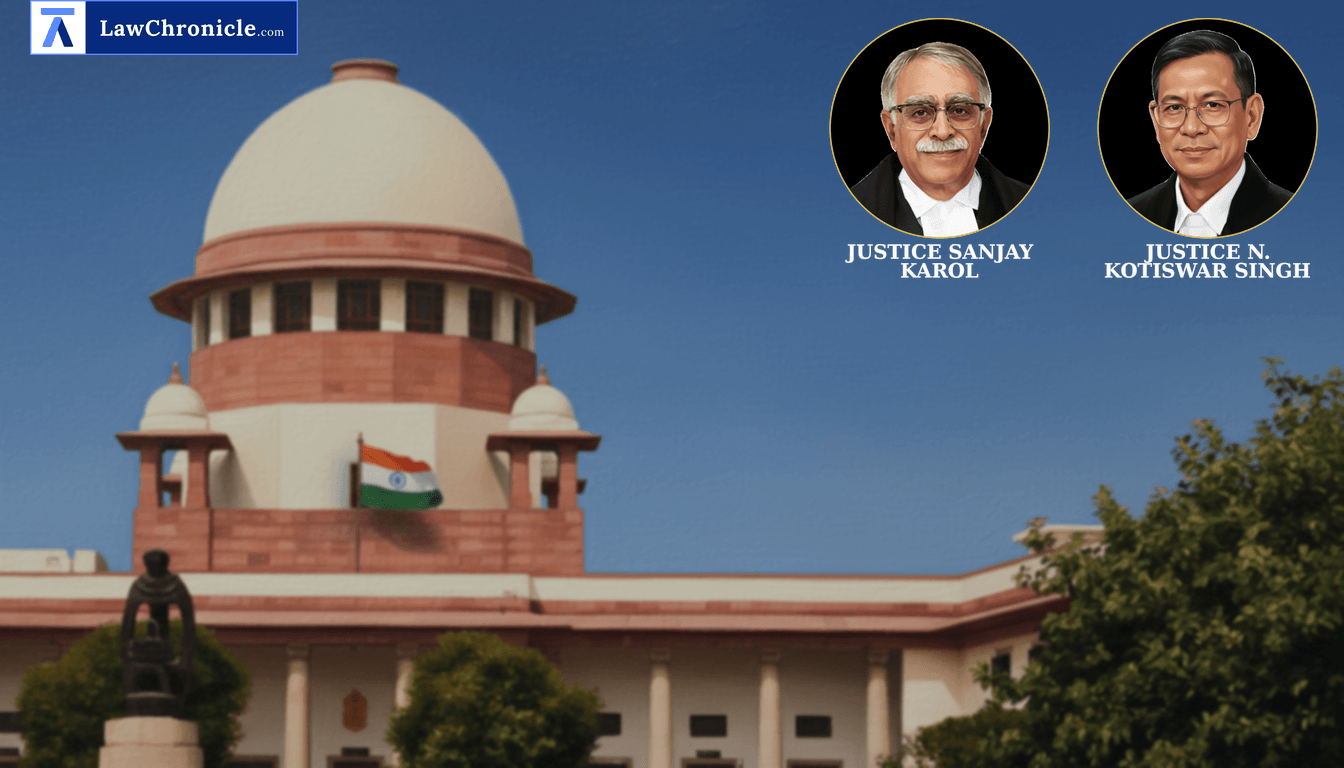
Voluntary financial contributions such as Employee Stock Purchase Plans and Provident Fund investments cannot be deducted as compulsory statutory charges to shrink disposable income while determining spousal and child maintenance. Clarifying the ambit of net income assessment in matrimonial disputes, the Supreme Court ruled that such investments ultimately accrue back to the salary earner and cannot be leveraged to depress maintenance obligations.
In a ruling delivered by a bench comprising Justice Sanjay Karol and Justice Nongmeikapam Kotiswar Singh, the apex court enhanced the maintenance awarded to two minor children and granted independent medical maintenance to an estranged wife battling aggressive cancer.
Key Takeaways
1. Voluntary Savings Are Not Income Deductions: Contributions toward Provident Fund and ESPPs cannot be subtracted as compulsory charges when calculating net income for maintenance.
2. Wealth Accumulation Rebounds to Earner: Unlike non-refundable taxes, voluntary investments represent deferred financial benefits that accrue directly back to the party's estate.
3. Enhanced Protection for Medical Crisis: The Supreme Court recognized the heightened financial burden on a mother dealing with critical illness while retaining custody of children.
4. Quantum Revision: Total monthly maintenance for the minor children was increased from Rs. 1,00,000 to Rs. 1,50,000 alongside separate medical maintenance for the wife.
Revising the quantum fixed by the High Court, the Supreme Court stressed that personal savings plans do not reduce a spouse's legal capacity to maintain dependents. The Court, in its reasoning, observed: "We find that deductions of Provident Fund and ESPPs are ultimately benefits that would be passed on to the Respondent-husband. Unlike Income Tax payment or professional taxes which are mandatory taxes, PFs and ESPPs are not permanent charges but rather will accrue into the account of the Respondent-husband which can be withdrawn by the depositor in the future."
The Court issued the following directions:
"We accordingly enhance monthly maintenance for both children to a total of Rs. 1,50,000/- (Rs. 75,000/- per child) with effective from 1st January 2025. This will not preclude the Appellant from seeking enhancement as and when there are change in circumstances."
Ratio
Voluntary financial deposits, provident fund contributions, and stock purchase deductions do not constitute compulsory statutory deductions like taxes and cannot be deducted from gross income to reduce the disposable income available for calculating child or spousal maintenance.
Background
The matrimonial dispute originated after the parties, who married in December 2004, separated in June 2018. The Appellant-wife instituted proceedings under Section 13(1)(ia) of the Hindu Marriage Act, 1955 alongside applications under Section 24 and Section 26 of the Hindu Marriage Act, 1955 seeking interim maintenance. The Family Court initially granted child maintenance of Rs. 40,000 per child per month, which was affirmed by the Delhi High Court.
Subsequently, the Appellant-wife sought enhancement owing to rising educational costs and her diagnosis with aggressive breast cancer in August 2024. During pendency, the Delhi High Court directed interim medical maintenance of Rs. 20,000 per month to the wife under Constitution of India and later enhanced child maintenance to Rs. 1,25,000 per month for both children, while closing contempt proceedings against the husband upon an assurance to clear arrears. The Appellant challenged the adequacy of these amounts before the Supreme Court under Article 136 of the Constitution of India.
Disposing of the appeals, the Supreme Court held that the husband's net disposable income was incorrectly calculated by deducting voluntary ESPP and PF contributions. Taking into account the mother's ongoing cancer treatment, the Court enhanced child maintenance to Rs. 75,000 per month per child (total Rs. 1,50,000 per month) effective from January 1, 2025, and separately enhanced maintenance for the wife to Rs. 30,000 per month.
Case Details:
Case No.: Civil Appeal Nos. of 2026 (Arising out of SLP (C) Nos. 31815-31816 of 2025)
Neutral Citation: 2026 INSC 822
Case Title: Harpreet Sawhney v. Puneet Sharma
Source: 2026 CaseBase(SC) 760
 Breaking News