


Waitlisted Candidates Cannot Claim Parity Post-Expiry As Fence-Sitters: Patna HC
 Copy Link
 Share
 Save
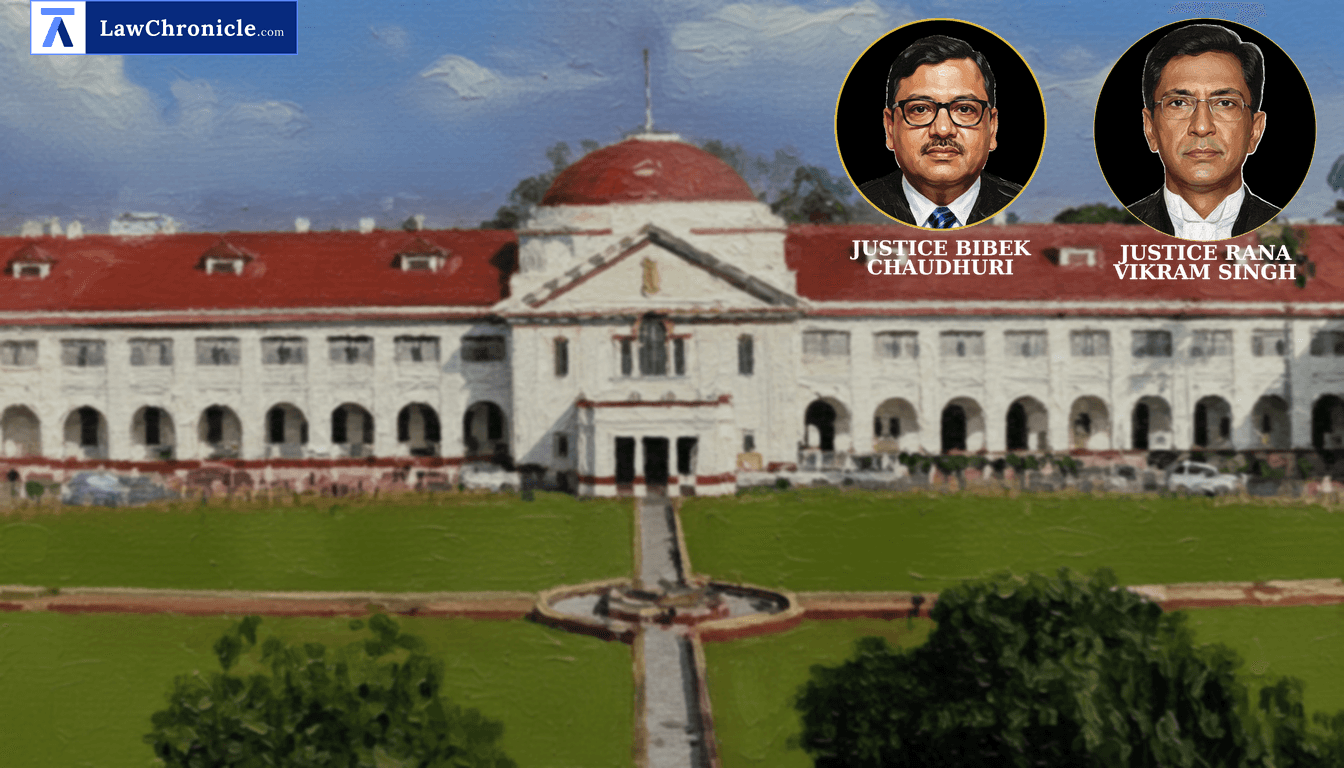
Fence-sitting litigants who remain dormant during initial rounds of litigation cannot subsequently resurrect stale employment claims merely because co-candidates secured relief through court intervention. The Patna High Court has held that administrative compliance with judicial mandates in favor of specific litigants does not confer an automatic right of appointment upon waitlisted candidates who slept over their rights.
A Division Bench comprising Justice Bibek Chaudhuri and Justice Rana Vikram Singh affirmed the dismissal of an intra-court appeal challenging the non-appointment of a candidate placed in the waiting list for the post of Clerk. The Court adjudicated whether a waitlisted candidate who chose not to join prior legal proceedings could seek mandamus for appointment on the premise that candidates with lower merit ranks were appointed strictly under specific judicial directions.
Key Takeaways
No Automatic Benefit for Fence-Sitters: Litigants who fail to approach the court in a timely manner cannot claim parity with diligent litigants who obtained specific judicial orders.
In Personam Nature of Relieved Mandates: Judicial relief explicitly restricted to specific petitioners does not constitute a judgment in rem for the entire select or waiting list.
Statutory Life of Selection Lists: Mandamus cannot be issued to enforce appointments from an expired waiting list once its statutory tenure lapses.
Court's Analysis on Equity, Delay, and Statutory Limits
The Court observed that while statutory provisions governed the validity of waitlists, operational relief granted specifically to original litigants does not automatically translate into a universal binding ratio for all waitlisted candidates. Emphasizing the principles governing delay and laches, the Court highlighted that equity aids only the vigilant.
The Court, in its reasoning, observed: "...the respondents are guilty since the respondents have acquiesced in accepting the retirement and did not challenge the same in time. If they would have been vigilant enough, they could have filed writ petitions as others did in the matter. Therefore, whenever it appears that the claimants lost time or whiled it away and did not rise to the occasion in time for filing the writ petitions, then in such cases, the court should be very slow in granting the relief to the incumbent."
Addressing the impact of belated representations on stale claims, the Court noted that issuing replies or dealing with representations does not generate a fresh cause of action. Reaffirming settled precedent, the Court stated that an order passed rejecting a stale claim pursuant to judicial directions does not revive dead claims or alter established jural relationships.
Furthermore, the Court held that appointments made strictly in obedience to a specific judicial direction cannot be characterized as arbitrary or discriminatory under Article 14 and Article 16 of the Constitution of India. The Court issued the following directions:
"(i) For the reasons recorded above, the present Letters Patent Appeal is dismissed.
(ii) The judgment and order, dated 22.02.2024, passed by the learned Single Judge in Civil Writ Jurisdiction Case No. 1063 of 2024, is, accordingly, affirmed."
Ratio
A waitlisted candidate who fails to vigilantly pursue remedies and approaches the court only after other diligent litigants obtain specific judicial relief is a fence-sitter whose claim is barred by delay, laches, and acquiescence. Appointments extended strictly in compliance with an in personam judicial direction do not violate Articles 14 and 16 of the Constitution of India nor do they confer an enforceable legal right on unappointed waitlisted candidates after the statutory life of the waitlist has expired.
Background
The dispute originated from Employment Notice No. 01/2016 issued by the Centralized Selection and Appointment Committee-cum-District and Sessions Judge, Patna for appointing Clerks in the Civil Courts of Bihar under the Bihar Civil Court Staff (Class-III and Class-IV) Rules, 2009. The appellant participated in the selection process, passed the tests, and was placed at Serial No. 951 in the Unreserved category waitlist.
When several selected candidates failed to join, certain other waitlisted candidates initiated litigation. A Division Bench subsequently allowed their appeals in L.P.A. No. 650 of 2022 and directed the authorities to consider the specific petitioners for appointment. In compliance, the authorities appointed 20 candidates, including two candidates ranked lower than the appellant. The appellant, who was not a party to the earlier litigation, served a legal notice demanding appointment and subsequently filed a writ petition under Article 226 of the Constitution of India after his representation was turned down.
The learned Single Judge dismissed the writ petition on grounds of delay, laches, and fence-sitting. On appeal under Clause 10 of the Letters Patent, the appellant relied on State of U.P. v. Arvind Kumar Srivastava ( "(2015) 1 SCC 347": 2014 CaseBase(SC) 808), K.C. Sharma v. Union of India ( "(1997) 6 SCC 721": 1997 CaseBase(SC) 1162), Behram Khurshid Pesikaka v. State of Bombay ( "AIR 1955 SC 123": 1954 CaseBase(SC) 194), Nar Singh Pal v. Union of India ( "(2000) 3 SCC 588": 2000 CaseBase(SC) 595), and State of Jharkhand v. Balkishun Ram to argue that the previous ruling operated in rem and that excluding higher-ranked candidates violated equality principles.
Conversely, the respondents cited Chairman & Managing Director, U.P. Power Corporation Ltd. v. Ram Gopal ( "(2021) 13 SCC 225": 2020 CaseBase(SC) 1411), State of U.P. v. Harish Chandra, Patna High Court v. Chandan Kumar, U.P. Jal Nigam v. Jaswant Singh, C. Jacob v. Director of Geology and Mining ( "(2008) 10 SCC 115": 2008 CaseBase(SC) 794), and Shiba Shankar Mohapatra v. State of Orissa ( "(2010) 12 SCC 471": 2009 CaseBase(SC) 153) to contend that the earlier judgment was in personam, the waitlist had expired, and the appellant was a fence-sitter. Aligning with the respondents and coordinate bench precedent, the Division Bench dismissed the appeal.
Case Details:
Case No.: Letters Patent Appeal No.459 of 2024
Case Title: Chandra Madhav Singh v. The State of Bihar & Ors.
Appearances:
For the Petitioner(s): Mr. Bindhyachal Singh, Sr. Advocate; Mr. Aakash Singh, Advocate
For the Respondent(s): Mr. Arvind Kumar, AC to GA-9
Source: 2026 CaseBase(PAT) 116
Similar Articles




 Breaking News


