What happens to Asha Bhosle’s personality rights after death?
 Copy Link
 Share
Share Save
Save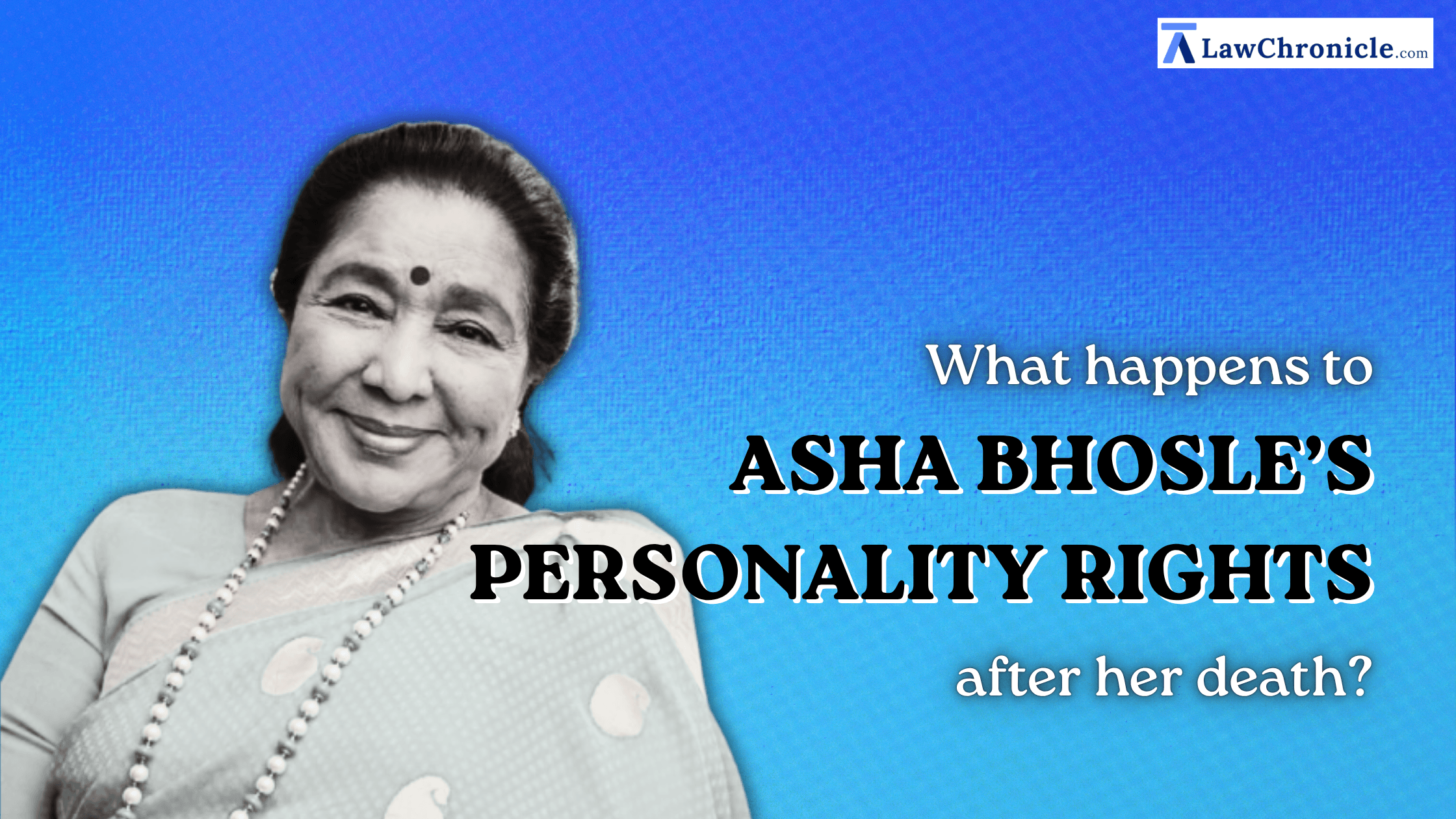
Asha Bhosle’s prolonged career marked iconic Bollywood songs, ranging from hip-hop hits to romantic ghazals. Appreciating her extraordinary stature, the Bombay High Court in September 2025 gave interim relief for Asha Bhosle’s personality rights protection. However, now that she has left for heavenly abode leaving behind a musical legacy, what happens to Asha Bhosle’s personality rights after death? In other words, is anyone now entitled to use her voice or looks to make profits? That’s a question which has not been particularly answered in the interim order, for obvious reasons. However, let us understand with the help of specific Copyright Law applicable after death of a person. But first, let’s have a look at Asha Bhosle’s vibrant, mischievous and gigantic personality.
Asha Bhosle’s Legacy
Any discussion of Asha Bhosle's personality rights must begin with an appreciation of the extraordinary stature that weighs upon legal and commercial facets. The Bombay High Court did not miss out on admiring the exceptional standing of Asha Bhosle in the world of music. Her accolades, as enumerated in the judgment, include:
- Two National Film Awards for Best Female Playback Singer
- The Dadasaheb Phalke Award (2000)
- BBC Lifetime Achievement Award, presented by the then UK Prime Minister Tony Blair (2002)
- International Indian Film Academy Lifetime Achievement Award (2002)
- Padma Vibhushan (2008)
- Nine Filmfare Awards, including a Lifetime Achievement Award and a record seven awards for Best Female Playback Singer
- Recognition in the Guinness Book of World Records in 2011 as the "Most Recorded Artist" in music history
- Two Grammy nominations and the Maharashtra Bhushan Award (2021)
Her social media following stood at 7.46 lakhs on Instagram, 8.8 lakhs on Facebook, 46 lakhs on X (formerly Twitter), and 2.85 lakhs on YouTube.
Asha Bhosle’s Personality Rights
The Bombay High Court in Asha Bhosle vs Mayk Inc (2025) decided a commercial Intellectual Property Suit. The same sought protection of personality rights of Asha Bhosle’s name, voice, signatures, photographs, images, and caricatures, etc. Section 38B of the Copyright Act, 1957 was the centre of arguments in this matter.
Scope of Cases Cited
The Bombay High Court in the order affirming Asha Bhosle’s personality rights did not specify if the interim protection would still be available to the heirs posthumously. It may be noted that none of the cases relied upon before the Bombay High Court, pertaining to personality rights of singer Arijeet Singh or actress Aishwarya Rai, laid about whether the rights would be enjoyable till the lifetime of the celebrities. In other words, the judgments/orders ensuring personality rights for celebrities have not expressly addressed the issue of whether the protection would end with the lifetime of the person, or would it continue.
Copyright Law After Death
Let us now look at the specific provisions of Copyright Act, 1957 invoked for protection of personality rights of these famous personalities.
- Section 22 speaks of work published during her lifetime. This is the primary term-of-copyright provision for literary, dramatic, musical and artistic works. It states that copyright shall subsist until 60 years from the beginning of the calendar year following the year in which the author dies. However, the benefit attracts if she was also a composer. In other words, if Asha Bhosle also composed the music, she qualifies as the author for protection under Section 22 of Copyright Act.
- Section 24 lays about terms of copyright in posthumous works. It specifically addresses literary, dramatic, musical works or engravings where copyright subsisted at the date of the author's death but which had not been published before that date. For such Asha Bhosle’s unheard songs, copyright subsists until 60 years from the beginning of the calendar year next following the year in which the work is first published after her death.
- Section 38 covers literary, dramatic or musical work or an engraving, where copyright subsists. It grants a separate and distinct "Performer's Right," which subsists for 50 years from the beginning of the calendar year following the year in which the performance was made. Under Section 38A, this includes exclusive rights to make sound/visual recordings, broadcast the performance, and issue copies to the public. Her moral rights as a performer are separately preserved under Section 38B, even after assignment.
| Scenario | Relevant Section | Duration |
| Musical work published during her lifetime | Section 22 | 60 years from start of year after death |
| Musical work unpublished at the time of death | Section 24 | 60 years from start of year after posthumous publication |
| Performer's rights (as a singer) |
| 50 years from start of year after performance |
Asha Bhosle’s Legacy for Heirs
The interim relief by Bombay High Court affirmed that a pre-eminent personality is entitled to protection of all facets of her identity: her name, voice, image, likeness, and persona. This restricts any kind of unauthorized commercial exploitation, including by AI technologies.
After Asha Bhosle's death, her legal heirs would have a clear statutory cause of action under Section 38B to restrain any AI voice cloning, provided the 50-year term of performers' rights has not expired. Given the longevity of her career and the recency of many of her recordings, this protection would extend well into the second half of the 21st century.
 Breaking News