When can Amendment After Commencement of Trial be Allowed? Supreme Court Explains
 Copy Link
 Share
 Save
On question of amendment after commencement of trial, Supreme Court has ruled that subsequent discovery of a compromise decree affecting title satisfies the due diligence test, enabling post-trial amendment of pleadings to prevent fragmentation of land disputes. The Apex Court emphasized that courts must adopt a liberal approach towards amendment applications when necessary to determine the real question in controversy without causing injustice to the opposing side.
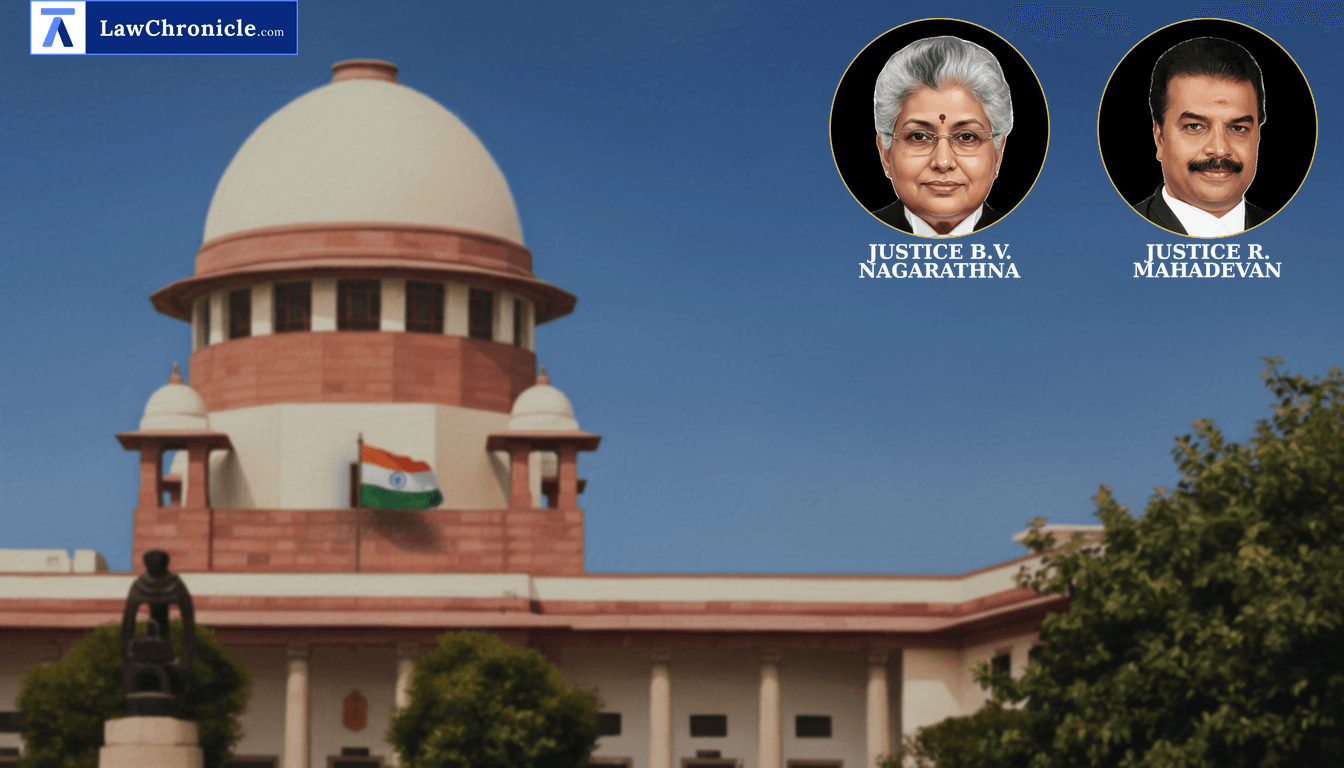
A Division Bench comprising Justice B.V. Nagarathna and Justice R. Mahadevan set aside orders of the High Court of Orissa and the trial court which had rejected an application for amendment of the plaint under Order VI Rule 17 of the Code of Civil Procedure, 1908. The bench held that delay alone cannot be a ground to deny an amendment where the plea of due diligence is satisfactorily demonstrated.
Key Takeaways
- Due Diligence Test Satisfied via Discovery: Belated amendments based on newly discovered documents affecting property title meet the statutory threshold under Order VI Rule 17 of the Code of Civil Procedure, 1908.
- Arguable Limitation Left to Trial: Where the question of limitation depends on disputed facts such as the date of knowledge, courts should allow the amendment and leave limitation open for trial determination.
- Avoidance of Fragmented Litigation: Permitting amendments incorporating newly found decrees prevents multiple proceedings and inconsistent judicial findings over the same parcel of land.
- Prejudice Compensable by Costs: Any procedural inconvenience caused to contesting defendants due to delayed amendments can be neutralized by costs and granting liberty to file additional written statements.
Court Observations and Directions
The Supreme Court analyzed the statutory requirement under Order VI Rule 17 of the Code of Civil Procedure, 1908, noting that while post-trial amendments require due diligence, the cardinal principle remains the determination of the real controversy between litigants. Examining the liberal framework governing amendments, the Supreme Court, in its reasoning, observed that "The real inquiry is whether the amendment introduces a distinct and independent controversy having no connection with the original cause of action, or whether it merely brings on record additional facts and consequential reliefs having a direct nexus with the existing controversy. On the facts of the present case, the proposed amendment falls within the latter category. The subject matter of the proposed amendment and the original suit substantially overlap, and the adjudication of the proposed issue would have a direct bearing upon the title and possession claimed in respect of the suit property."
Ratio
An application for amendment of pleadings under Order VI Rule 17 of the Code of Civil Procedure, 1908 filed after the commencement of trial ought to be permitted if the applicant establishes due diligence through the subsequent discovery of facts or decrees directly affecting the suit property, provided the amendment does not fundamentally alter the nature of the suit or introduce a cause of action ex facie barred by limitation.
Background
The dispute originated from Civil Suit No. 86 of 2009 filed by the original plaintiff (predecessor of the appellants) seeking a declaration of right, title, interest, recovery of possession, and rectification of sale deeds executed in 1971 and 1978 regarding suit land under Hal Khata No. 198. During the trial proceedings, after the defendants filed their written statements detailing mutation plot details, the original plaintiff conducted a search at the office of the Tahsildar, Niali. Upon obtaining certified copies on June 22, 2020, the plaintiff discovered a compromise decree passed in Title Suit No. 105 of 1998 affecting a portion of the suit plot.
Consequently, an application under Order VI Rule 17 read with Section 151 of the Code of Civil Procedure, 1908 was moved to incorporate foundational pleadings regarding T.S. No. 105 of 1998 and to seek a declaration that the final compromise decree was null and void. The trial court rejected the amendment application on September 21, 2022, holding it to be belated. The High Court of Orissa affirmed this rejection on April 10, 2023.
In appeal, the Supreme Court evaluated landmark precedents including A.K. Gupta & Sons Ltd. v. Damodar Valley Corporation and Rajesh Kumar Aggarwal & others v. K.K. Modi and others ( "(2006) 4 SCC 385": 2006 CaseBase(SC) 290) on the fundamental 'real controversy test'. It noted that Abdul Rahman & another v. Mohd. Ruldu & others ( "(2012) 11 SCC 341": 2012 CaseBase(SC) 723) established that changing the relief claimed does not alter the basic nature of a suit. Applying principles from Revajeetu Builders and Developers v. Narayanaswamy and Sons & others ( "(2009) 10 SCC 84": 2009 CaseBase(SC) 844) and Life Insurance Corporation of India v. Sanjeev Builders Private Limited and another ( "(2022) 16 SCC 1": 2022 CaseBase(SC) 652), the bench observed that courts must avoid a hyper-technical approach. Referring to Akkiraju Panduranga Rao and another v. Gunlapally Ranga Rao ( "2026 SCC OnLine SC 805": 2026 CaseBase(SC) 552), the Apex Court reiterated that liberal standards apply where no irreparable prejudice is caused.
Regarding the bar of limitation, the Supreme Court relied on Ragu Thilak D. John v. S. Rayappan and others ( "(2001) 2 SCC 472": 2001 CaseBase(SC) 439), Sampat Kumar v. Ayyakannu and another ( "(2002) 7 SCC 559": 2002 CaseBase(SC) 255), and Pankaja and another v. Yellappa (Dead) by LRs and others to hold that arguable issues of limitation depending on disputed dates of knowledge should be left open for trial rather than rejected at the threshold. Distinguishing Basavaraj v. Indira and others ( "2024 INSC 151": 2024 CaseBase(SC) 307), the apex court held that due diligence was established and allowed the appeal subject to payment of Rs. 25,000 as costs.
Case Details:
Case No.: Civil Appeal No. 13681 of 2026
Neutral Citation: 2026 INSC 1112
Case Title: Haramani Sahoo and others v. Lalita Nayak and others
Source: 2026 CaseBase(SC) 8259
 Breaking News