Why Is Telegram Not Working in India? - Find Out Here
 Copy Link
 Share
Share Save
Save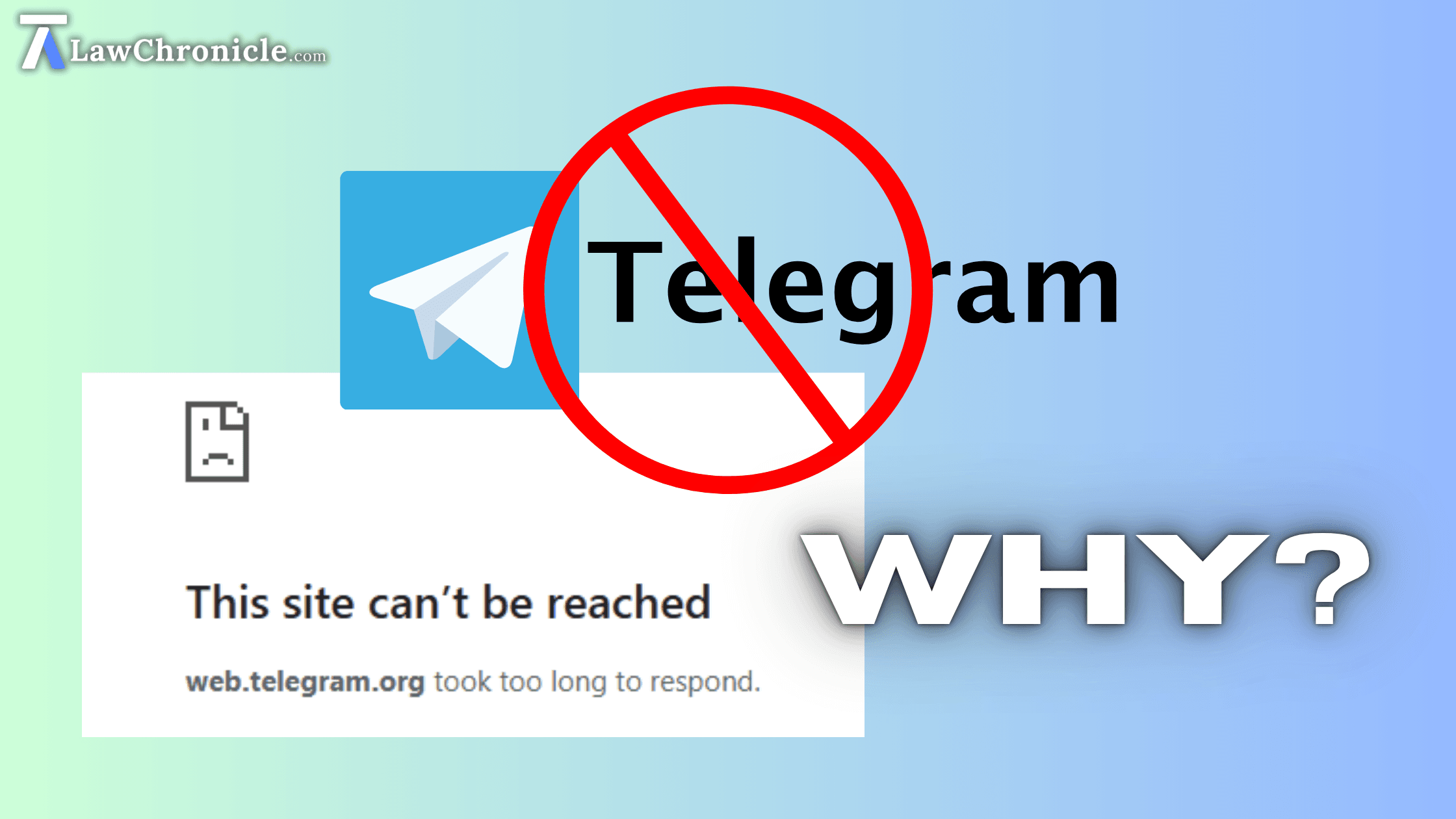
On 16th June, 2026, the Ministry of Electronics and Information Technology (MeitY) issued two directions that have made Telegram inaccessible to millions of users across India. The internet is flooded with queries like “Is Telegram blocked in India?”, “Why is Telegram not working in India?”, “When did Telegram stop in India?”, and most important one is “Telegram ban in India date and time” since people wish to know when they will be able to use it again.
The MeitY directions were issued on the recommendation of the National Testing Agency (NTA), in the immediate run-up to the NEET (UG) 2026 re-examination scheduled for 21st June 2026. All this is the aftermath of the chaos caused by the NEET paper leak. While reports suggest that Telegram has already moved the Delhi High Court regarding this ban, let us skim through what the law lays.
What the NTA Notice Says
The NTA's press release records two distinct directions:
- First, a direction under Section 69A of the Information Technology Act, 2000 restricting access to the Telegram platform in India until 22nd June, 2026, that’s the day after the re-examination.
- Second, a separate direction requiring Telegram to disable its message-editing feature in India for a longer window ending 30 June 2026. This addresses the specific mechanism through which the platform has allegedly been used to fabricate "paper leak" evidence.
According to the notice, the reason for the second direction is technical but significant. Telegram's message-editing feature permits a channel administrator to substitute the content of an already-posted message, including attached files, while retaining the original send-timestamp. As the NTA explains, this has been used to insert actual question papers into old, innocuous messages after an examination concludes, making it appear as though the paper was in circulation before the exam. The resulting chat logs are then circulated as supposed "proof" of a paper leak. The direction aims to close this window for the post-examination period.
The NTA also records that Telegram channels openly operating under names such as "PAPER LEAKED NEET," "Re-NEET 2026," and "REE NEET MAFIAA" demanded sums ranging from a few thousand to several lakhs of rupees from candidates, in exchange for purported access to the question paper. NTA categorically stated that no such paper exists outside the secured examination chain.
The broader enforcement picture involves multiple agencies. The Indian Cyber Crime Coordination Centre (I4C) under the Ministry of Home Affairs served as the principal coordinating body, securing takedowns of a substantial number of Telegram channels, groups, and bots. The Bihar Police Economic Offences Unit issued a public advisory on 9th June 2026, and the Ahmedabad City Cyber Crime Branch arrested members of an inter-State cyber-fraud gang operating eight Telegram channels, with documented transactions of approximately ₹1.5 crore and nearly one thousand mobile numbers contacted in a single month. The CBI is conducting a parallel inquiry.
The platform-level Telegram ban in India was described as a measure of last resort, taken only after channel-by-channel takedowns failed to produce adequate compliance at the platform level.
The Law behind Telegram Ban in India
Section 69A of the IT Act, 2000 empowers the Central Government to issue directions to block public access to any online content or platform in the interest of the sovereignty and integrity of India, defence, security of the State, friendly relations with foreign States, public order, or for preventing incitement to any cognizable offence.
The NTA has justified both directions on the ground of public order, a recognized head under the provision. Crucially, Section 69A is accompanied by the Information Technology (Procedure and Safeguards for Blocking for Access of Information by Public) Rules, 2009, which require that blocking orders be issued only after review by a designated committee and that intermediaries be given an opportunity to respond, except in emergencies.
What Is Justified, and What Merits Scrutiny
The case for the directions rests on documented, ongoing fraud targeting a large candidate pool, a specific platform feature being actively exploited, failed intermediary-level remedies, and a narrow, time-bound restriction rather than a permanent ban. The notice's emphasis on calibration, a block confined to the examination window, not an open-ended suspension, reflects proportionality considerations that courts have found relevant when reviewing Section 69A actions.
The legitimate concerns, however, are also noted in the press release itself: the access restriction affects lakhs of citizens who use Telegram for lawful personal, educational, and professional purposes. A blanket platform block is a blunt instrument. The Supreme Court's judgment in Anuradha Bhasin v. Union of India (2020 CaseBase(SC) 435) held that internet shutdowns must satisfy the tests of necessity and proportionality, and that the reasons for restrictions must be published. Whether the present directions comply with those procedural safeguards, including committee review and reasoned orders, is not addressed in the NTA press release and remains to be independently assessed.
 Breaking News