Wife Cannot Claim Maintenance After Waiving Rights In Mutual Consent Divorce: Karnataka HC
 Copy Link
 Share
Share Save
Save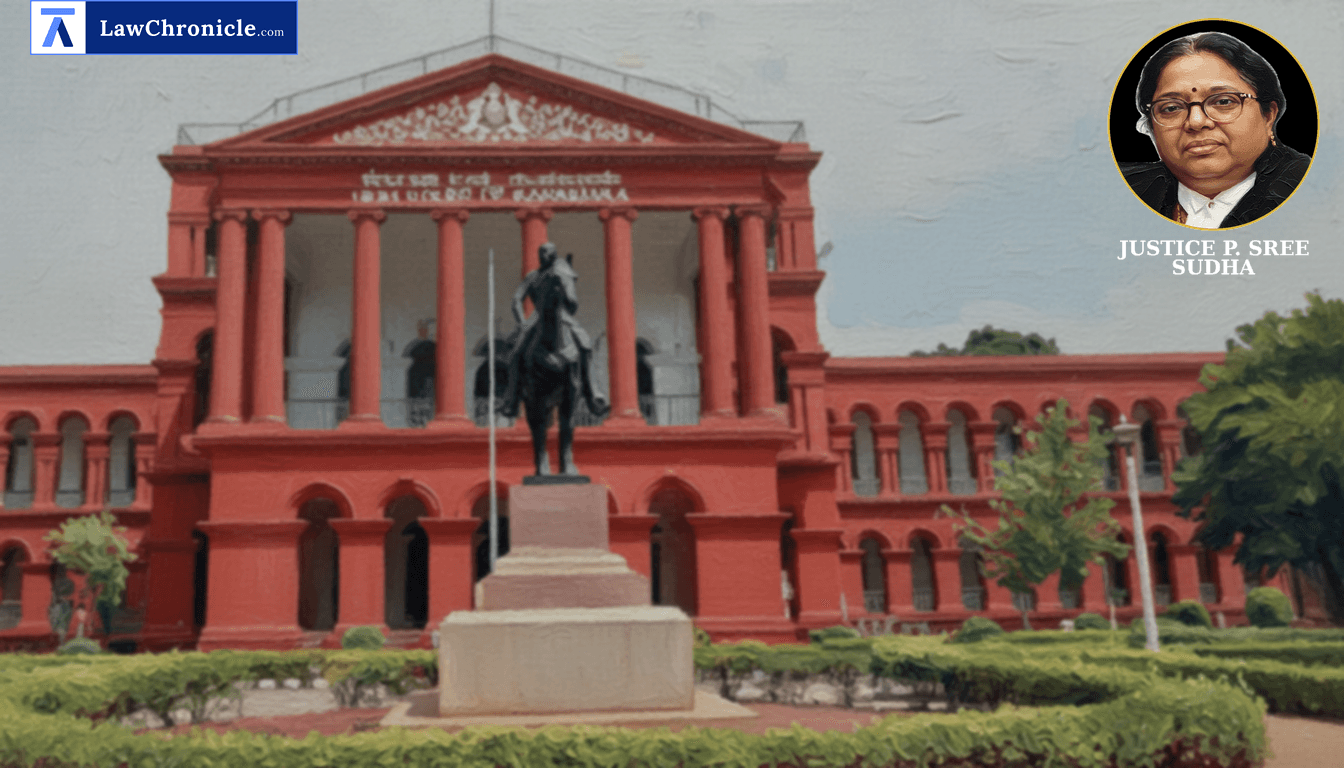
Renouncing the right to alimony in mutual consent divorce proceedings operates as a binding waiver, disentitling a spouse from later seeking interim maintenance under criminal procedure laws. The Karnataka High Court has clarified that while a wife may waive her personal right to support, such an agreement cannot extinguish the statutory right of a minor child to receive maintenance from their father.
A Single Judge Bench of Hon'ble Mrs. Justice P Sree Sudha modified a Family Court order that had granted interim maintenance to both a wife and her minor child. The Court was hearing a revision petition filed by the husband challenging the grant of Rs. 5,000 each to the respondents, arguing that the wife had explicitly undertaken not to claim maintenance during their previous M.C.No.35/2023 proceedings.
Binding Nature of Mutual Consent Undertakings
The Court, upon perusing the terms and conditions entered between the parties at the time of their separation, noted that the wife had clearly stated she would not claim any maintenance from the petitioner. The Court found that the Family Court had failed to adequately consider the impact of the mutual consent divorce terms on the subsequent maintenance application.
The Court, in its reasoning, observed: "This Court has perused the terms and conditions entered between the parties at the time of taking mutual divorce. In the said proceedings the respondent-wife clearly stated that she will not claim any maintenance from the petitioner. Therefore, this Court finds it just and reasonable to modify the order of the Family Court to an extent that petitioner No.1 (wife) is not entitled to interim maintenance."
Child's Right to Maintenance Remains Absolute
Despite the wife's waiver, the High Court emphasized that the minor child’s entitlement to support is independent of the parental agreement. The petitioner-husband had contended that he was a coolie with limited income and had already provided furniture and documents during the divorce, but the Court maintained the child's right to basic financial security.
The Court has the following directions:
"petitioner No.1 (wife) is not entitled to interim maintenance. However, petitioner No.2 being the minor child, is entitled to interim maintenance of Rs.5,000/- per month from the date of filing of the application till the disposal of the main petition. With the said modification, the RPFC is allowed."
Background:
The dispute arose from an order dated 18.02.2026 passed by the Principal Judge, Family Court, Hassan, in Crl.Misc.No.174/2025. The wife had filed an application for interim maintenance under Section 144(2) of the BNSS, seeking Rs. 20,000 per month. The Family Court had initially allowed the application partially, granting Rs. 5,000 per month to both the wife and the daughter. The husband challenged this before the High Court, citing the CPC and the specific settlement reached in M.C.No.35/2023, where the wife had voluntarily renounced her right to alimony. He argued that since he was doing manual labor (coolie work) and had already fulfilled settlement obligations, the burden of maintenance for the wife was legally and factually unsustainable.
Key Takeaways:
Contractual Waivers in Matrimonial Law
Specific undertakings made during mutual consent divorce proceedings are binding on the parties and prevent subsequent claims for interim maintenance.
Independency of Child Support
Parents cannot contract away the rights of a minor child; the father remains legally obligated to provide for the child regardless of the mother's waiver of her own alimony.
Judicial Scrutiny of Interim Orders
High Courts will intervene in revisionary jurisdiction if lower courts overlook relevant evidence, such as prior settlement agreements or mutual divorce decrees.
Ratio Decidendi:
When a spouse voluntarily waives the right to maintenance in a recorded settlement during mutual consent divorce proceedings, they are estopped from seeking interim maintenance in subsequent litigations. However, such waivers do not affect the statutory entitlement of a minor child to receive maintenance from the father, as the child's right to support is a matter of public policy and cannot be signed away by the parents.
Case Details:
Case No.: RPFC No. 82 of 2026
NeutralCitation: 2026:KHC:33281
Case Title: RAVIKUMAR v. JAYALAKSHMI & ANR.
Appearances:
For the Petitioner(s): Smt. Kavitha H.C, Advocate
Source: 2026 CaseBase(KAR) 227
 Breaking News