Writ Jurisdiction Cannot Resolve Title Disputes Under Cloud: Andhra Pradesh HC
 Copy Link
 Share
Share Save
Save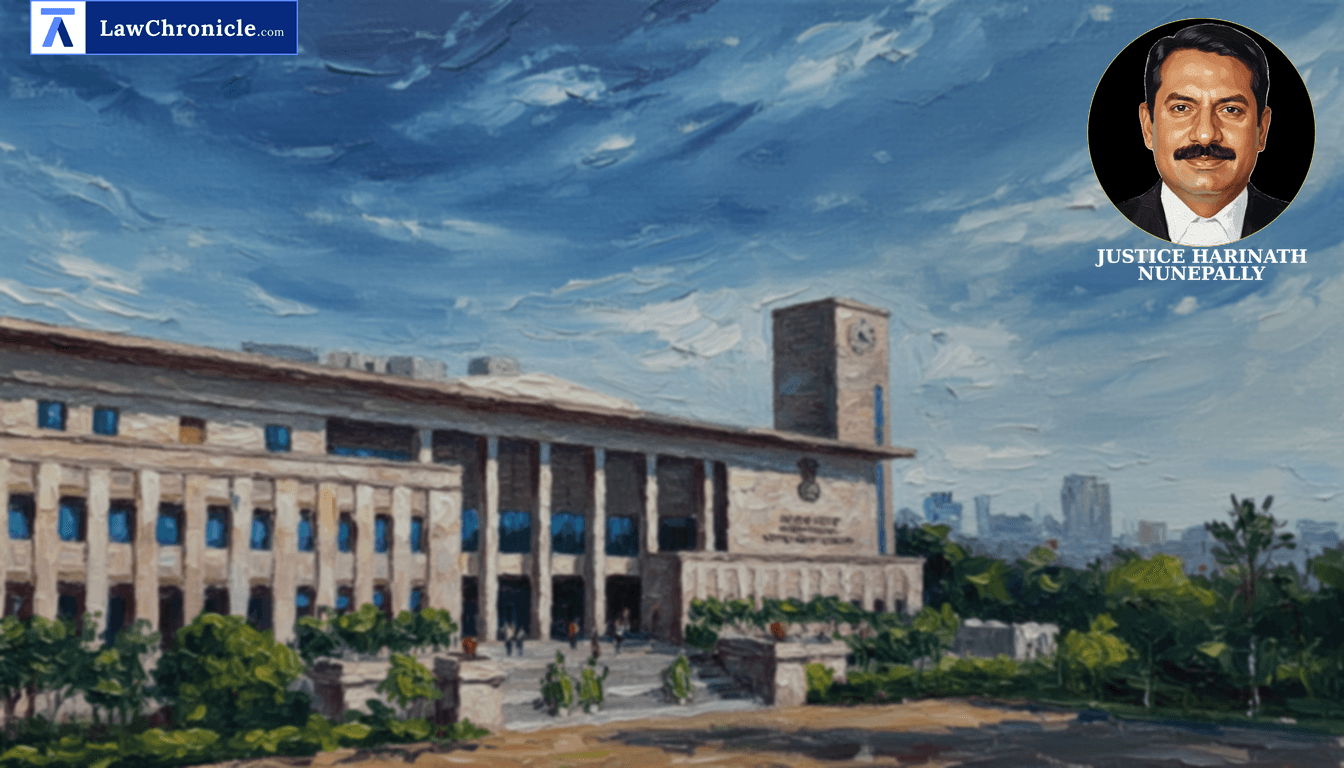
Shutting the doors of constitutional writ remedy for litigants seeking to resolve complex title disputes under the guise of halting municipal works, the Andhra Pradesh High Court has held that disputed ownership claims relying on questionable records must be adjudicated exclusively by civil courts.
A single-judge bench of Justice Harinath N. dismissed a writ petition challenging the construction of a burial ground, observing that extraordinary jurisdiction under Constitution of India cannot be invoked to generate evidence or bypass civil proceedings when a title is heavily clouded.
Key Takeaways
- No Writ Remedy For Disputed Titles: Litigants cannot use writ petitions under Constitution of India to adjudicate complex title disputes or create evidence for civil proceedings.
- Mandatory Joinder of Necessary Parties: Failure to implead the primary title-holder invalidates the writ proceedings on grounds of non-joinder.
- Reliance on Fabricated Records Fatal: Placing reliance on revenue orders previously held to be forged and bogus disentitles a petitioner from equitable relief.
Evaluating the petitioner's plea regarding the land interference, the Court emphasized that public infrastructure initiatives on long-standing utility sites cannot be stalled through doubtful title claims. The Court, in its reasoning, observed: "When all these points raised by the respondents categorically indicate that the petitioner has failed to make out a case for grant of relief under Article 226 of the Constitution of India, this Court is not inclined to consider granting any relief to the petitioner."
Ratio
Article 226 of the Constitution of India cannot be invoked for the determination of disputed questions of title over immovable property, particularly when the petitioner's title is under a cloud and relies on disputed or fraudulent revenue records.
Background
The dispute arose when the petitioner filed a writ petition seeking a direction against the Tirupati Municipal Corporation to prevent them from constructing a burial ground on Ac.2.00 cents out of Ac.9.83 cents in Survey No.57/1 of Tirupati Revenue Village. The petitioner claimed title over the land derived through lease rights and subsequent succession. Conversely, the municipal corporation and official respondents contended that the land belonged to Sri Swamy Hatiramji Matt under Katha No.166, and an extent of two acres had been utilized as a burial ground for over four decades.
During the proceedings, respondent No.5 appeared in person and highlighted that the revenue proceedings of 1961 relied upon by the petitioner were previously declared forged and fabricated by the High Court in E.Venugopal Chetty Vs. District Collector, Chittoor and others, which was affirmed in E.Venugopal Chetty Vs. District Collector, Chittoor and others. Furthermore, official records from the Joint Collector confirmed that the relevant file was bogus and null and void. The respondents also argued that the petitioner deliberately failed to implead Sri Swamy Hatiramji Matt, the recorded owner of the subject land.
Finding that the petitioner suppressed material facts, relied on invalid proceedings, and failed to join necessary parties, the High Court dismissed the writ petition without costs.
Case Details:
Case No.: WRIT PETITION NO: 30771/2022
Neutral Citation: 2026:APHC:35647
Case Title: Soora Sudhakar Reddy v. The State of Andhra Pradesh and Others
Appearances:
For the Petitioner(s): Sri. P. Veera Reddy, Senior Counsel for S V Muni Reddy
For the Respondent(s): Potham Vengala Reddy (SC for M. Corporation), Addl Advocate General (AP), Venkatasubbaiah V, Jangam Venkata Siva Sai, Party in Person (Respondent No.5), Sri. Venugopal, Senior Counsel
Source: 2026 CaseBase(AP) 14576
 Breaking News