Zero Presence Voids Panchayat Meeting: Calcutta High Court
 Copy Link
 Share
 Save
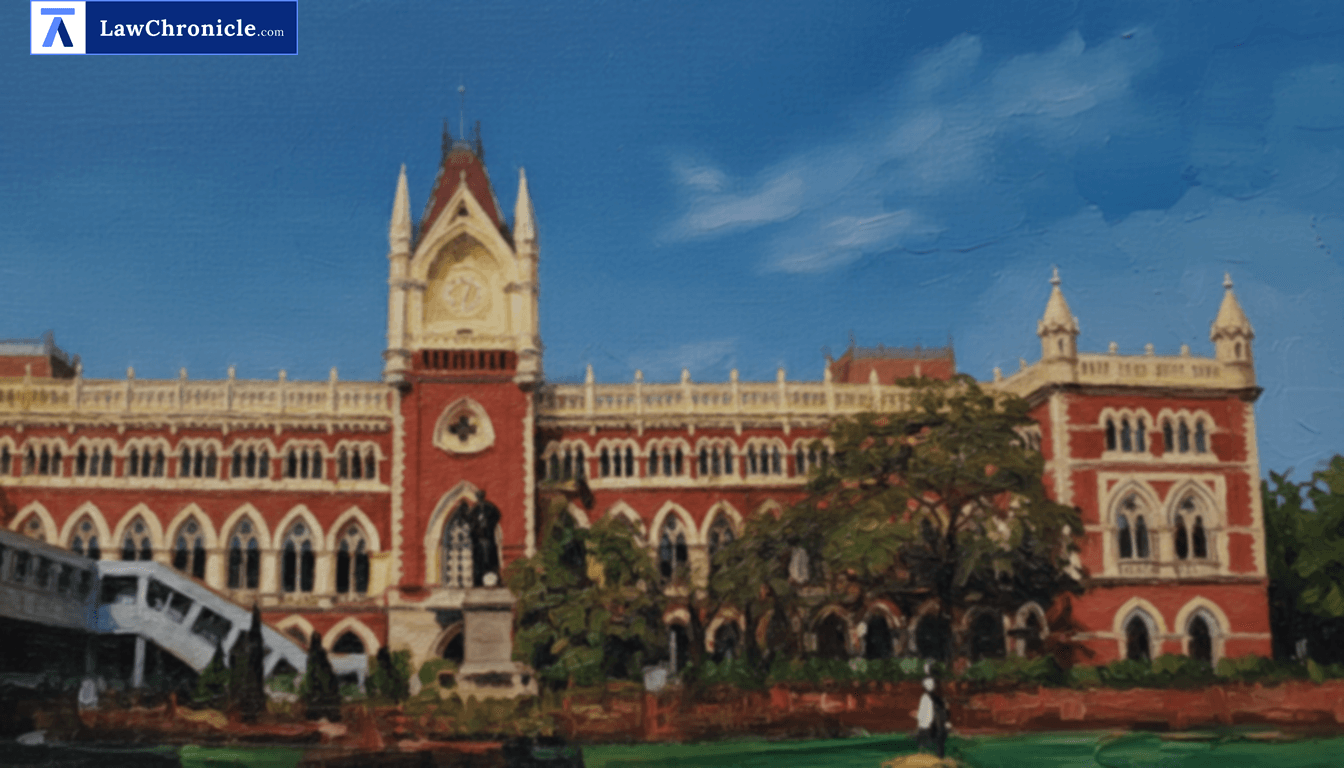
The Calcutta High Court has clarified that a meeting cannot be legally said to have occurred if not a single elected member is present, effectively bypassing the statutory one-year bar on fresh no-confidence motions. This ruling prevents the weaponization of forced absences to shield local officials from democratic accountability through technicalities of quorum.
Justice Suvra Ghosh presided over the matter, hearing a challenge where petitioners claimed they were forcibly restrained from attending a scheduled no-confidence meeting against a Gram Panchayat Pradhan.
Key Takeaways
Defining a Meeting
Legal 'meetings' require at least two persons; the presence of only a non-voting Presiding Officer does not constitute a valid local authority meeting.
Bypassing Section 12(11) Bar
If no elected members attend, the meeting is deemed 'non-existent' rather than failed for 'want of quorum,' allowing for a fresh motion within a year.
Democratic Accountability
Statutory protections intended to ensure stability cannot be used to insulate office bearers when members are prevented from exercising their voting rights through coercion.
Court Rationale on Meeting Existence and Quorum
The Court scrutinized Section 12(11) of the West Bengal Panchayat Act, 1973, which prohibits a fresh motion for one year if a previous meeting failed for lack of quorum. However, the Court distinguished between a meeting that fails for quorum and a situation where no meeting takes place at all. The Bench observed that the term "meeting" necessarily implies the gathering of more than one person, noting that local authority practices do not recognize a one-person meeting.
The Court, in its reasoning, observed: "In the absence of any elected member of the concerned Gram Panchayat, there can be no meeting at all. The question of quorum or the lack of it would have arisen only if there was a meeting and not otherwise. In absence of such meeting there was no embargo and/or fetter on the part of the Prescribed Authority to have called a meeting for removal of the Pradhan of the Panchayat."
Applying the ratio from Md. Ali Reza v/s. State of West Bengal, the Court held that since not a single elected member was present on July 15, 2026, the statutory bar under Section 12(11) was not attracted. The Court distinguished the private respondent's reliance on Rashmi Singh v/s the State of Bihar and Others, noting that the voting dynamics of a held meeting differ fundamentally from a meeting that never commenced.
Directions Issued by the Court
The Court has the following directions:
"Since the time frame prescribed under Section 12(10) of the Act has expired, liberty is granted to the petitioners to submit a fresh motion before the Prescribed Authority in terms of Section 12 of the Act. In the event such motion has submitted, the Prescribed Authority shall proceed with the same in accordance with the said provision of law, particularly the time frame stipulated therein."
Ratio
For the purposes of the West Bengal Panchayat Act, 1973, a meeting is non-existent in the eyes of the law if no elected members are present; consequently, the failure of such a gathering does not constitute a 'lack of quorum' and does not trigger the one-year statutory prohibition against subsequent no-confidence motions.
Background
The petitioners, members of Dhoradaha-II Gram Panchayat, moved a no-confidence motion against the Pradhan in June 2026. Despite a court order for police assistance, the petitioners alleged they were threatened and detained by anti-social elements on the day of the meeting, preventing their attendance. While the Presiding Officer was present at the venue, no elected members appeared. When the petitioners attempted to submit a fresh motion on August 7, 2026, the Prescribed Authority rejected it, citing the one-year embargo under Section 12(11) of the West Bengal Panchayat Act, 1973. The Court ultimately set aside this technical objection, granting liberty to the petitioners to re-initiate the removal process.
Case Details:
Case No.: WPA 22444 of 2026
Case Title: Sarifa Khatun & Ors. v/s. The State of West Bengal & Ors.
Appearances:
For the Petitioner(s): Adv. Md. Sarwar Jahan, Adv. Shahan Shah, Adv. Shahjahan, Adv. Sanjita Sarkar
For the Respondent(s): Adv. Bidhyak Lahiri, Adv. Sudipta Ghosh, Adv. Robiul Islam, Adv. Jayed Hossain, Adv. Raju Mondal, Adv. M. Rahaman
Source: 2026 CaseBase(CAL) 2911
 Breaking News