


Absence of explanation under Section 106 Evidence Act completes chain of circumstances: Delhi HC
 Copy Link
 Share
 Save
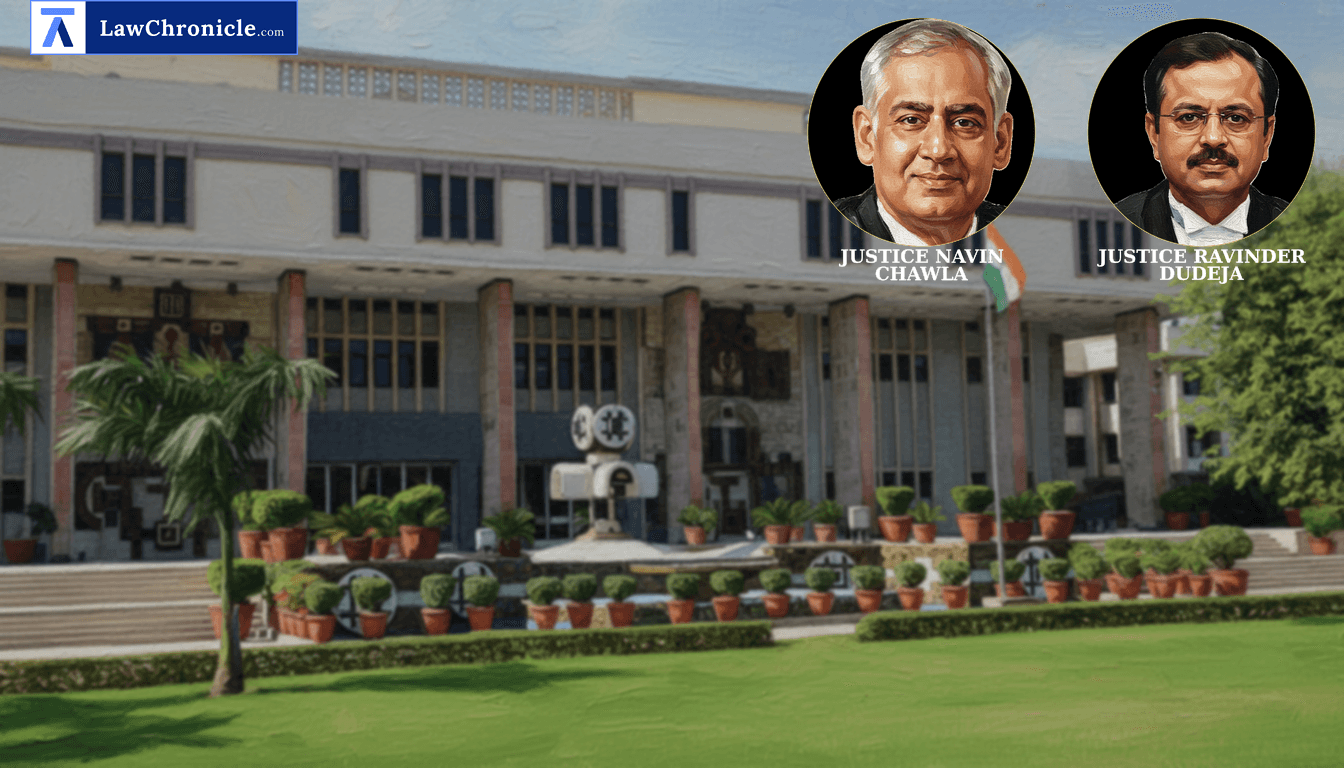
The Delhi High Court has reinforced the evidentiary weight of the 'last seen' theory combined with a defendant's silence, ruling that the failure of an accused to explain facts within their special knowledge serves as a critical link in establishing guilt in murder cases based on circumstantial evidence.
In a comprehensive ruling, a division bench of Justice Navin Chawla and Justice Ravinder Dudeja dismissed an appeal against a conviction for murder, holding that the prosecution had successfully established a motive rooted in financial disputes and a temporal link between the victim's disappearance and death.
Key Takeaways
Special Knowledge Burden
Under Section 106 of the Indian Evidence Act, 1872, once the prosecution establishes basic facts like 'last seen', the onus shifts to the accused to explain how they parted ways with the victim.
Identification via Photographs
Physical identification of a body is not invalidated by minor discrepancies like facial hair if clothes and clear photographs are identified by close relatives.
Circumstantial Chain
Individual links like motive, last seen, and non-explanation of presence during the period of disappearance cumulatively establish guilt beyond reasonable doubt.
Court Observations on Section 106 of the Evidence Act
The Court scrutinized the interplay between the prosecution's burden and the accused's duty to explain. The Court, in its reasoning, observed: "As per Section 106 of the Indian Evidence Act, 1872, the onus to explain would shift on the accused only after the prosecution succeeds in establishing the basic facts from which a reasonable inference can be drawn regarding the existence of certain other facts which are within the special knowledge of the accused. If the accused fails to offer a proper explanation about the existence of the said other facts, the Court can draw an inference against the accused."
Addressing the 'last seen' doctrine, the Court noted its relevance when paired with medical timelines. The Court referred to the principle in Nizam & Anr. v. State of Rajasthan ( "(2016) 1 SCC 550": 2015 CaseBase(SC) 534) to emphasize that while 'last seen' is not the sole basis for conviction, it is a vital link when the time gap between the last meeting and death is narrow.
Directions Issued by the Court
The Court has following directions:
"The appeal accordingly stands dismissed."
"The appellant is directed to surrender before the Superintendent Jail within a period of two weeks from the date of the judgment for serving the remaining sentence and in the event of failure to surrender, appropriate steps be taken by the Superintendent Jail and the learned Trial court to ensure that the appellant is taken into custody for serving the remaining sentence."
Ratio
In cases founded on circumstantial evidence, the 'last seen' theory shifts the burden of proof to the accused under Section 106 of the Indian Evidence Act, 1872 to explain the circumstances of parting ways. A total failure to provide a reasonable explanation, combined with a proven motive and a narrow temporal gap between the last seen event and the time of death, completes the chain of circumstances necessary to sustain a conviction for murder.
Background
The dispute originated in January 2000 when the appellant, an employee of the deceased, allegedly took the victim from Delhi to Jaipur for business collections. The victim never returned. A body was recovered by Bulandshahar police on January 2nd, which was later identified via photographs and clothing by the victim's son after the appellant's arrest and subsequent disclosure.
The prosecution relied on the testimony of several witnesses, including a Dhaba owner who saw the two together. The appellant argued that the identification was faulty as the victim had a beard while the recovered body was clean-shaven. However, the Court accepted the prosecution's explanation that fresh blade marks suggested the victim was shaved post-mortem to conceal identity.
The Court also addressed the applicability of Charandas Swami v. State of Gujarat and Ors. ( "(2017) 7 SCC 177": 2017 CaseBase(SC) 378) regarding disclosure statements, noting that even if a body is already recovered as 'unidentified', the accused's knowledge of the specific location and the identity of the body constitutes a relevant discovery under Section 27 of the Indian Evidence Act, 1872. Citing Ganeshlal v. State of Maharashtra ( "(1992) 3 SCC 106": 1992 CaseBase(SC) 400), the Court reiterated that a denial of prosecution facts without a counter-explanation is consistent with the hypothesis of guilt.
Case Details:
Case No.: CRL.A. 72/2005
Case Title: HASMAT ALI v. STATE NCT OF DELHI
Appearances:
For the Petitioner(s): Mr. Mohd. Nasir, Mr. Tabrez, Mr. Javed, Mr. Saad, Advocates
For the Respondent(s): Mr. Aman Usman, APP for the State with Mr. Manvendra Yadav, Advocate
Source: 2026 CaseBase(DEL) 6629
Similar Articles



 Breaking News


