


Conviction Based on Complete Chain of Circumstances Upheld; State Directed to Consider Remission
 Copy Link
 Share
 Save
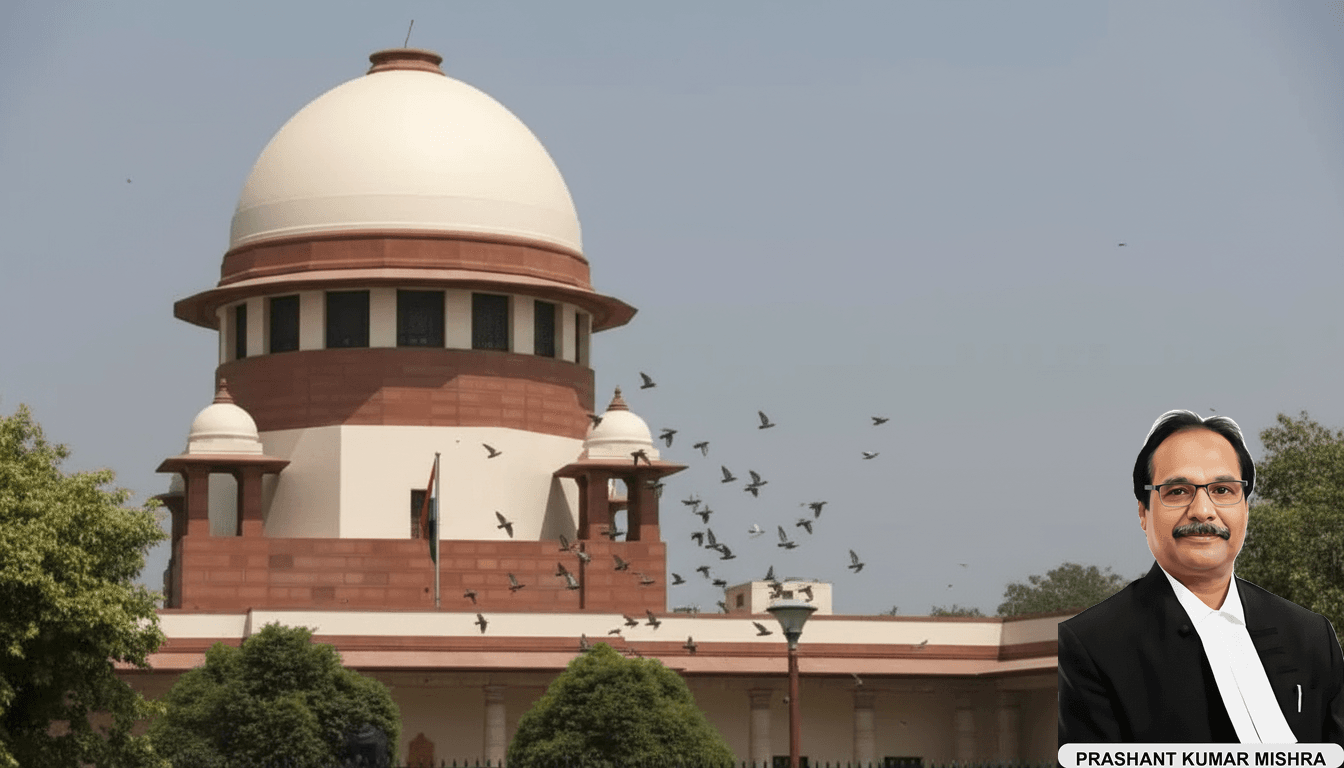
A Bench of Justice Prashant Kumar Mishra and Justice Vipul M. Pancholi heard an appeal by Neelu @ Nilesh Koshti challenging concurrent convictions and sentences imposed for the murder of Archana @ Pinki and for destruction of evidence, arising from the recovery of the deceased’s body and related material during police investigation.
The Court dismissed the appeal and upheld the judgments of the Trial Court and the High Court, holding that the prosecution had established a complete and unbroken chain of circumstantial evidence pointing to the appellant’s guilt. The Bench accepted the Trial Court’s and High Court’s findings that ransom calls were made from the deceased’s mobile, the phone and the scooty were traced to persons who had purchased them from parties linked to the appellant, and crucially the dead body was recovered from a well at the appellant’s disclosure. The Court reiterated established principles for convictions based on circumstantial evidence and confirmed the admissibility of the appellant’s memorandum statement under Section 27 of the Evidence Act as leading to the discovery. The High Court’s earlier observation that “Looking to the testimony of all these witnesses coupled with the medical evidence and other piece of circumstantial evidence available on record, we are of the considered opinion that trial court did not commit any error in holding that appellant has murdered the deceased Pinki for non-fulfillment of his demand of ransom by strangulating her and kept her body in an empty sack and destroyed the evidence of murder by throwing her dead body into the well,” was accepted by the Supreme Court. The Court, in its reasoning, observed: “The entire case of the prosecution rests on circumstantial evidence, as there is neither any eyewitness nor any judicially admissible confession. It is a trite law that when the conviction is solely based on circumstantial evidence, there should be no breakage in the chain of circumstances, leading to the culpability of the accused, within all human probability. In Sharad Birdhichand Sarda vs. State of Maharashtra this Court outlined five essential principles which must be satisfied before an accused can be convicted on the basis of circumstantial evidence… (1) the circumstances from which the conclusion of guilt is to be drawn should be fully established; (2) the facts so established should be consistent only with the hypothesis of the guilt of the accused; (3) the circumstances should be of a conclusive nature and tendency; (4) they should exclude every possible hypothesis except the one to be proved; and (5) there must be a chain of evidence so complete as not to leave any reasonable ground for the conclusion consistent with the innocence of the accused.”
Background:
The dispute arose after Archana @ Pinki was reported missing on 28.07.2009 though she had been missing since 25.07.2009. Her husband Rajesh deposed that he received ransom calls demanding Rs. 5 lakh from a person claiming custody of her; call detail evidence showed calls from the deceased’s mobile. Investigation traced the deceased’s mobile to Shekhar Chouhan who purchased it from the appellant and then resold it. The appellant was arrested on 10.08.2009; while in custody his memorandum statement under Section 27 of the Evidence Act led police to a well near Tasaali Dhaba where the deceased’s body, stuffed in a sack, was recovered. The post-mortem reported ligature marks, fracture of thyroid cartilage and ecchymosis consistent with throttling; rope marks and tied handkerchiefs were noted and some parts of the body were sufficiently preserved for identification. Panch witnesses and relatives identified the body by clothing and facial recognition; the scooty used by the deceased was also recovered at the appellant’s disclosure from a parking stand with supporting entries. The Trial Court convicted the appellant under Sections 302 and 201 IPC; the High Court dismissed his appeal, and the Supreme Court affirmed those concurrent findings after reviewing precedents such as Sharad Sarda, Udai Bhan, Bodhraj and Mulakh Raj on circumstantial evidence and on the scope of Section 27. The appeal was dismissed as devoid of merit. Sentences stood as life imprisonment with a fine of Rs.1,000 for the offence under Section 302 IPC and seven years rigorous imprisonment with a fine of Rs.1,000 for the offence under Section 201 IPC, with default stipulations. Noting that the appellant had undergone over 15 years of imprisonment, the Court granted liberty to apply for remission and directed the State to consider his case for remission in accordance with the applicable policy.
Case Details:
Case No.: Criminal Appeal No. 5357 of 2025 (2026 INSC 173)
Case Title: Neelu @ Nilesh Koshti v. The State of Madhya Pradesh
Appearances:
For the Petitioner(s): Not mentioned in the judgment
For the Respondent(s): Not mentioned in the judgment
Source: 2026 CaseBase(SC) 139
Similar Articles




 Breaking News


