


Absence Of Ticket Doesn't Disentitle Railway Accident Victim's Claim: Supreme Court
 Copy Link
 Share
 Save
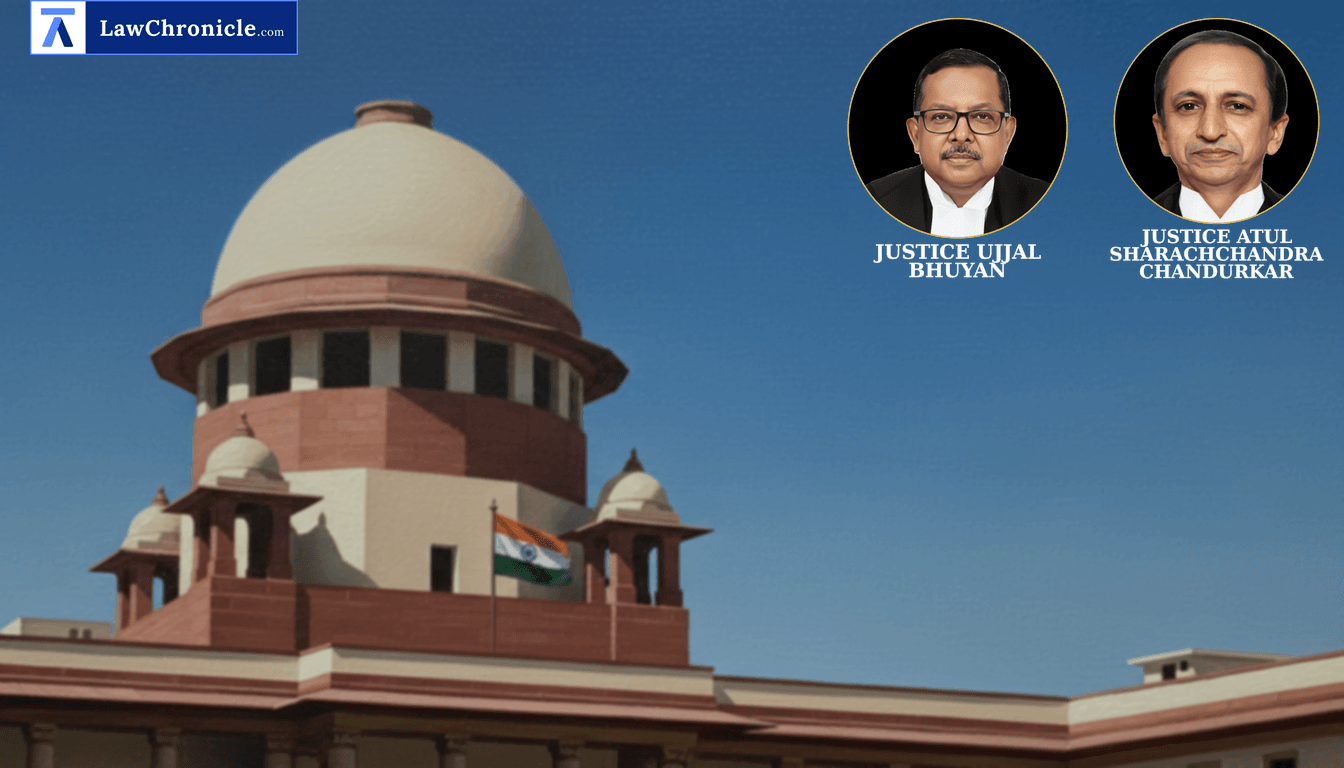
The Supreme Court ruled that the mere non-recovery of a train ticket cannot be used to defeat a victim's compensation claim for an untoward railway incident. A bench comprising Justice Ujjal Bhuyan and Justice Atul S. Chandurkar set aside a High Court judgment that had denied compensation to the parents of a deceased passenger solely due to missing travel details and ticket.
Key Takeaways
- Discharge of Initial Onus: Claimants discharge the initial burden of proving bona fide passenger status by submitting a sworn affidavit, shifting the onus onto Railways.
- Strict Liability Principle: Compensation for untoward incidents operates under strict liability under Section 124-A of Railways Act, 1989.
- Delayed DRM Reports Invalid: Investigations conducted months after the incident without proper justification cannot be weaponized by Railways to deny claims.
- Pragmatic Evidentiary Approach: Pockets left unsearched by railway staff at the scene cannot be used to presume the victim was an unauthorized passenger.
Court Observations and Directions
The Supreme Court restored the award passed by the Railway Claims Tribunal Act, 1987 and rejected the Railways' defense of self-inflicted injury. The Court emphasized that loss of tickets during traumatic accidents is a common occurrence on preponderance of probabilities. The Bench highlighted that "On preponderance of probabilities, it can be concluded that the victim was a bona fide passenger and that absence of recovery of his ticket cannot result in defeating the claim for compensation. The principle of 'strict liability' flowing from Section 124-A of the Act of 1989 as held in Union of India vs. Prabhakaran Vijaya Kumar & Others is clearly attracted."
Addressing the delayed investigation report produced seven months post-incident, the Court noted that failure to adhere to statutory timelines under Rule 6 and 7 of the Railway Passengers (Manner Of Investigation Of Untoward Incidents) Rules, 2003 deprives such reports of evidentiary weight.
Ratio
Once a claimant files a sworn affidavit stating that the deceased was a bona fide passenger who purchased a ticket that was subsequently lost in an untoward incident, the initial burden shifts entirely to the Railways. The mere absence of a ticket recovered from the victim does not negate a claim under Section 124-A of Railways Act, 1989 when the Railways fails to rebut the evidence.
Background
The victim fell from a train due to a sudden jerk while travelling between Sabarmati and Ahmedabad Railway Stations in September 2017 and later succumbed to his injuries. His parents filed a claim under Section 16 of the Railway Claims Tribunal Act, 1987, which was allowed by the Railway Claims Tribunal with ₹8 lakhs compensation and 9% interest. However, a Single Judge of the Gujarat High Court reversed the Tribunal's order, holding that the incident was not an 'untoward incident' under Section 123(c)(2) of Railways Act, 1989 due to lack of train travel details and non-recovery of the ticket. Aggrieved, the parents appealed to the apex court.
Reversing the High Court's order, the Supreme Court relied on Union of India vs. Rina Devi ( "2018 INSC 469": 2018 CaseBase(SC) 1157) to reiterate that lack of a ticket does not inherently disprove passenger status. The Apex Court also drew upon Union of India vs. Prabhakaran Vijaya Kumar & Others ( "2008 INSC 577": 2008 CaseBase(SC) 1499) regarding strict liability under Section 124-A of Railways Act, 1989 and Kalandi Charan Sahoo and Another vs. General Manager, South-East Central Railways, Bilaspur regarding the invalidity of delayed investigation reports compiled beyond the framework of the Railway Passengers (Manner Of Investigation Of Untoward Incidents) Rules, 2003.
Case Details:
Case No.: Civil Appeal No.12951 of 2026
Neutral Citation: 2026 INSC 1056
Case Title: Sukhabhai Nanjibhai Makwana and Another v. Union of India
Appearances:
For the Petitioner(s): Mr. Nachiketa Joshi, Senior Advocate
For the Respondent(s): Mr. Kanakamedala Ravindra Kumar, Additional Solicitor General
Source: 2026 CaseBase(SC) 8011
Similar Articles

 Breaking News


