


Absence of Railway Ticket Not Fatal to Compensation Claim: Bombay HC Reiterates
 Copy Link
 Share
 Save
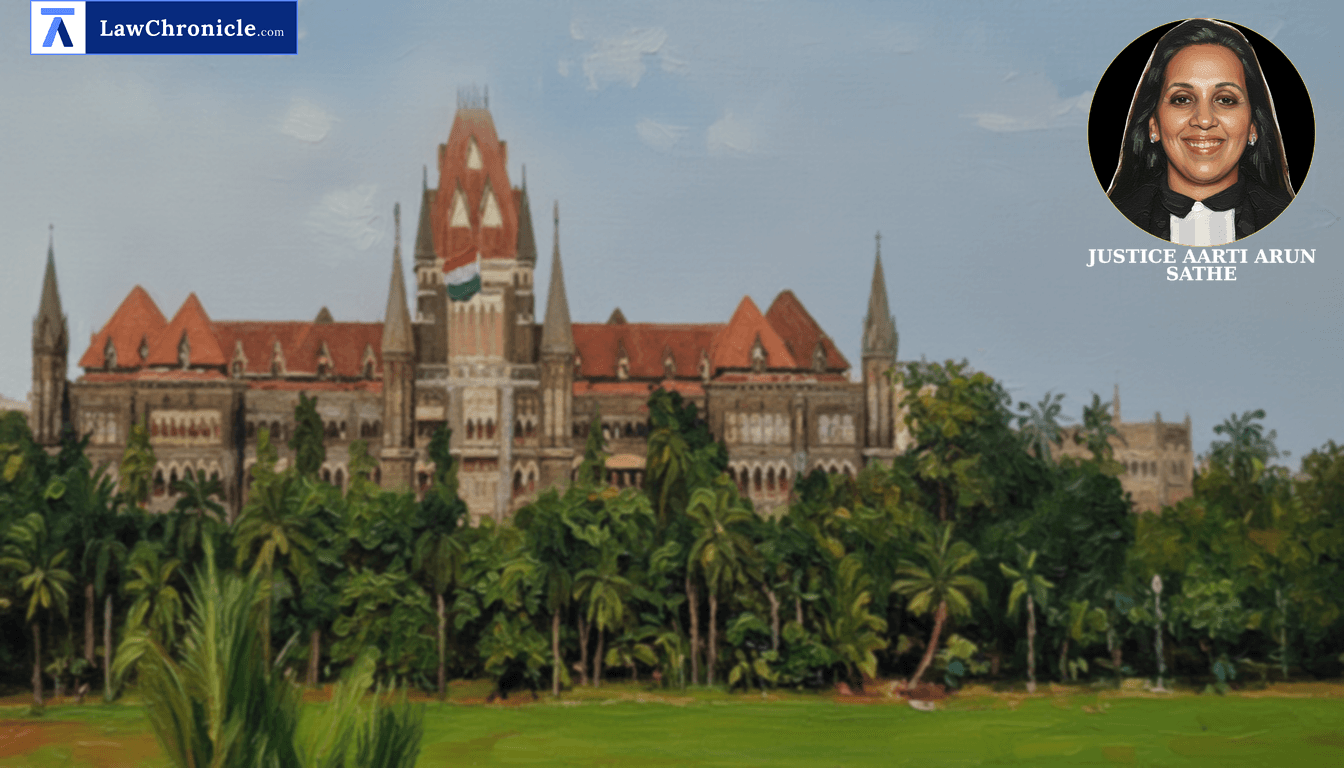
The Bombay High Court has reinforced the protective umbrella of social welfare legislation by ruling that the mere absence of a railway ticket on a deceased body cannot be the sole ground to deny compensation for an untoward incident. In a significant intervention, the Court rebuked the Railway Claims Tribunal for its contradictory findings, holding that once a fall from a train is established, the burden shifts to the Railways to prove the passenger was not bona fide.
A single-judge bench of Justice Aarti Sathe adjudicated the appeal, overturning a 2020 order that had dismissed a death compensation claim. The Bombay High Court emphasized that technicalities cannot override the beneficial intent of the law designed to support families of victims in railway accidents.
Key Takeaways
Prima Facie Bona Fide Status
Filing an affidavit of relevant facts is sufficient to discharge the initial burden of proof regarding a passenger's bona fide status, even if a ticket is not recovered.
Shift in Burden of Proof
Once a claimant asserts the existence of a lost ticket via affidavit, the onus shifts to the Railway Administration to rebut the claim with evidence, rather than relying on negative onus.
Beneficial Legislation Interpretation
Courts must adopt a liberal and beneficiary-centric interpretation of statutes like the Railway Claims Tribunal Act, 1987 to ensure the real intent of the legislature is fulfilled.
Compensation Enhancement
Claimants are entitled to the higher of the two amounts when comparing the pre-amendment compensation (with interest) and the post-2016 revised compensation rates.
Tribunal’s Finding Labeled ‘Erroneous’ and ‘Contradictory’
The Bombay High Court observed that the Tribunal had reached an inconsistent conclusion by acknowledging that the deceased died in an "untoward incident" of falling from a train, yet denying compensation because a return ticket was missing. The Bench noted that a ticket for the first leg of the journey (Kurla to Belapur) was indeed found in the deceased’s wallet, which supported the claimants' version that the return ticket was likely lost during the fall.
The Bombay High Court commented that "The aforesaid finding of the Tribunal is in the teeth of the decision in Union of India Vs. Rina Devi ( "(2019) 3 SCC 572": 2018 CaseBase(SC) 1157), wherein it has been categorically held that even in the cases where there is absence of a railway ticket, the same will not negate the claim of a bona fide passenger. ... Initial burden will be on the claimant which can be discharged by filing an affidavit of the relevant facts and burden will then shift on the Respondent-Railways and the issue can be decided on the facts shown or attending circumstances."
Negligence Claims Rejected Due to Lack of Evidence
Justice Sathe dismissed the Railways' argument that the deceased was negligent by standing near the door. The Bombay High Court pointed out that the Divisional Railway Manager (DRM) report was submitted after an inordinate delay of four years and lacked eyewitness testimony. It was further noted that the mandatory Jamatalashi report under the Railway Passengers (Manner of Investigation of Untoward Incident) Rules, 2003 was not prepared, showing a disregard for due process.
Ratio
Under Section 124A of the The Railways Act, 1989, the absence of a ticket on the person of a victim found dead on railway tracks does not automatically categorize them as a trespasser. If the claimants discharge their initial burden through an affidavit, the presumption of being a bona fide passenger stands unless the Railways provides specific evidence of a criminal act or intentional negligence. Compensation must be awarded at the revised rates if they are more beneficial than the original claim plus interest.
Background
The case arose from the death of Sandeep P. Panda on September 1, 2015. He had travelled from Kurla to Belapur and was returning to CSMT to meet a friend when he fell from a crowded train between Kurla and Chunabhatti stations. While his wallet contained the Kurla-Belapur ticket, the return ticket was not found. The Railway Claims Tribunal dismissed the parents' claim in 2020, asserting the deceased was not a bona fide passenger.
The Bombay High Court, relying on Union of India Vs. Rina Devi ( "(2019) 3 SCC 572": 2018 CaseBase(SC) 1157), Lata vs. Union of India ( "2026 SCC OnLine SC 1350": 2026 CaseBase(SC) 667), and Moulali N Hubballi & Anr vs. Union of India, found that the Railways failed to prove the death fell under any exceptions of Section 124A. Finding the The Railways Act, 1989 to be a beneficial legislation, the Bench allowed the appeal and awarded Rs. 8,00,438.36, representing the more favorable amount between the revised Rs. 8 lakh compensation and the original Rs. 4 lakh plus interest.
Case Details:
Case No.: FIRST APPEAL NO.838 OF 2022
Neutral Citation: 2026:BHC-AS:42264
Case Title: Bhaskar Kandh Panda & Anr. Versus Union of India
Appearances:
For the Petitioner(s): Mr.S.V.Chaugule
For the Respondent(s): Mr.Niranjan Shimpi with Ms.Bhagyashri Waghmare
Source: 2026 CaseBase(BOM) 6538
Similar Articles

 Breaking News


