


Abusive or Vulgar Language Not Per Se Obscene Under Section 294(b) IPC: Supreme Court
 Copy Link
 Share
 Save
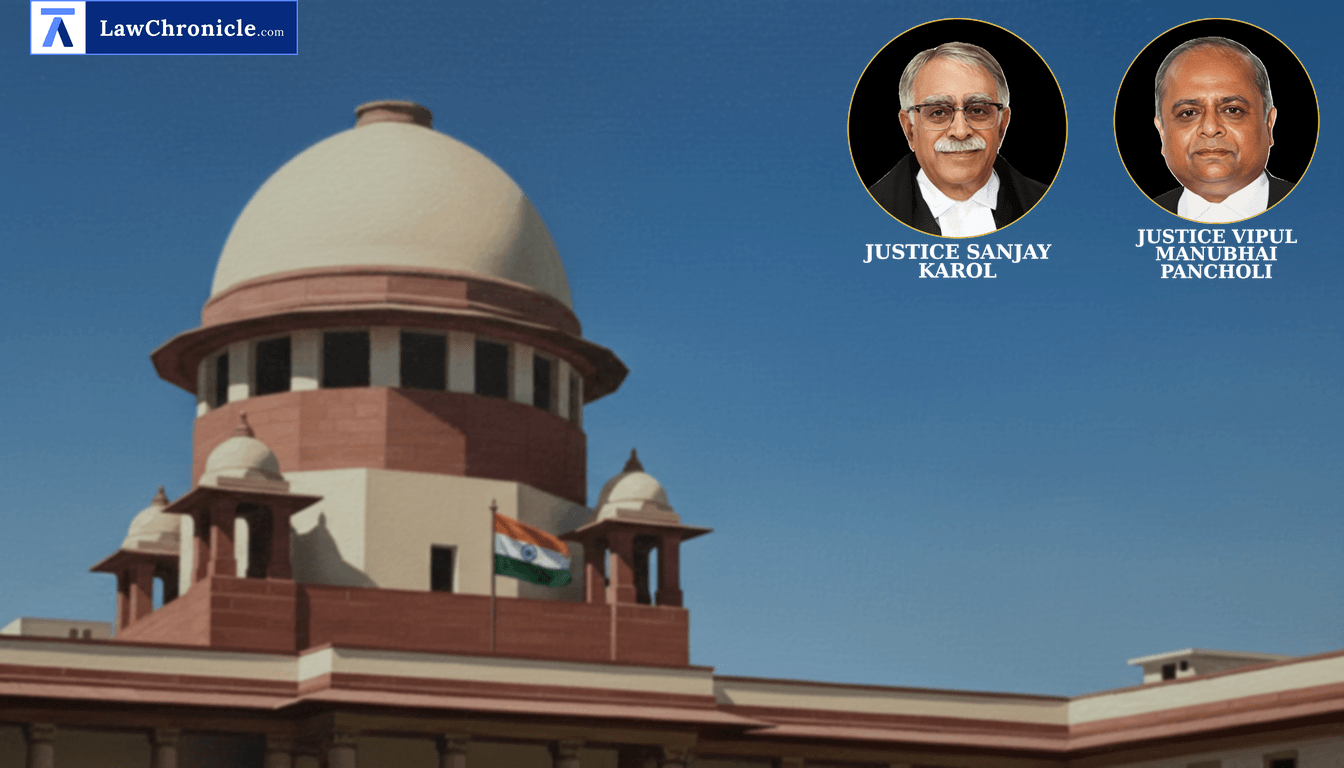
The Supreme Court has clarified the critical legal distinction between mere vulgarity and criminal obscenity, ruling that the use of profane swear words during an altercation does not automatically constitute an offense under the Indian Penal Code, 1860. In a significant judgment, the Court emphasized that for words to be 'obscene' in law, they must satisfy the specific test of being lascivious or having a tendency to deprave and corrupt the minds of those exposed to them.
A bench of Justice Sanjay Karol and Justice Vipul M. Pancholi heard the appeal challenging a Madras High Court order that had confirmed the conviction of a 70-year-old man for using abusive language and criminal intimidation. While the High Court had already acquitted the appellant of charges under the Scheduled Castes and Scheduled Tribes (Prevention of Atrocities) Amendment Act, 2015, the Apex Court was called upon to determine if the conviction under Sections 294(b), 326, and 506(ii) of the Indian Penal Code, 1860 could be sustained.
Distinction Between Obscenity and Vulgarity
The Court scrutinized the scope of Section 294(b) of the Indian Penal Code, 1860, noting that the term 'obscene' is not explicitly defined within the Code. Drawing upon constitutional precedents, the Court applied the 'community standard test' to determine the threshold of obscenity. It observed that words which are merely vulgar or abusive may evoke disgust or shock, but they do not necessarily satisfy the legal requirements of obscenity unless they appeal to prurient interests.
The Court, in its reasoning, observed: "Words which are merely vulgar or abusive may evoke a feeling of disgust, revulsion or shock, but that by itself does not make them obscene in law. It is for this reason that this Court, through various judicial pronouncements, has held that the use of abusive, vulgar or profane language does not necessarily constitute obscenity. For an utterance to be considered obscene, it must be shown that it was lascivious, appealed to prurient interests and had the tendency to deprave and corrupt the minds of those who are exposed to it."
Referencing Ranjit D. Udeshi v. State of Maharashtra ( "1964 SCC OnLine SC 52": 1964 CaseBase(SC) 48) and Aveek Sarkar v. State of W.B. ( "(2014) 4 SCC 257": 2014 CaseBase(SC) 154), the bench noted that even if the slang used by the appellant was distasteful, it lacked the lascivious element required for a conviction. Similarly, the Court set aside the conviction for criminal intimidation under Section 506(ii), finding that mere threatening words used during a heated dispute, without intent to cause alarm or compel action, do not constitute a crime as per the principles in Naresh Aneja v. State of U.P..
Conviction for Grievous Hurt Affirmed
While the Court cleared the appellant of obscenity and intimidation charges, it upheld the conviction under Section 326 of the Indian Penal Code, 1860 for voluntarily causing grievous hurt with a dangerous weapon. Relying on the definition of 'grievous hurt' in Section 320 of the Indian Penal Code, 1860 and the test laid down in Mathai v. State of Kerala ( "(2005) 3 SCC 260": 2005 CaseBase(SC) 1016), the Court found the medical evidence regarding a nasal bone fracture to be conclusive.
Regarding the sentence, the Court took a compassionate view of the appellant's age and the nature of the dispute. The Court has following directions:
"...we are inclined to modify the sentence to be served by the appellant till the rising of the Court on a day as maybe specified by the concerned Court. He shall also be liable to pay a fine to the tune Rs.50,000/-. The same shall be done within a period of two months."
Key Takeaways:
Legal Standard for Obscenity
Abusive language or profanity used in a public place must be lascivious or appeal to prurient interests to attract Section 294(b) IPC; mere vulgarity is insufficient.
Community Standard Test
Courts must apply contemporary community standards rather than outdated tests to determine what constitutes obscenity in the eyes of an ordinary person.
Intent in Criminal Intimidation
Conviction under Section 506(ii) requires proof of intent to cause alarm; spontaneous threats during an altercation may not meet this threshold.
Grievous Hurt via Fractures
A nasal bone fracture squarely fits the definition of 'grievous hurt' under Section 320 IPC, justifying a conviction under Section 326 when caused by a dangerous weapon like a billhook.
Ratio Decidendi:
Obscenity under Section 294(b) IPC is not synonymous with vulgarity, abuse, or profanity. A conviction for obscenity requires the prosecution to prove that the words used were lascivious, appealed to prurient interests, and had a tendency to deprave or corrupt minds, while also causing annoyance to others. Mere swear words, regardless of how uncivil, do not constitute obscenity unless these specific legal elements are established.
Background:
The dispute originated on August 24, 2017, when the appellant allegedly quarrelled with and used caste-based slurs and obscene language against the complainant and his nephew over a land dispute. The appellant then assaulted the complainant with a billhook, causing injuries to his forehead and nose. The Trial Court convicted the appellant under the Scheduled Castes and Scheduled Tribes (Prevention of Atrocities) Amendment Act, 2015 and various sections of the Indian Penal Code, 1860. The Madras High Court later acquitted him of the Scheduled Castes and Scheduled Tribes (Prevention of Atrocities) Amendment Act, 2015 charges but upheld the IPC convictions. The Supreme Court eventually refined this further, affirming only the charge of causing grievous hurt while emphasizing that the verbal abuse did not meet the legal threshold of 'obscenity' as established in Chandrakant Kalyandas Kakodkar v. State of Maharashtra and Samaresh Bose v. Amal Mitra ( "(1985) 4 SCC 289": 1985 CaseBase(SC) 167).
Case Details:
Case No.: Criminal Appeal No. of 2026 (Arising out of SLP(Crl.) No.4516 of 2025)
NeutralCitation: 2026 INSC 719
Case Title: Mani @ Subramaniyam v. State Rep by the Deputy Superintendent of Police
Appearances:
For the Petitioner(s): Mr. Shailesh Madiyal (Amicus Curiae)
Source: 2026 CaseBase(SC) 669
Similar Articles
 Breaking News


