


Adjournments Are A Malignancy: HP High Court Refuses To Reopen Defence Evidence
 Copy Link
 Share
 Save
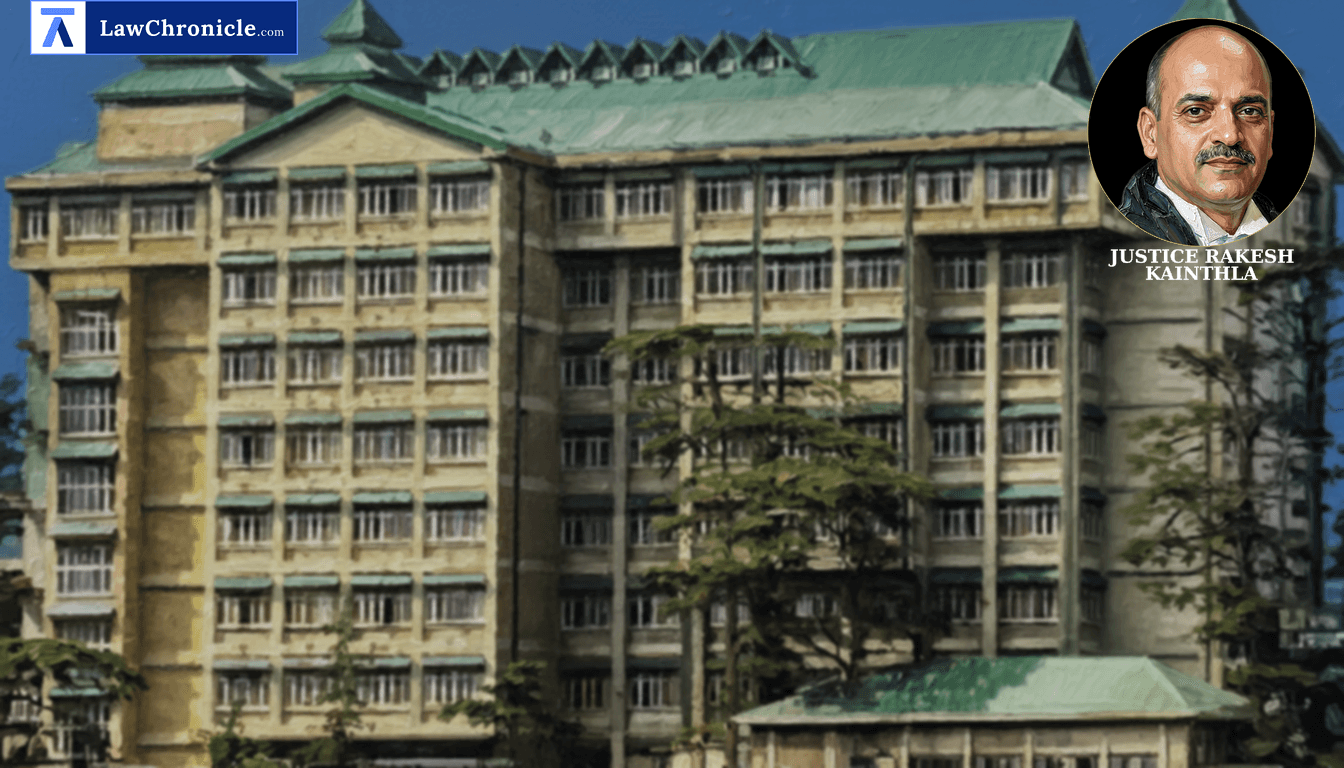
The Himachal Pradesh High Court has slammed the practice of seeking repeated adjournments in criminal trials, ruling that the 'interest of justice' cannot be used as a cloak to hide gross negligence or dilatory tactics by litigants. Declining to interfere with a trial court's decision to close defence evidence in a cheque bounce case, the Court underscored that the judiciary cannot remain a silent spectator to the systemic 'slow motion syndrome' that corrodes the sanctity of legal proceedings.
In a verdict delivered by Justice Rakesh Kainthla, the High Court heard a petition challenging an order passed by the Chief Judicial Magistrate, Kullu, which had closed the petitioner's right to lead evidence. The petitioner, facing prosecution under Section 138 of the Negotiable Instruments Act, 1881, had sought further time citing a medical condition, a plea the Court found factually unsubstantiated and legally untenable.
Key Takeaways
End to Routine Adjournments
Trial courts are not obliged to grant adjournments mechanically and must ensure that effective progress takes place on every date of hearing to maintain public faith.
Medical Grounds Require Contemporaneous Proof
Medical records from previous years cannot be used to justify non-appearance or failure to produce evidence in the current year.
Fair Trial is Not a License for Delay
While a fair trial is a constitutional right, it does not permit an accused to indefinitely stall proceedings through unnecessary applications or absence.
Inherent Powers Restricted
Extraordinary jurisdictions for preventing abuse of process will not be exercised to rescue a party that has been consistently dilatory in its conduct.
The Judicial Rebukal of 'Slow Motion Syndrome'
The Court observed that the petitioner had failed to show sufficient cause for his inability to produce evidence on the fixed date. Upon reviewing the medical documents, which pertained to 2023 and 2025, the Court found they offered no justification for a default in 2026. The Court emphasized that Section 346 of the Bharatiya Nagarik Suraksha Sanhita, 2023 (corresponding to Section 309 of the Code Of Criminal Procedure, 1973) mandates day-to-day trials to prevent procrastination.
Quoting extensively from various precedents, the Court noted that the problem of arrears in Indian courts has reached a critical stage, where 'justice delayed is justice denied' is no longer just a maxim but a systemic reality. The Court noted that the petitioner's case had been dragging since early 2024, and the trial court was well within its rights to refuse further indulgence.
The Court, in its reasoning, observed: "Adjournments have grown like cancer, corroding the entire body of the justice delivery system. A party to the suit is not at liberty to proceed with the trial at its leisure and pleasure and has no right to determine when the evidence would be let in by it or the matter should be heard. The parties to a suit whether the plaintiff or the defendant must cooperate with the court in ensuring the effective work on the date of the hearing for which the matter has been fixed. If they do not, they do so at their own peril."
The Court further highlighted that the 'Majesty of Justice' does not allow the court to be a silent spectator when litigants attempt to hijack community interests by making trials farcical through 'mock' delays.
Ratio
The High Court held that the grant of repeated adjournments without justification is a 'malignancy' that affects the right to a speedy trial. The interest of justice demands a balance between the rights of the accused and the need for timely disposal; therefore, trial courts must not grant adjournments in a routine or mechanical manner. Inherent powers under Section 528 of Bharatiya Nagarik Suraksha Sanhita, 2023 cannot be invoked where the circumstances do not indicate an abuse of process or a failure to secure the ends of justice.
Background
The legal battle began when Kanwar Shiv Pal Singh filed a complaint against Sher Singh for the dishonor of a cheque worth ₹4,90,000/-. After the cross-examination of the complainant was allowed, the petitioner failed to appear on several dates, leading to the initiation of proclamation proceedings. Although the petitioner eventually secured the cancellation of non-bailable warrants under Section 70(2) of the Bharatiya Nagarik Suraksha Sanhita, 2023, he failed to take steps to produce defence evidence.
The petitioner argued before the High Court that he suffered a major paralytic attack and was unable to walk, which prevented him from producing evidence. However, the Court found that the medical records provided were outdated. Relying on Asha Ranjan v. State of Bihar ( "(2017) 4 SCC 397: (2017) 2 SCC (Cri) 376: 2017 SCC OnLine SC 140": 2017 CaseBase(SC) 485) and Ishwarlal Mali Rathod v. Gopal ( "(2021) 12 SCC 612: (2023) 2 SCC (Civ) 625: 2021 SCC OnLine SC 921": 2021 CaseBase(SC) 1851), the Court reiterated that an accused cannot seek adjournments indefinitely in the name of a fair trial. It also cited Jasbir Sobti v. Surender Singh to establish that minor procedural lapses might be condoned, but persistent laxity cannot be tolerated. Following the principles in Vinod Kumar v. State of Punjab ( "(2015) 3 SCC 220: (2015) 2 SCC (Cri) 226: (2015) 1 SCC (L&S) 712: 2015 SCC OnLine SC 53": 2015 CaseBase(SC) 113) and Bablu Kumar v. State of Bihar, the petition was dismissed, affirming the trial court's order to close the evidence.
Case Details:
Case No.: Cr. MMO No. 1156 of 2026
Neutral Citation: 2026:HHC:46973
Case Title: Sher Singh v. Kanwar Shiv Pal Singh
Appearances:
For the Petitioner(s): Mr Devender K. Sharma, Advocate.
For the Respondent(s): Nemo
Source: 2026 CaseBase(HP) 11142
Similar Articles
 Breaking News


