


Advocates Cannot Close Defence Evidence Without Specific Instructions: Gauhati HC
 Copy Link
 Share
 Save
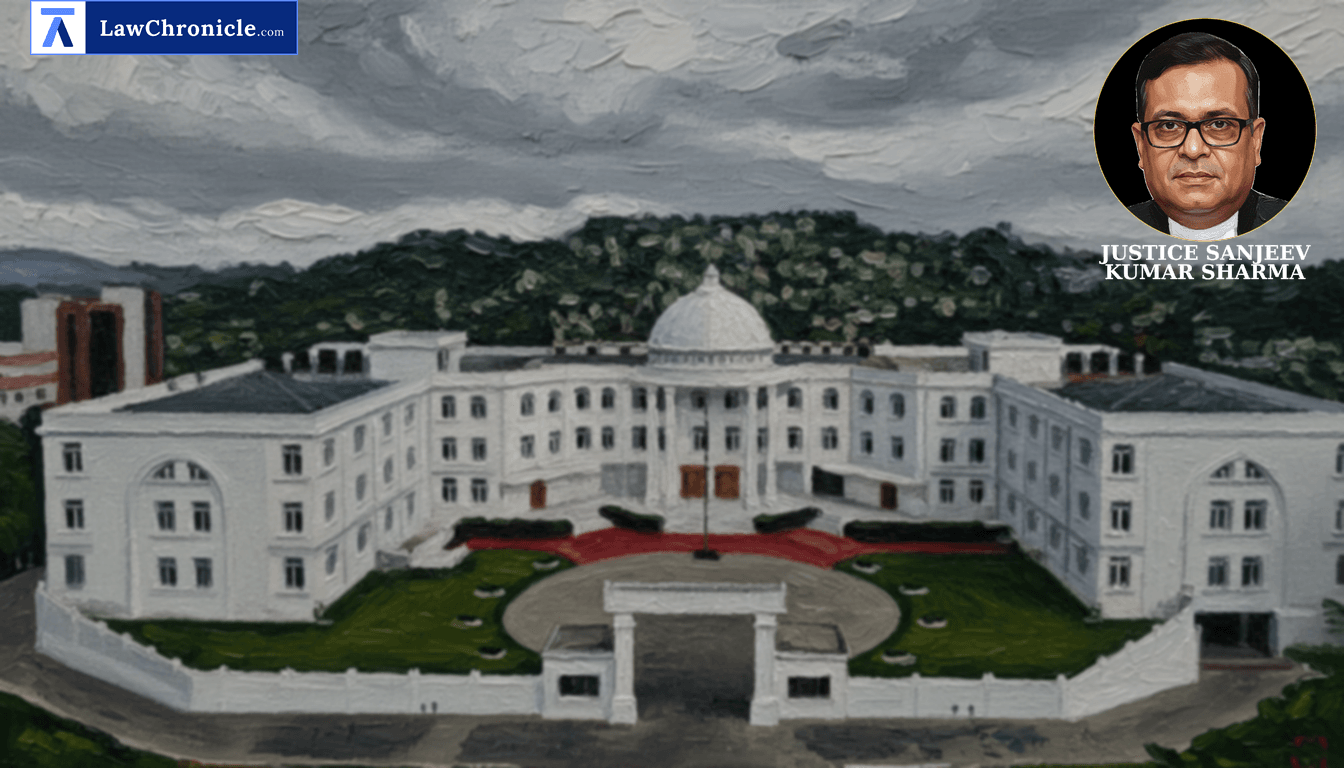
Denying an accused the right to present defence evidence renders a trial a mere walkover for the prosecution, striking at the very core of fair trial guarantees. The Gauhati High Court has held that an advocate cannot unilaterally move to close defence evidence without express client instructions, emphasizing that courts retain statutory power to enable necessary evidence in the interest of justice.
A single-judge bench of Justice Sanjeev Kumar Sharma set aside a Magistrate's order rejecting a plea to recall the closure of defence evidence in a cheque dishonour case. Hearing a criminal revision petition challenging the order of the Judicial Magistrate First Class, Kamrup(M), the Court addressed whether trial courts can permit defence evidence despite previous procedural lapses and whether advocates can close evidence without client instructions.
Key Takeaways
Fair Trial Rights Paramount: Denying defence evidence turns criminal proceedings into an unfair walkover for the prosecution.
Advocacy Boundaries Enforced: Counsel must withdraw rather than close defence evidence without specific client instructions.
Section 311 CrPC Operates Independently: Re-opening evidence under Section 311 does not amount to an impermissible judicial review of criminal orders.
Reversing the Magistrate's decision, the High Court observed that while the petitioner was negligent in court attendance, total deprivation of defence evidence frustrates fair trial principles, especially when statutory presumptions operate against the accused under the Negotiable Instruments Act.
In relation to the duties of an advocate, the Court, in its reasoning, observed: "if the accused had failed to appear on consecutive dates and the learned counsel representing the accused had no instructions from his client, i.e., the accused, the proper course of action would have been for the said learned counsel to have withdrawn from the case and not to have made a submission to the Court to close the defence evidence. Ordinarily, of course, an Advocate is presumed to be acting under the instructions of his client, but on an issue of such grave importance and consequence for the accused, namely the closure of the defence evidence, in the absence of specific instructions to that effect, it was perhaps not proper for the learned counsel to have submitted before the Court to close the defense evidence."
Addressing the Magistrate's jurisdiction under Section 311 of the Cr.P.C., the Court clarified that summoning essential witnesses is an independent power to ensure a just decision, rather than a review of prior orders. Relying on Rajaram Prasad Yadav vs State of Bihar & Anr. ( "(2013) 14 SCC 461": 2013 CaseBase(SC) 623), Jamatraj Kewalji Govani vs. State of Maharashtra ( "AIR 1968 SC 178": 1967 CaseBase(SC) 287), Mohanlal Shamji Soni vs. Union of India and another ( "1991 Suppl.(1) SCC 271": 1991 CaseBase(SC) 246), Raj Deo Sharma (II) vs. State of Bihar ( "1999 (7) SCC 604": 1998 CaseBase(SC) 556), U.T. of Dadra and Nagar Haveli and Anr. vs. Fatehsinh Mohansinh Chauhan, Iddar & Ors. vs. Aabida & Anr. ( "AIR 2007 SC 3029": 2007 CaseBase(SC) 221), and P. Sanjeeva Rao vs. State of A.P. ( "AIR 2012 SC 2242": 2012 CaseBase(SC) 278), the Court reiterated that statutory provisions like Section 311 of the Cr.P.C. and Section 138 of the Evidence Act must be exercised liberally to secure justice.
The Court has following directions:
"Accordingly, I deem it fit to allow the instant revision by setting aside the impugned order dated 23-03-2026 and directing the learned Magistrate to record the defence evidence, if offered, subject to payment of a costs of Rs. 10,000/- to the complainant, the sole respondent herein, before the recording of such defence evidence. The petitioner/accused as well as the complainant/the sole respondent herein are directed to appear before the learned trial court within a period of 7 (seven) days from today, whereafter the defence witnesses, if any, presented by the accused, shall be examined by the learned trial court, and the said exercise shall be completed within a period of 14 (fourteen) days from the date of appearance of the parties before the learned trial court pursuant to the instant order. It is made clear that, under no circumstances, any further opportunity shall be granted to the accused beyond the aforesaid period of 14 (fourteen) days to present defence evidence. It is further made clear that in the event the complainant seeks an adjournment on any ground, the same shall be considered on merits by the learned trial court."
Ratio
When an accused fails to appear, an advocate lacking instructions must withdraw from the case rather than consent to close defence evidence without specific authorization. Furthermore, the invocation of Section 311 CrPC to allow essential defence evidence constitutes an independent power to ensure a just decision and fair trial, rather than an impermissible review of a criminal court's previous order.
Background
The case arose from a complaint filed under Section 138 of the Negotiable Instruments Act against the petitioner in CR(NI) case No. 6360/2018. After prosecution evidence was closed and statement under Section 313 of the Cr.P.C. was recorded, the petitioner failed to appear on consecutive dates, leading to the issuance of non-bailable warrants. On March 18, 2025, the petitioner's former counsel submitted before the Magistrate to close defence evidence, allegedly without client instructions.
Subsequently, the petitioner engaged new counsel and filed an application to recall the closure order to record defence evidence. The Magistrate rejected this application on March 23, 2026, finding that the petitioner was deliberately delaying proceedings. Aggrieved, the petitioner approached the High Court in revision. The High Court allowed the revision petition, setting aside the Magistrate's order and granting one final 14-day opportunity to the accused to adduce defence evidence, subject to payment of Rs. 10,000 as costs to the complainant.
Case Details:
Case No.: Crl.Rev.P./273/2026
Neutral Citation: 2026:GAU-AS:11455
Case Title: MR DIPAMJYOTI BORAH v. SRI DIGANTA SIKDAR
Appearances:
For the Petitioner(s): MR SISHIR DUTTA, Senior Counsel, assisted by MR. S DUTTA
For the Respondent(s): MR. C K NATH
Source: 2026 CaseBase(GAU) 1114
Similar Articles
 Breaking News


