


Administrator Lacks Inherent Power to Terminate Employees Without Formal Inquiry: Kerala HC
 Copy Link
 Share
 Save
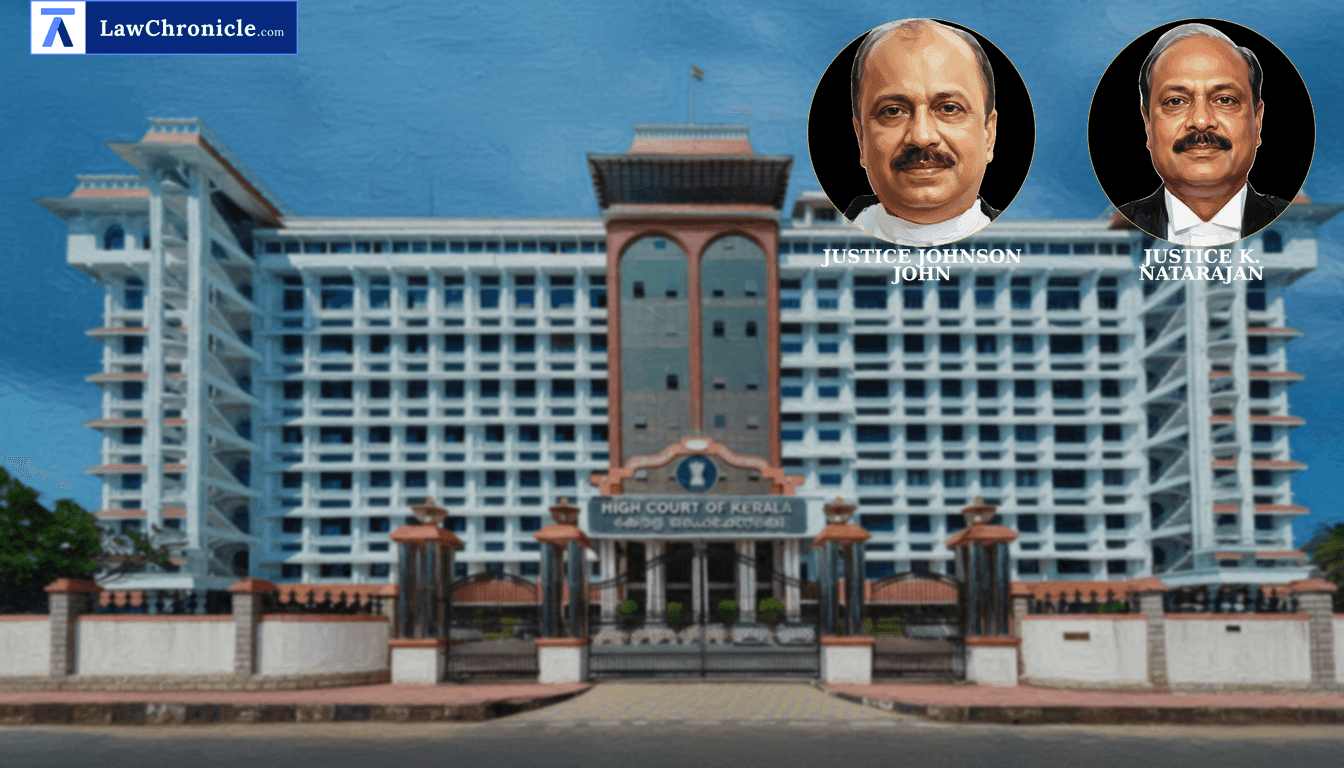
The High Court of Kerala has reinforced the constitutional safeguards for public employment, ruling that an Administrator of a co-operative bank cannot summarily terminate regular employees or cancel a selection process initiated by a previously elected Managing Committee without conducting a formal, independent departmental inquiry.
In a significant verdict, a Division Bench comprising Justice K. Natarajan and Justice Johnson John emphasized that the unfettered discretion to terminate services, especially those governed by statutory rules, is a manifest violation of the rule of law and the procedural protections enshrined under the Constitution of India, 1950.
Key Takeaways
Limitations on Administrative Authority
Administrators appointed under Section 32 of the Kerala Co-operative Societies Act, 1969 are restricted to routine functions and cannot make major policy decisions or reverse selection processes without explicit Registrar concurrence.
Public Law Element in Co-operative Banking
Since co-operative banks operate under the Banking Regulation Act, 1949 and statutory supervision, their employment disputes carry a public law element, making them amenable to writ jurisdiction under Article 226.
Mandatory Procedural Safeguards
Termination of regular employees, even those on probation, requires adherence to principles of natural justice, including a formal inquiry and prior approval from the Registrar.
Judicial Scrutiny of Administrative Overreach
The Court observed that the Administrator had terminated the petitioners on grounds of alleged irregularities in the selection process, such as non-compliance with reservation rules under Rule 187 of the Kerala Co-operative Societies Rules, 1969 and the acceptance of fraudulent certificates. However, the Bench noted that these actions were taken without the oversight of an Inquiry Officer or concurrence from the Registrar.
The Court has following directions:
"In such circumstances, this Court must reinstate them with continuity of service and all consequential benefits. Accordingly, the issues are answered against the appellants, and the appeals are liable to be dismissed."
The Court, in its reasoning, observed: "It is further held that constitutional intent is clear that in a democratic republic governed by the rule of law, public employment cannot be terminated at the unfettered discretion of the employer... save and except these narrowly tailored exceptions, the holding of an inquiry prior to dismissal, removal, or reduction in rank remains the constitutional rule and not a matter of discretion."
Ratio
An Administrator of a Co-operative Society, being a nominee of the Registrar, does not possess the inherent power to review or annul the selection and appointment decisions of a previously elected Managing Committee through simple administrative orders. Any termination of regular employees must strictly adhere to the statutory disciplinary procedures, including the conduct of a formal inquiry and obtaining prior approval from the Registrar, as the employment in such institutions involves a public law element and constitutional protections against arbitrary executive action.
Background
The dispute arose when the Thrissur District Co-operative Bank (now merged into the Kerala State Co-operative Bank) invited applications for part-time sweepers in 2015. Although the notification was challenged in Trissur District Co-operative Bank v. State of Kerala ( "[2003 (2) KLT 606]": 2003 CaseBase(KER) 303) and Gangadharan v. Administrator, the High Court eventually upheld the validity of the notification in Debashish Mohapatra & Ors.v. District and Session Judge, Jagatsinghpur & Ors.. Following a change in management, an Administrator replaced the elected committee and subsequently issued orders in 2017 and 2018 terminating the petitioners and cancelling the entire selection process.
The Bank argued that the Administrator had inherent power to correct 'accidental mistakes' and cited State of U.P. v. U.P. State Law Officers' Association and others to argue that those who enter through the 'back door' must leave by the same door. The Bank also challenged the maintainability of the writ based on Association of Milma Officers' Ksheera Bhavan, Tvm and another v. State of Kerala and Others. However, the Court distinguished these by relying on State of West Bengal and others v. Jai Hind Private Limited and Rajan N. v. State of Kerala and Others, noting that statutory violations make the society's actions liable to judicial review. The Court ultimately dismissed the appeals filed by the Bank and third parties, upholding the single judge's order to reinstate the employees.
Case Details:
Case No.: WA NO. 1601 OF 2022 & batch
Neutral Citation: 2026:KER:76855
Case Title: Thrissur District Co-operative Bank Ltd. & Anr. v. Haroon.K.A. & Ors.
Appearances:
For the Petitioner(s): Sri. P.C. Sasidharan, SC; Shri. O.V. Maniprasad; Shri. Jose Antony; Shri. Harikrishnan P.
For the Respondent(s): Sri. P.N. Mohanan; Sri. N. Anand; Smt. K.P. Santhi; Smt. A. Sreekala, Sr. Government Pleader; Sri. Saneej M.S., Government Pleader
Source: 2026 CaseBase(KER) 24974
Similar Articles
 Breaking News


