


Orrisa HC: State Cannot Arbitrarily Cancel Completed Recruitment Process On Whimsical Grounds
 Copy Link
 Share
 Save
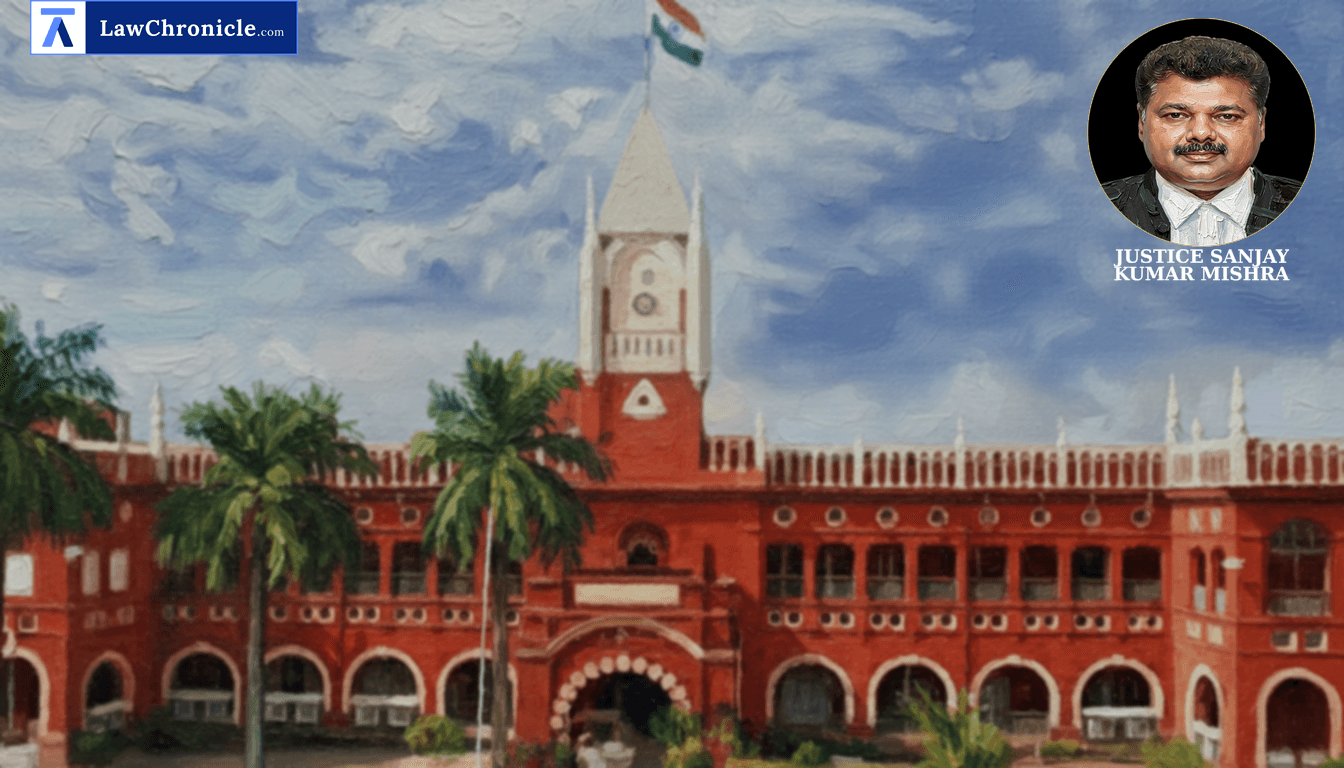
The Orissa High Court has reinforced the constitutional protection against executive arbitrariness in public employment, ruling that the state cannot nullify a completed selection process based on non-existent records or 'notes of dissent' that never saw the light of day. Justice Sanjay Kumar Mishra, presiding as a single judge bench, quashed the Odisha Legislative Assembly's decision to cancel a three-year-old recruitment for Reporters, holding that while candidates lack an indefeasible right to appointment, the state is under a legal obligation to justify its refusal with reasonable, non-capricious grounds.
Justice Sanjay Kumar Mishra delivered the judgment in a challenge brought by two candidates whose selection for the post of Reporters was stalled by the Assembly Secretariat for years despite no proved irregularities. The Court was hearing an application filed under Article 226 and Article 227 of the Constitution of India, 1950.
Court Strikes Down Cancellation of Selection Process
The Court observed that the Selection Board's decision to cancel the recruitment process on the pretext of missing original documents was hit by the principle of res judicata, as a coordinate bench had already scrutinised the same records and found the process 'hassle-free'. The Court, in its reasoning, observed: "The decision not to fill up the vacancies has to be taken bona fide for appropriate reasons. And if the vacancies or any of them are filled up, the State is bound to respect the comparative merit of the candidates, as reflected at the recruitment test, and no discrimination can be permitted."
Addressing the state's reliance on a 'note of dissent' to justify the cancellation, the Court remarked that such claims were an afterthought intended to nullify the recruitment. The Court noted: "In the absence of any clarity coupled with the fact that no enquiry having been conducted on such allegation by the authorities before coming to the conclusion to cancel the recruitment process, complex this Court to believe that such belated discussion on the dissent note is an afterthought to nullify the recruitment process."
The Court's Directions
The Court has the following directions:
"The Opposite Party No.1 is directed to do all the remaining formalities as per Rule 7(2) of the Rules 1983, if it is so required, and appointment letters be issued in favour of the Petitioners for the posts of Reporters in Odisha Legislative Assembly, in terms of the advertisement dated 26.01.2021, within four weeks from the date of production/communication of the certified copy of this Judgment."
Background:
The dispute began with a 2021 advertisement for seven Reporter posts. The Petitioners were successfully selected and placed in the merit list. However, the appointment was repeatedly delayed. Initially, the Assembly Secretariat claimed that the Selection Board could not meet. Later, it took a contrary stand, alleging procedural irregularities and the existence of a 'note of dissent' by committee members.
A coordinate bench previously called for the original records and found no such note, observing that the recruitment had followed the rules meticulously. Despite this, the Secretariat issued a fresh notice in July 2023 cancelling the entire process, citing the non-availability of documents for verification. The Court relied on Dinesh Kumar Kashyap & others Vs. South East Central Railway ( "(2019) 12 SCC 798": 2018 CaseBase(SC) 219) and Shankarsan Dash Vs. Union of India ( "(1991) 3 SCC 47": 1991 CaseBase(SC) 594) to emphasize that while the state has discretion, it is bound by Constitution of India, 1950 to act fairly. The Court also referred to Sachin Kumar Vs. Delhi Subordinate Service Selection Board ( "(2021) 4 SCC 631": 2021 CaseBase(SC) 1057) and R.S. Mittal Vs. Union of India ( "1995 Supp (2) SCC 230": 1995 CaseBase(SC) 154) regarding the treatment of systemic fraud versus individual irregularities, concluding that in this case, no wrongdoing was proven to justify cancellation.
Key Takeaways:
Shield Against Administrative Whims
The judgment clarifies that the state’s discretion to not fill vacancies is not absolute and must withstand the test of Article 14.
Precedent on Selection Purity
It establishes that the state must prove "systemic fraud" to cancel an entire selection; mere suspicion or missing files do not suffice to penalise innocent selected candidates.
Finality of Judicial Scrutiny
Once a court has scrutinised records and declared a process valid, the executive cannot use those same records or their alleged absence to take a contrary administrative decision.
Ratio Decidendi:
When a candidate has been selected through a lawful process and vacancies exist, the appointing authority cannot ignore the select panel or decline appointments based on arbitrary, capricious, or whimsical reasons. The burden lies on the state to provide a justifiable, non-arbitrary reason for not filling the posts, and any decision to cancel the recruitment must be proportionate to the risk or proven wrongdoing.
Case Details:
Case No.: W.P.(C) No. 23353 of 2023
Case Title: Sourava Rout & Anr. v. Odisha Legislative Assembly & Anr.
Appearances:
For the Petitioner(s): Mr. Subrat Misra, Advocate
For the Respondent(s): Mr. P.K. Nanda, Advocate (Opp. Party No.1), Mr. Bibekananda Nayak, Addl. Govt. Advocate (Opp. Party No.2)
Source: 2026 CaseBase(ORI) 11
Similar Articles
 Breaking News


