


Adversary Cannot Summon Opposite Party As Witness: Madras High Court
 Copy Link
 Share
 Save
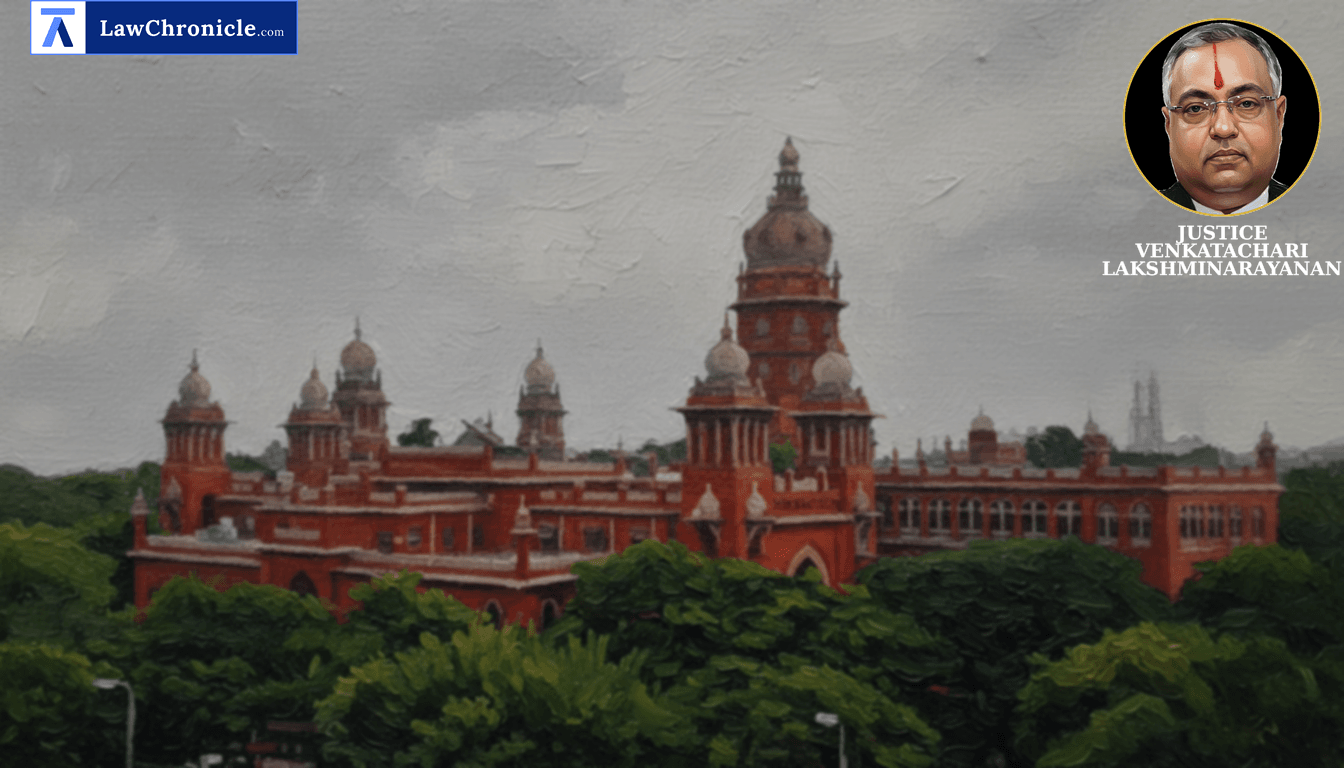
The Madras High Court recently reaffirmed the fundamental principle that a party to a suit cannot summon their opponent as a witness to build their own case, emphasizing that such tactics compromise the integrity of adversarial trials. The Court noted that allowing a defendant to summon the plaintiff's husband is an indirect attempt to bypass legal prohibitions and statutory provisions.
In a decision delivered by Justice V. Lakshminarayanan, the High Court intervened in a civil revision petition challenging a trial court order that had permitted the defendant to summon the plaintiff's husband as a witness. The Court observed that the trial judge had 'fallen prey' to the dilatory tactics of the defendant, who had repeatedly changed counsel and sought adjournments to stall the recovery suit.
The Integrity of Adversarial Trials
The Court, in its reasoning, observed: "It is a settled position of law that an adversary to a suit cannot summon the opposite party as a witness on his side. ... A plaintiff must win on his own strength of evidence, not by forcing the defendant into the witness box to extract evidence under the guise of examination in chief and vice versa. The purpose for having such a rule is to ensure the integrity of adversarial trials and also to prevent the parties from forcing their appellants to build a case against them."
The Court further clarified the scope of its earlier order which had allowed the defendant a limited opportunity to mark specific documents. It emphasized that such liberty did not equate to a 'de novo' trial or a reopening of the entire evidence. Referring to Section 120 of the Indian Evidence Act, the Court held that the interchangeability of evidence between husband and wife makes the summoning of a spouse an indirect attempt to circumvent the law as established in Kishori Lal v.Chuni Lal and followed in Jortin Antony & Ors. v. Sree Padmanabha Dasa Marthanda Varma and Ors.
Directions Issued by the Court
The Court has the following directions:
"i) In the light of the above discussions, the Civil Revision Petition is allowed.
ii) The learned V-Additional District and Sessions Judge, Madurai, is requested to hear the arguments of both sides and pronounce judgment, as directed by this Court, on or before 30.06.2026."
Background:
The dispute originated from O.S.No.376 of 2021, a suit filed by P. Sharmila for the recovery of Rs.23,69,333/- based on a promissory note executed by T. Thirupathy. Although the defendant admitted to executing the note, he contended it was for business dealings with the plaintiff's husband rather than a demand loan. During the trial, the defendant filed various applications under Order VIII Rule 1A(3) of the Code of Civil Procedure to produce additional documents, which were initially dismissed due to non-cooperation.
Following a previous revision where the High Court granted a conditional opportunity to mark documents upon payment of costs, the defendant attempted to summon the plaintiff's husband. The High Court found this to be a "new ploy" and a misuse of liberty. Consequently, the High Court set aside the trial court's docket order and directed the swift disposal of the suit under Article 227 of the Constitution of India.
Case Details:
Case No.: C.R.P.(MD)No.1597 of 2026
Case Title: P.Sharmila v. T.Thirupathy
Appearances:
For the Petitioner(s): Ms.S.K.Pavithra
For the Respondent(s): Mr.Niranjan S.Kumar
Source: 2026 CaseBase(MAD) 290
Similar Articles
 Breaking News


