


Court Discretion Under Order XVI Rule 7 CPC Not Curtailed By Procedural Rules: Jammu & Kashmir and Ladakh HC
 Copy Link
 Share
 Save
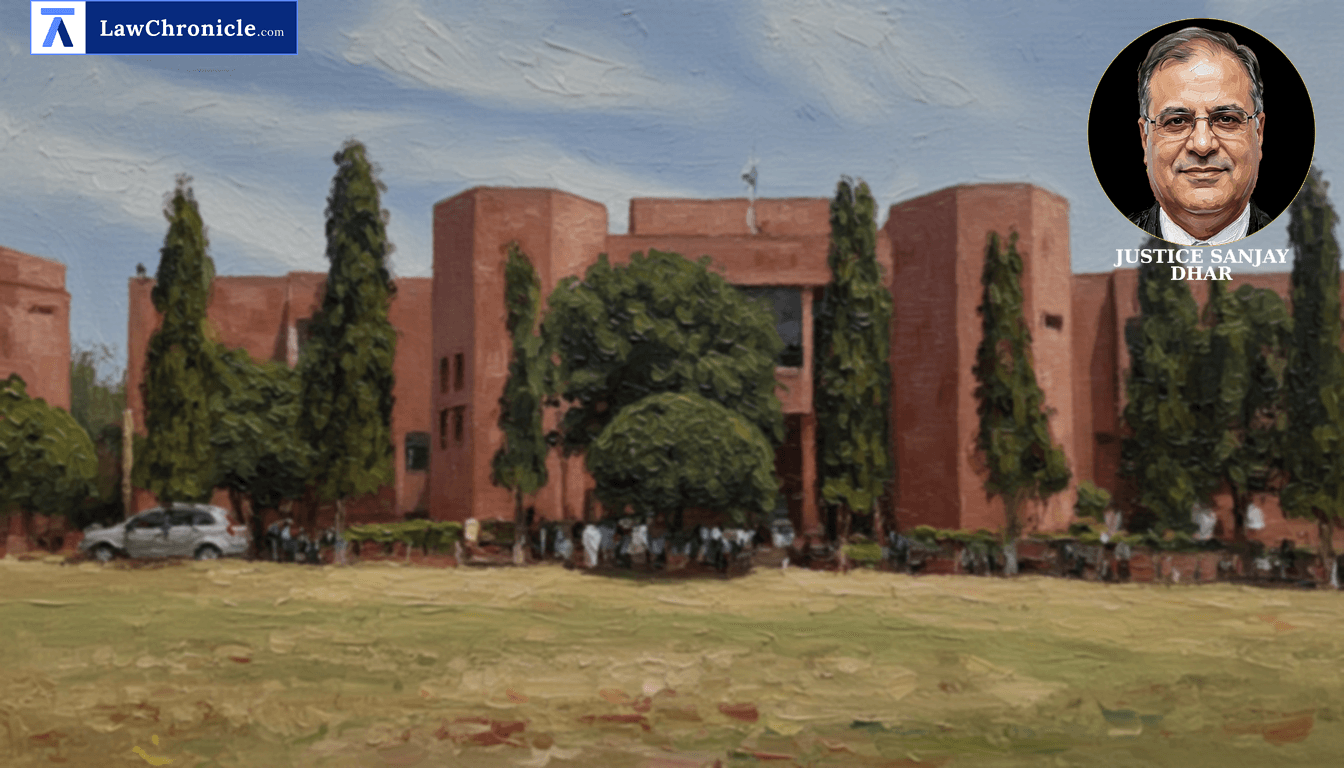
The High Court of Jammu & Kashmir and Ladakh has fortified the discretionary powers of trial courts to summon witnesses and documents present in court, ruling that procedural requirements for witness lists do not override the judicial mandate to secure the best possible evidence for substantial justice.
In a significant procedural clarification, Justice Sanjay Dhar held that the power vested in a court under Order XVI Rule 7 of the Code of Civil Procedure is an independent provision that remains unaffected by the obligations imposed on parties to file witness lists or deposit expenses under preceding rules.
Judicial Discretion and Procedural Mandates
While hearing a supervisory petition under Article 227 of the Constitution, the Court examined whether a trial court could direct a revenue official (Patwari), already present for examination, to produce additional historical revenue records not previously filed by the plaintiff. The petitioner argued that such a direction bypassed the mandate of Order XVI Rules 1 to 6, which require prior listing of witnesses and documents.
Rejecting this narrow interpretation, the Court noted that the trial court's power to require a person present in court to produce a document in their possession is a tool to ensure the 'best evidence' is brought on record. The bench emphasized that the petitioner would not be prejudiced as they retain the right to cross-examine and lead evidence in rebuttal.
Key Takeaways
Primacy of Substantial Justice
Procedural technicalities regarding the filing of witness lists (Order XVI Rule 1) cannot be used to block the court's pursuit of truth through relevant evidence.
Independent Power of Rule 7
Order XVI Rule 7 of the Code of Civil Procedure is an independent provision, not subservient to the requirements of depositing diet money or specifying attendance times in Rules 2 to 5.
Custodians of Public Record
Revenue officials like Patwaris, being custodians of public records, can be directed to produce historical entries to clarify long-standing possession claims, provided they are within the scope of pleadings.
Limited Supervisory Intervention
Discretionary orders passed by lower courts to ensure justice will not be interfered with under Article 227 unless they are found to be patently illegal.
Court Observations and Directions
The Court observed that allowing the examination of revenue records from 1960 to 2011 did not amount to introducing a new case, as the plaintiff had consistently pleaded possession since "time immemorial." The Court has following directions:
"...a direction has been issued to the Partwari Halqa, concerned to remain present on the next date of hearing for his further examination in continuation of his part examination conducted on 03.02.2025 and to produce attested copies of revenue record in form of khasra girdhawari from the year 1960 to 2011 in respect of the suit land in addition to earlier summoned record..."
The Court, in its reasoning, observed: "It is a fundamental legal principle that a party should not be prevented from presenting the best possible evidence in support of its case... The said provision [Rule 7] only vests powers with the Court to require any person, who is present in Court, either pursuant to summons issued by the Court or otherwise, to give evidence or to produce any document then and there in his possession. It is a provision independent of the provisions contained in Rules 1 to 6 of Order XVI CPC."
Ratio
The power of a Court under Order XVI Rule 7 of the Code of Civil Procedure, 1908, to require a person present before it to produce documents in their possession is an independent discretionary power. This power is not negated or superseded by the procedural mandates of Rules 1 through 6 of Order XVI, as the primary objective of the court is to facilitate the presentation of the best possible evidence to achieve substantial justice.
Background
The dispute originated from a civil suit filed by the respondents (successors of Jagdish Raj) seeking a declaration of ownership and possession over land in Village Nalley, Reasi. The respondents challenged revenue entries naming the petitioner, alleging they were obtained fraudulently. During the trial, a Patwari appeared to produce specific records for 1969-70 and 1997-98. When asked about records from 1960-1991, the petitioner objected, citing the absence of these documents in the original plaint. The trial court subsequently allowed an application under Section 151 and Order XVI Rules 1 and 7 of the Code of Civil Procedure to summon the complete registers. The High Court upheld this, finding no merit in the challenge against the trial court's discretionary power.
Case Details:
Case No.: CM(M) No. 35/2026
Neutral Citation: 2026:JKLHC-JMU:2965
Case Title: Pardeep Kumar vs Chanchala Devi and others
Appearances:
For the Petitioner(s): Mr. Vikram Sharma, Sr. Adv. with Mr. Sachin Dev Singh, Adv. and Mr. Sanpreet Singh, Adv.
For the Respondent(s): Mr. R. K. S. Thakur, Adv and Ms. Anandita Thakur, Adv.
Source: 2026 CaseBase(JK) 881
Similar Articles
 Breaking News


