


Aggressive Loan Recovery Without Intent to Drive Suicide is Not Abetment: Gujarat HC
 Copy Link
 Share
 Save
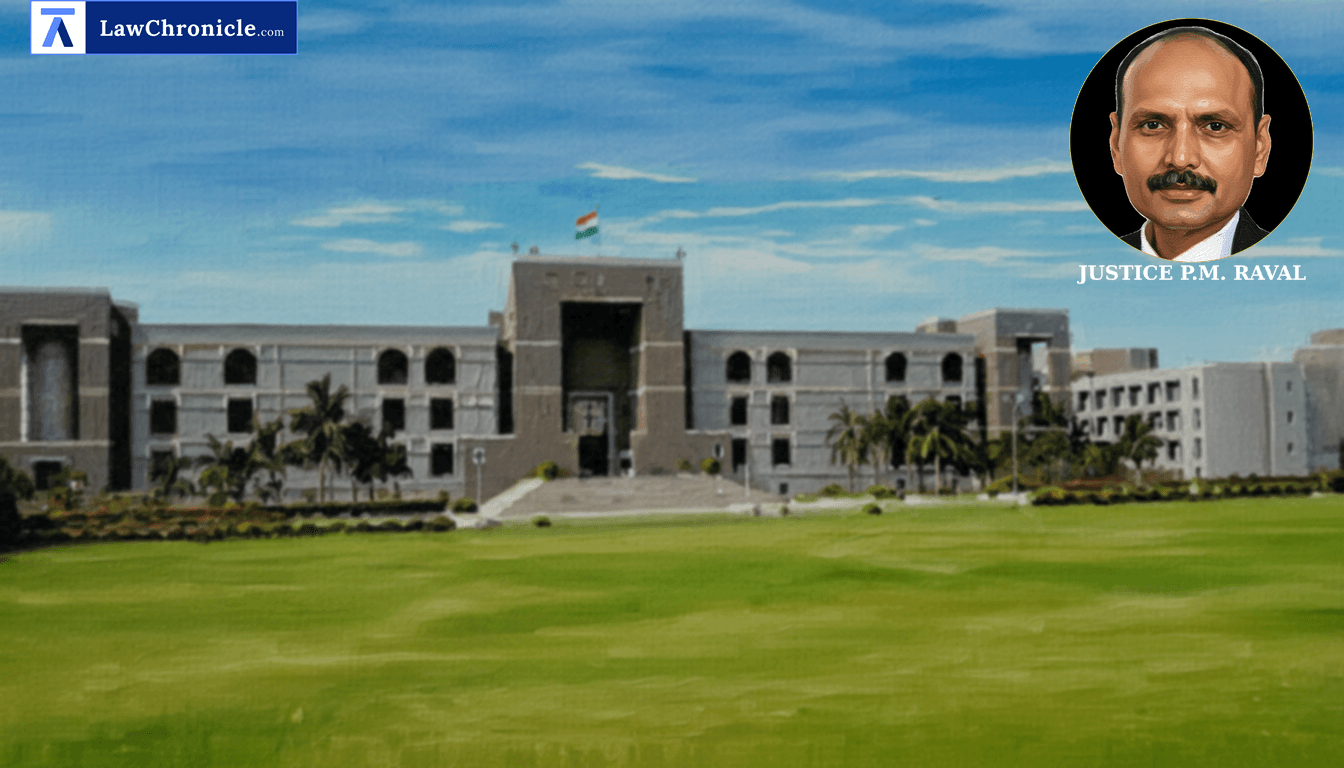
The Gujarat High Court has ruled that persistent demands for debt repayment and the initiation of legal proceedings for cheque dishonour do not constitute abetment of suicide or extortion, emphasizing that a lender's aggressive recovery tactics lack the requisite criminal intent to drive a borrower to end their life. In a significant clarification of the boundaries between financial disputes and criminal liability, the Court quashed proceedings against creditors, holding that the tragic reaction of an individual to financial distress cannot be legally attributed to lenders without proof of a positive act of instigation.
In a decision delivered by Justice P. M. Raval, the Court was hearing two applications seeking to quash an FIR involving allegations of abetment to suicide, extortion, and unauthorized money-lending. The matter arose following the death of a salon owner who consumed poison, allegedly due to the mounting pressure and harassment from several lenders from whom he had borrowed significant sums at high interest rates.
Key Takeaways
Redefining Abetment in Debt Defaults
High-pressure loan recovery and verbal disputes do not automatically translate to abetment under Section 306 of the Indian Penal Code, 1860 without a specific mens rea to cause death.
Legal Recourse is Not Extortion
Issuing statutory legal notices under Section 138 of the Negotiable Instruments Act, 1881 or depositing collateral cheques is a legitimate legal exercise and cannot be categorized as criminal extortion.
Requirement of Proximity
For a charge of abetment to stand, there must be a proximate prior act of instigation; transactions occurring years prior to the suicide cannot form the basis of a criminal trial.
Subjective Reactions vs. Criminal Liability
Individual emotional responses to financial stress vary, and the law cannot hold an accused responsible for a victim's extreme step unless there is a conscious deliberate intention to goad them into suicide.
The Court observed that for an offence of abetment to be sustained, the prosecution must strictly satisfy the requirements of Section 107 of the Indian Penal Code, 1860. The bench noted that even if the allegations of constant harassment are accepted, they must be linked to a proximate incident that served as 'the straw that broke the camel's back.' The Court highlighted that the social status and relationship between the parties must be considered to distinguish between ordinary business pressure and criminal goading.
The Court has following directions:
"The First Information Report registered against the applicants, referred in Paragraph 2 above, Charge-sheet and all consequential criminal proceedings arising therefrom, are hereby quashed and set aside qua the applicants."
The Court, in its reasoning, observed: "However harsh or severe the harassment, unless there is a conscious deliberate intention, mens rea, to drive another person to suicidal death, there cannot be a finding of abetment under Section 306. ... To put the blame on the pressure imposed and the person responsible for it, at all times, without something more to clearly discern an intention, would not be the proper application of the penal provisions under Section 306."
Ratio
To attract the offence of abetment of suicide under Section 306 of the Indian Penal Code, 1860, there must be an active, positive, and intentional act of instigation or conspiracy with a direct nexus and proximity to the act of suicide. Mere harassment or persistent demands for loan recovery, in the absence of a specific mens rea to drive a person to end their life, do not constitute abetment. Furthermore, the delivery of signed cheques as collateral at the time of a loan does not constitute extortion under Section 386 of the Indian Penal Code, 1860, as the essential element of dishonest inducement through fear of injury at the time of delivery is absent.
Background
According to the prosecution, the deceased, Amitbhai Bagthariya, had borrowed various sums from different individuals, including the applicants, to invest in a construction business. After suffering losses, he struggled to service high-interest payments ranging from 5% to 10%. It was alleged that the lenders, including Khodabhai Jograna and Kalubhai Shiyaliya, frequently visited his shop and residence, issuing threats and creating unendurable psychological pressure. One lender allegedly filled in blank cheques provided as security and initiated proceedings under the Negotiable Instruments Act, 1881 after they were dishonoured. These factors allegedly drove the deceased to consume poison on March 8, 2018.
The applicants contended that the deceased had independent financial troubles, including losses in IPL betting, and that the essential ingredients of abetment under Section 107 of the Indian Penal Code, 1860 were missing. They relied on Abhinav Mohan Delkar v. State of Maharashtra ( "(2026) 6 SCC 233": 2025 CaseBase(SC) 684) to argue that the FIR did not disclose a prima facie case. The State and the complainant argued that the deceased's statement naming the lenders served as a suicide note and that the applicants had criminal antecedents. However, the Court, relying on the principles in State of Haryana v. Bhajan Lal, found that the allegations, even if taken at face value, did not constitute the alleged offences. The Court also noted that the complainant had initially filed an affidavit expressing no objection to quashing the case before resiling.
Case Details:
Case No.: R/Criminal Misc. Application No. 6657 Of 2018 With R/Criminal Misc. Application No. 6389 Of 2018
Neutral Citation: 2026:GUJHC:62738
Case Title: Khodabhai Dhanabhai Jograna Versus State Of Gujarat & Anr.
Appearances:
For the Petitioner(s): Mr Mk Pujara With Mr Jay Ambani For Mr Ashish M Dagli
For the Respondent(s): Jaivik Uday Bhatt, Mr Uday H Bhatt, Mr Rohan Shah, APP
Source: 2026 CaseBase(GUJ) 29397
Similar Articles



 Breaking News


