


Agreement to Sell Creates No Ownership Rights Without Registered Instrument: Delhi HC
 Copy Link
 Share
 Save
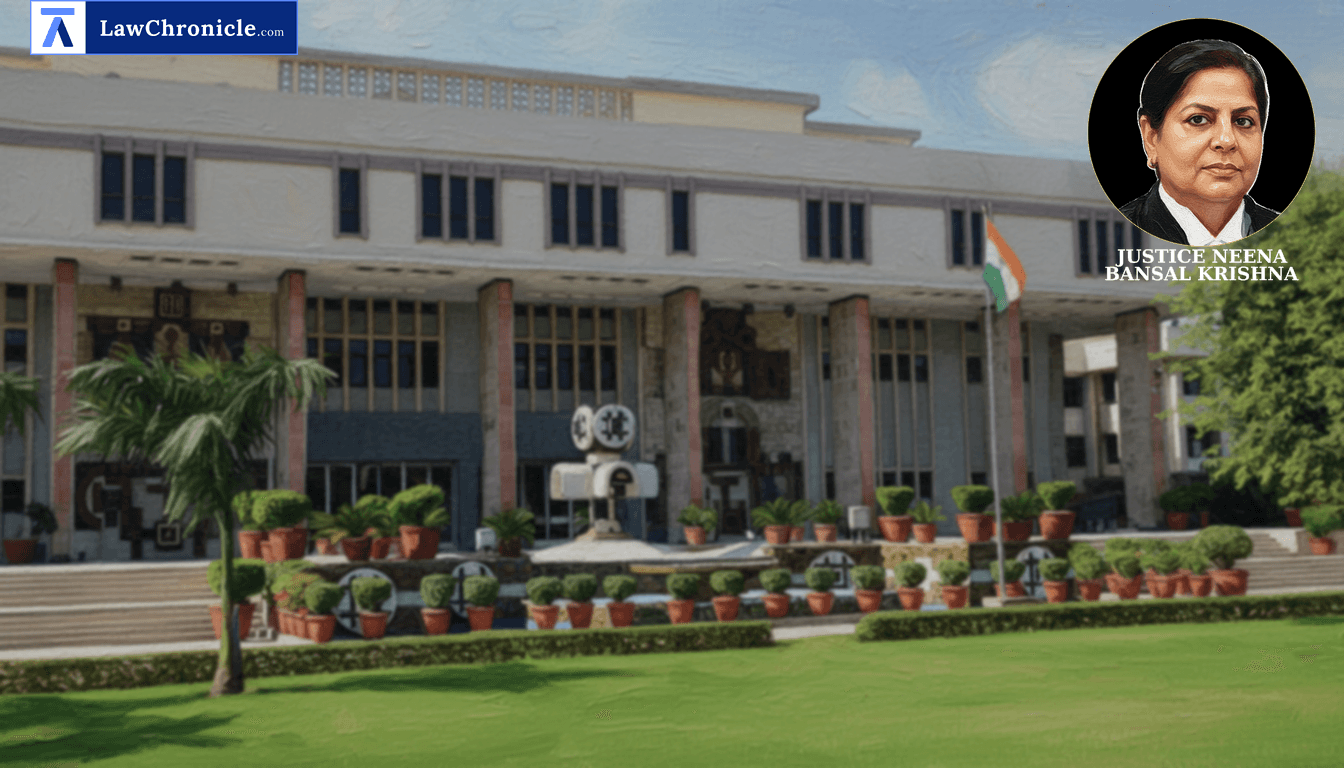
In a decisive blow to claims of ownership based on unregistered documentation, the Delhi High Court has ruled that an agreement to sell does not, by itself, create any interest or charge on a property, particularly when enforcement is sought after decades of inaction. The court clarified that even if a contract does not specify a timeline for performance, the right to seek specific performance cannot be exercised indefinitely, especially when third-party rights have intervened through registered deeds.
A Single Judge bench of Justice Neena Bansal Krishna adjudicated this Regular Second Appeal. The Court was hearing a challenge against the concurrent findings of the District Judge and the Senior Civil Judge, who had both dismissed a suit for specific performance concerning an undivided share of an urban property in Ramesh Nagar.
Key Takeaways
Unregistered Deeds Void for Title
Reaffirms that title in immovable property exceeding Rs. 100/- value can only be transferred via a registered instrument under the Registration Act, 1908 and Transfer Of Property Act, 1882.
Limitation Period for Specific Performance
Clarifies that where no date is fixed for performance, the three-year limitation period under the Limitation Act, 1963 begins from the date the plaintiff has notice that performance is refused, not indefinitely.
No Automatic Protection for Possessors
Establishes that the doctrine of part performance under Section 53A of the Transfer Of Property Act, 1882 requires active enforcement of rights and does not override the necessity of registered sale deeds for claiming full ownership.
Impact of Third-Party Relinquishment
Determines that if a vendor relinquishes their share to a co-owner via a registered deed after an unregistered agreement to sell, the agreement may become unenforceable if the successor is not properly impleaded.
Legal Effect of Section 54 of TPA
The court emphasized the strict requirement of registration for the transfer of ownership. It noted that while a vendor may agree to sell a share, no ownership is conveyed until a registered Sale Deed is executed.
The Court has following directions:
"There is no infirmity in the impugned judgment. No substantial question of law has been raised in this Second Appeal, which is accordingly dismissed. The pending Applications are disposed of accordingly."
The Court, in its reasoning, observed: "While Shri Kishan Lal may have agreed to sell his one-third share in the suit property, no right of ownership was conveyed to the Plaintiff by virtue of the Agreement to Sell dated 03.08.2001. It was an Agreement to Sell, and the right which the plaintiff was to seek execution of a Sale Deed on the basis of the Agreement to Sell. However, the Agreement to Sell did not materialize into a sale as defined under Section 54 of the Transfer of Property Act, which could result in transfer of ownership to the plaintiff."
Ratio
A contract for the sale of immovable property is merely a contract that a sale shall take place on settled terms and does not, of itself, create any interest in or charge on such property under Section 54 of the Transfer Of Property Act, 1882. In suits for specific performance, even where time is not the essence of the contract, the court must apply greater scrutiny to the readiness and willingness of the purchaser, and prolonged inaction for over a decade renders the suit barred by limitation under Article 54 of the Limitation Act, 1963.
Background
The dispute originated from an Agreement to Sell executed in 2001 by Shri Kishan Lal in favor of the appellant, Smt. Swaraj Chopra, for his one-third share in a property. Despite paying consideration and taking possession, no registered Sale Deed was executed. Subsequently, Kishan Lal executed a registered Relinquishment Deed in 2003 in favor of his brother, Nand Kishore.
A decade later, when an eviction petition under the Delhi Rent Control Act, 1958 was filed against the appellant’s husband, the appellant claimed ownership. However, the suit for specific performance was only filed in 2017. The Trial Court and First Appellate Court dismissed the suit citing Suraj Lamp & Industries Pvt. Ltd. v. State of Haryana and holding the suit barred by limitation.
The High Court, relying on Govid Prasad Chaturvedi v. Hari Dutt Shastri ( "1977 (2) SCC 539": 1977 CaseBase(SC) 53), Gomathinayagam Pillai v. Pallaniswami Nadar, and Chand Rani v. Kamal Rani ( "(1993) 1 SCC 519": 1992 CaseBase(SC) 510), observed that time while generally not the essence of property contracts must be interpreted reasonably. Citing Saradamani Kandappan v. S. Rajalakshmi & Ors. and R. Kandasamyv. T.R.K. Sarawathy, the court noted that courts must frown upon suits not filed immediately after a breach. The appeal was dismissed as the appellant failed to explain the 16-year delay.
Case Details:
Case No.: RSA 75/2026
Case Title: Smt. Swaraj Chopra v. Smt. Shanti Devi (Now Deceased) Through Her Legal Heirs & Ors.
Source: 2026 CaseBase(DEL) 6661
Similar Articles
 Breaking News


