


AI Training Using Public Data Not Copyright Infringement: Delhi High Court
 Copy Link
 Share
 Save
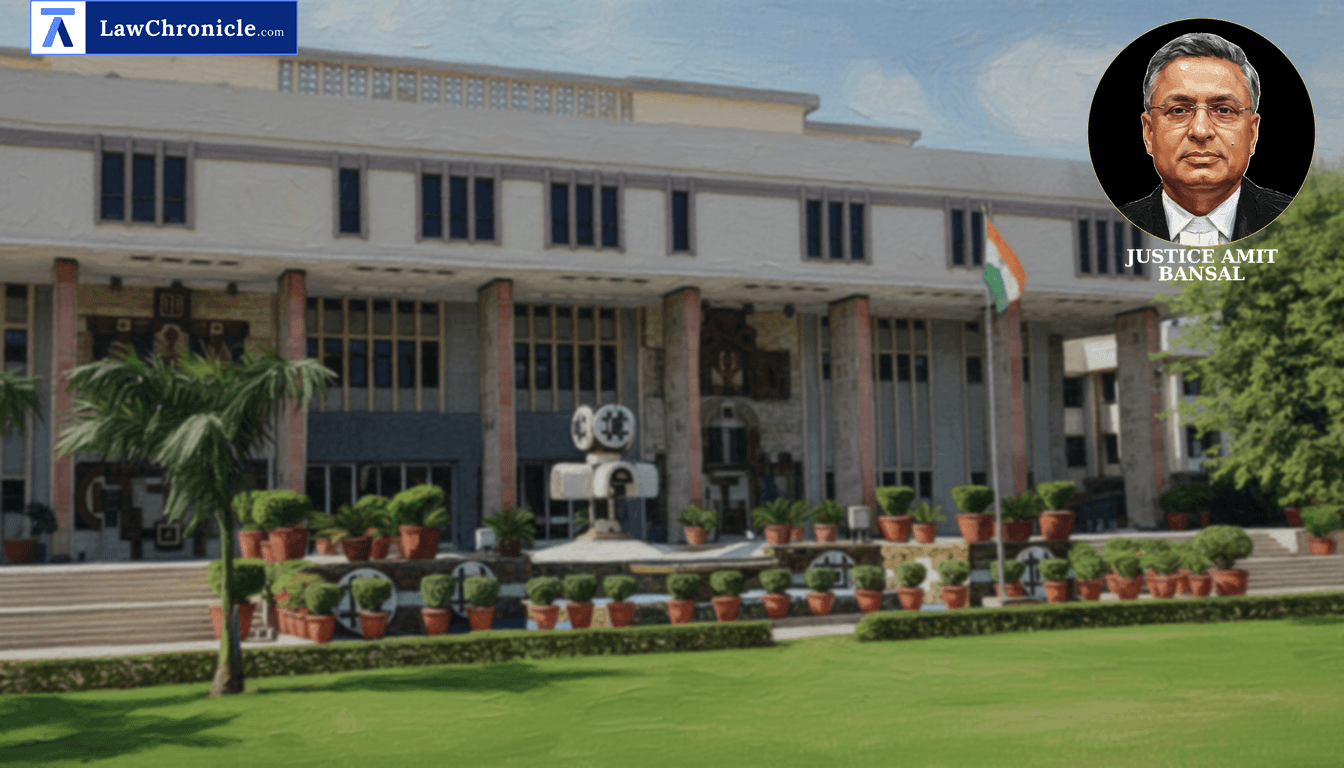
The High Court of Delhi has effectively redefined the boundaries of digital intellectual property, ruling that the storage of publicly available news data to train Artificial Intelligence models qualifies as 'fair dealing' and does not constitute copyright infringement. In a landmark decision that provides a major boost to the burgeoning AI industry, the court held that machine learning is a transformative research process that does not substitute the original news market, even when conducted by commercial tech giants.
Justice Amit Bansal, while deciding an interim injunction application, navigated the uncharted intersection of the Copyright Act, 1957 and generative AI. The court was tasked with determining whether scraping and storing copyrighted news articles for training Large Language Models (LLMs) like ChatGPT, and the subsequent generation of outputs, violates the exclusive rights of news agencies.
The Transformative Nature of AI Training
The court emphasized that the relationship between technological innovation and copyright law has always been dynamic. It observed that the Copyright Act, 1957, originally enacted in 1957, must be interpreted through the 'doctrine of updating construction' to account for modern advancements like AI. Justice Bansal noted that data is the 'oil' for LLMs and that training these models involves an internal, non-expressive use of data that does not mirror human consumption of news.
The Court, in its reasoning, observed: "In my opinion, the expression ‘research’ should be given an updating construction by taking into account the modern-day technical advancements. With the advent of these technologies, research/ learning is no longer confined to humans. It is now being done through Artificial Intelligence... the acts of further research cannot be confined to acts of human being alone and the same would extend to machine learning as well."
Rejection of the 'Output Claim'
Addressing the allegation that ChatGPT regurgitates copyrighted content, the court found that the instances provided were largely the result of 'adversarial prompting' rather than inherent memorization. It was noted that since the training of the specific models (GPT-4 and GPT-4o) concluded before the publication of the disputed articles, the AI could not have 'memorized' them. The court further clarified that using Retrieval-Augmented Generation (RAG) to provide snippets with links to sources does not constitute substantial reproduction.
The Court has the following directions:
"Accordingly, I.A. 45300/2024 is dismissed. Needless to say, any observations made herein are only for the purpose of adjudication of the aforesaid application and would have no bearing on the final outcome of the suit."
Key Takeaways
Machine Learning as 'Private Research'
Court expanded the definition of Section 52(1)(a)(i) to include automated data analysis by AI as a form of private research.
Transformative Use Doctrine
Building on Chancellor Masters & Scholars of The University of Oxford v. Narendera Publishing and Syndicate of the Press of the University of Cambridge v. B.D. Bhandari, the court held that if the secondary use serves a fundamentally different purpose than the original, it is transformative and fair.
Commerciality Not a Bar to Fair Dealing
Explicitly stated that Section 52(1)(a) does not exclude commercial entities from claiming fair dealing, unlike other specific clauses in the Act.
Market Substitution Test
Confirmed that AI summaries and snippets do not displace the market for actual news reporting, as their functions are distinct.
Ratio
The storage of copyrighted works in an electronic medium for the purpose of training Artificial Intelligence models constitutes 'fair dealing' for the purpose of 'private use including research' under Section 52(1)(a)(i) of the Copyright Act, 1957. Such use is highly transformative, does not conflict with the normal exploitation of the work, and serves the broader public interest in technological innovation. Verbatim output produced through adversarial prompting does not suffice to prove infringement if the model was not trained on those specific works or if the output is not a substantial reproduction of the work as a whole.
Background
The dispute arose when a prominent news agency alleged that Open AI was scraping its syndicated news feed and website to train ChatGPT. The plaintiff claimed both a 'training claim' (unauthorized storage) and an 'output claim' (reproduction of articles in responses). Open AI argued that the training occurred on US servers and that the use of data was non-expressive, aimed only at learning linguistic patterns.
The court relied on several precedents, including R.G. Anand v. Deluxe Films to establish that facts and news are not copyrightable, and Eastern Book Company v. D.B. Modak ( "(2008) 1 SCC 1": 2007 CaseBase(SC) 802) to shift the standard from 'sweat of the brow' to 'skill and judgment'. The court also looked at US rulings such as Richard Kadrey v. Meta Platforms and Andrea Bartz v. Anthropic to understand the transformative nature of LLMs. Ultimately, the court found that granting an injunction would stifle AI development in India and that the plaintiff's potential losses were quantifiable and could be compensated later if successful.
Case Details:
Case No.: CS(COMM) 1028/2024
Case Title: ANI MEDIA PVT. LTD. v. OPEN AI OPCO LLC
Appearances:
For the Petitioner(s): Mr. Sidhant Kumar, Mr. Akshit Mago, Ms. Manyaa Chandok, Ms. Anshika Saxena and Ms. Lahar Jain, Advocates
For the Respondent(s): Mr. Amit Sibal, Senior Advocate with Mr. Sanjeev Kapoor, Mr. Nirupam Lodha, Mr. Madhav Khosla, Mr. Gautam Wadhwa, Ms. Moha Paranjpe, Mr. Abhi Udai Singh Gautam, Ms. Rebecca Cardoso, Mr. Hardik Malik, Ms. Vanshika Thapliyal, Mr. Rajat Bector, Advocates; Mr. Akhil Sibal, Senior Advocate; Mr. Kapil Sibal, Senior Advocate; Mr. Arvind P. Datar, Senior Advocate
Source: 2026 CaseBase(DEL) 3539
Similar Articles
 Breaking News


