


Allahabad HC allows Dying Declaration as Sole Basis of Conviction
 Copy Link
 Share
 Save
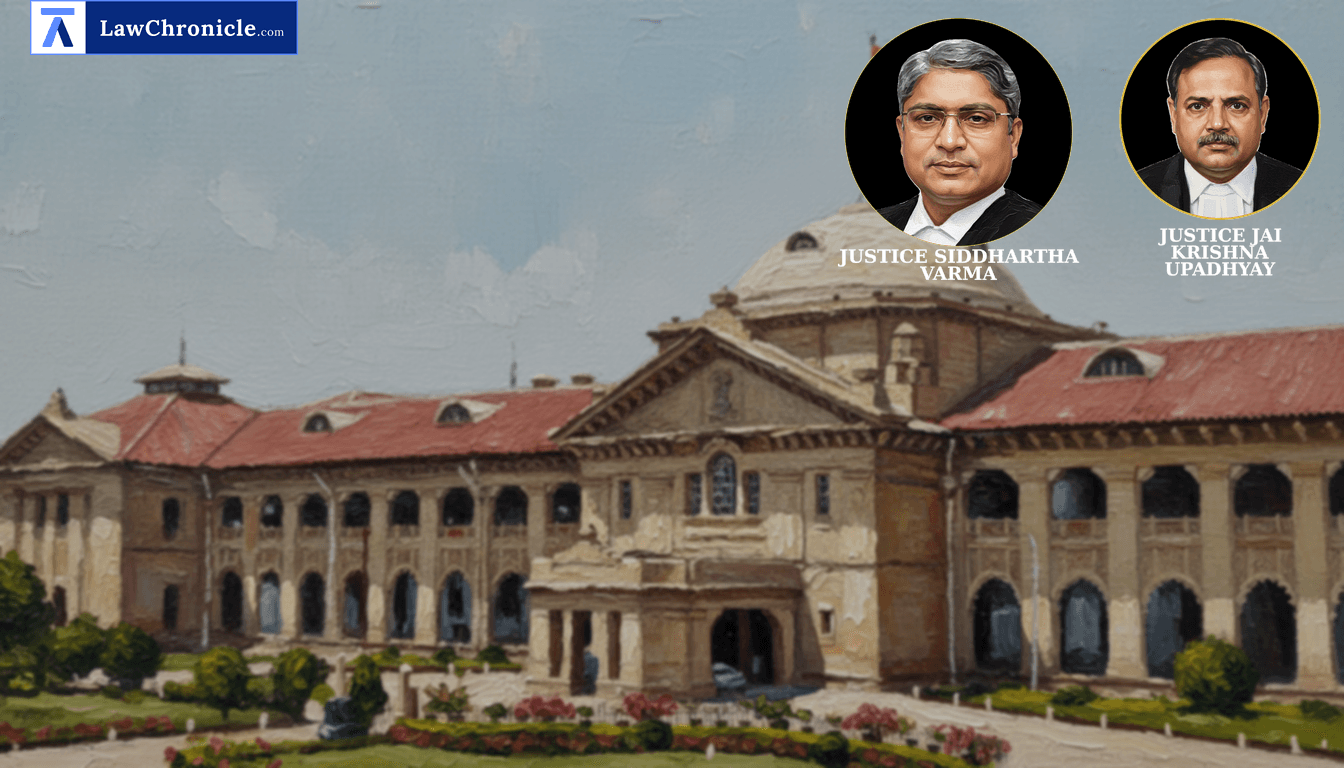
The Allahabad High Court has reaffirmed that a consistent and voluntary dying declaration can be sole basis of conviction under Section 302 of the I.P.C. without the necessity of independent corroboration.
A division bench comprising Justice Siddhartha Varma and Justice Jai Krishna Upadhyay adjudicated an appeal filed against a trial court judgment that sentenced the appellant to life imprisonment for the murder of his daughter. The Court examined whether the alleged contradictions in witness testimony and the lack of certain physical evidence could outweigh two consistent dying declarations recorded shortly before the victim's demise.
Key Takeaways
Primacy of Dying Declarations
Where a dying declaration is voluntary and untainted by tutoring, it possesses high legal sanctity and can form the sole basis for conviction.
Hostile Witness Limitations
The testimony of a hostile witness is not entirely effaced from the record; courts must 'separate the grain from the chaff' to accept dependable portions.
Medical Fitness Overrides Procedural Minutiae
A written certificate of mental fitness from a medical officer at the time of recording a declaration dispels doubts regarding the victim's cognitive capacity.
Motive in Direct Evidence Cases
While not a prerequisite in cases of direct evidence, established motives like 'moral outrage' or 'family honor' reinforce the prosecution's narrative.
Consistency in Final Statements and Judicial Rationale
The Allahabad Court observed that the victim had provided two consistent statements naming her father as the assailant. The first was recorded by a Sub-Inspector and the second by a Naib Tehsildar. In both instances, the victim narrated that her father poured kerosene and set her on fire due to resentment over her personal relationship. The Allahabad High Court emphasized that the procedural requirement for a dying declaration is the satisfaction of the person recording it regarding the declarant's fit state of mind.
The Allahabad High Court explained acceptance of dying declaration as sole basis of conviction that “Once a dying declaration is found to be authentic inspiring confidence of the court, then the same can be relied upon and can be the sole basis for conviction without any corroboration. However, before accepting such a dying declaration, court must be satisfied that it was rendered voluntarily, it is consistent and credible and that it is devoid of any tutoring. Once such a conclusion is reached, a great deal of sanctity is attached to a dying declaration and as said earlier, it can form the sole basis for conviction.”
Ratio
A dying declaration recorded by a competent Magistrate, supported by a medical certificate of fitness, stands on a higher footing than oral testimony. Such a declaration, if voluntary and consistent, is a substantive piece of evidence that does not require corroboration to sustain a conviction for murder. The evidence of a hostile witness remains admissible to the extent it supports the core res gestae of the prosecution's case.
Background
The case arose from an incident on September 1, 2012, where the victim, Mobin Jahan, was set on fire in her room. Before succumbing to her injuries, she named her father, Abdul Navi, as the perpetrator, citing his anger over her relationship with a local tempo driver. The trial court convicted the appellant under Section 302 of the I.P.C..
During the appeal, the appellant argued that the mother of the deceased (PW-2) had turned hostile and claimed the death was accidental. However, the High Court relied on Rajendra S/O Ramdas Kohle Vs. State of Maharashtra ( "2024 SCC OnLine SC 941": 2024 CaseBase(SC) 163) and Laxman v. State of Maharashtra ( "(2002) 6 SCC 710": 2002 CaseBase(SC) 476) to determine the weight of the dying declarations. The Court also referred to Khujji alias Surendra Tiwari v. State of M.P. ( "(1991) 3 SCC 627": 1991 CaseBase(SC) 635) to explain why the mother’s hostile testimony did not invalidate the case, noting that family members often try to protect the accused out of sympathy. The Allahabad High Court further noted that physical evidence, such as molten aluminum pieces of a ceiling fan, refuted the accidental fire theory. Consequently, the High Court dismissed the appeal and affirmed the life imprisonment sentence.
Case Details:
Case No.: CRIMINAL APPEAL No. - 4944 of 2019
Case Title: Abdul Navi Versus State of U.P.
Appearances:
For the Petitioner(s): Archana Singh (Amicus Curiae), Krishna Mohan Tripathi, Nazrul Islam Jafri (Senior Adv.), Sadaful Islam Jafri, Sanjay Singh, Sunil Kumar
For the Respondent(s): G.A.
Source: 2026 CaseBase(ALL) 1165
Similar Articles
 Breaking News


