


Consistency in Dying Declaration Sufficient for Murder Conviction: Bombay HC
 Copy Link
 Share
 Save
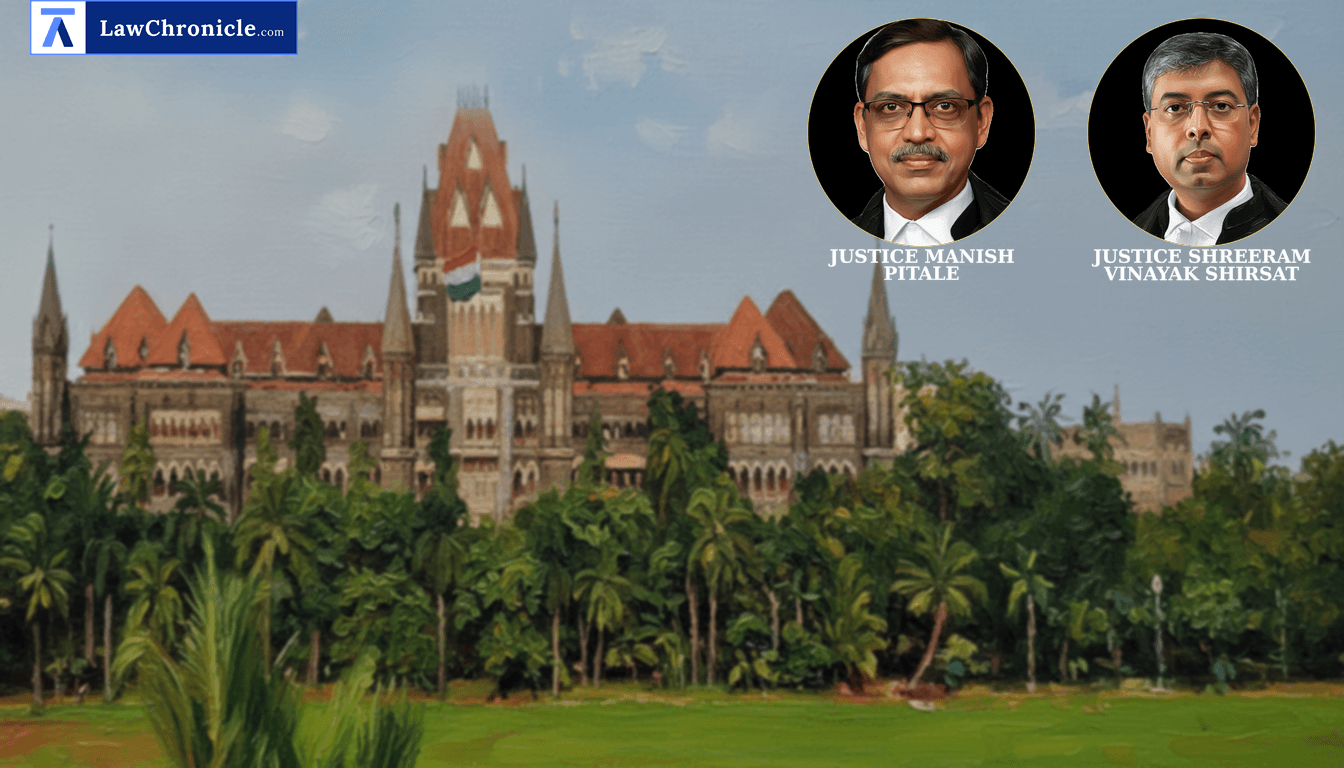
The Bombay High Court affirmed the life sentence of a mother-in-law for the murder of her daughter-in-law, emphasizing that a truthful and voluntary dying declaration can serve as the sole basis for conviction even without extensive corroboration. A division bench comprising Justice Manish Pitale and Justice Shreeram V. Shirsat upheld the trial court's findings, noting that the consistency between various dying declarations made by the deceased provided absolute certainty regarding the appellant's guilt.
Judicial Scrutiny of Multiple Dying Declarations
The Court extensively analyzed the evidence of the prosecution witnesses, focusing on the dying declaration recorded by the police and the oral declarations made to the maternal uncle and the employer. The bench observed that for a dying declaration to be the sole basis of conviction, it must inspire full confidence of the court in its correctness. The Court, in its reasoning, observed: "Once the court is satisfied that the declaration was true and voluntary, undoubtedly, it can base its conviction without any further corroboration. It cannot be laid down as an absolute rule of law that the dying declaration cannot form the sole basis of conviction unless it is corroborated. The rule requiring corroboration is merely a rule of prudence."
Absence of Magistrate Does Not Vitiate Evidence
Addressing the appellant's contention that the declaration was recorded by a police officer rather than a Magistrate, the Court relied on Purshottam Chopra and Another v/s State (Govt. Of Nct Delhi) ( "AIR OnLine 2020 SC 15": 2020 CaseBase(SC) 1161) to clarify that the law does not prescribe a specific authority or format for recording such statements. The Court noted that the recording officer had taken precautions to ensure the victim was in a fit state of mind by consulting medical professionals. Furthermore, the Court rejected the argument regarding the lack of a question-answer format, citing Ram Bihari Yadav v/s The State of Bihar and Others, and maintained that the brevity and directness of a statement can often be a guarantee of its veracity.
Background:
The dispute arose from an incident on April 17, 2013, involving the appellant and her daughter-in-law, Savitra. According to the prosecution, the appellant frequently harassed the deceased for money to release gold ornaments she had mortgaged with a jeweller. On the day of the incident, a quarrel erupted over this demand, leading the appellant to pour kerosene on Savitra and set her ablaze. The victim succumbed to 77% burn injuries on April 21, 2013.
The trial court at Pune convicted the appellant under Section 302 of the Indian Penal Code, 1860 and Section 235(2) of the Code of Criminal Procedure, 1973. The appellant challenged this before the High Court, claiming she was falsely implicated and that the death was accidental due to a stove explosion. However, the High Court found no evidence of a stove at the crime scene in the spot panchanama and noted the medical evidence supported the prosecution's theory of kerosene-induced burns. In dismissing the appeal, the Court relied on principles established in Laxman v/s State Of Maharashtra ( "(2002) 6 SCC 710": 2002 CaseBase(SC) 476), Trimukh Maroti Kirkan v/s State Of Maharashtra ( "(2006) 10 SCC 681": 2006 CaseBase(SC) 500), Irfan @ Naka v/s The State of Uttar Pradesh, and Uka Ram v/s The State of Rajasthan regarding the treatment of dying declarations and circumstantial evidence.
Case Details:
Case No.: CRIMINAL APPEAL NO. 852 OF 2019
Case Title: Smt. Meenabai Lobaji Gaikwad v. State of Maharashtra
Appearances:
For the Petitioner(s): Adv. Sachin Salunke
For the Respondent(s): Dr. Dhanlakshi S. Krishnaiyyer, APP
Source: 2026 CaseBase(BOM) 248
Similar Articles
 Breaking News


