


Allahabad HC directs DGP to make Audio-Video Recording Of Witness Statements Mandatory
 Copy Link
 Share
 Save
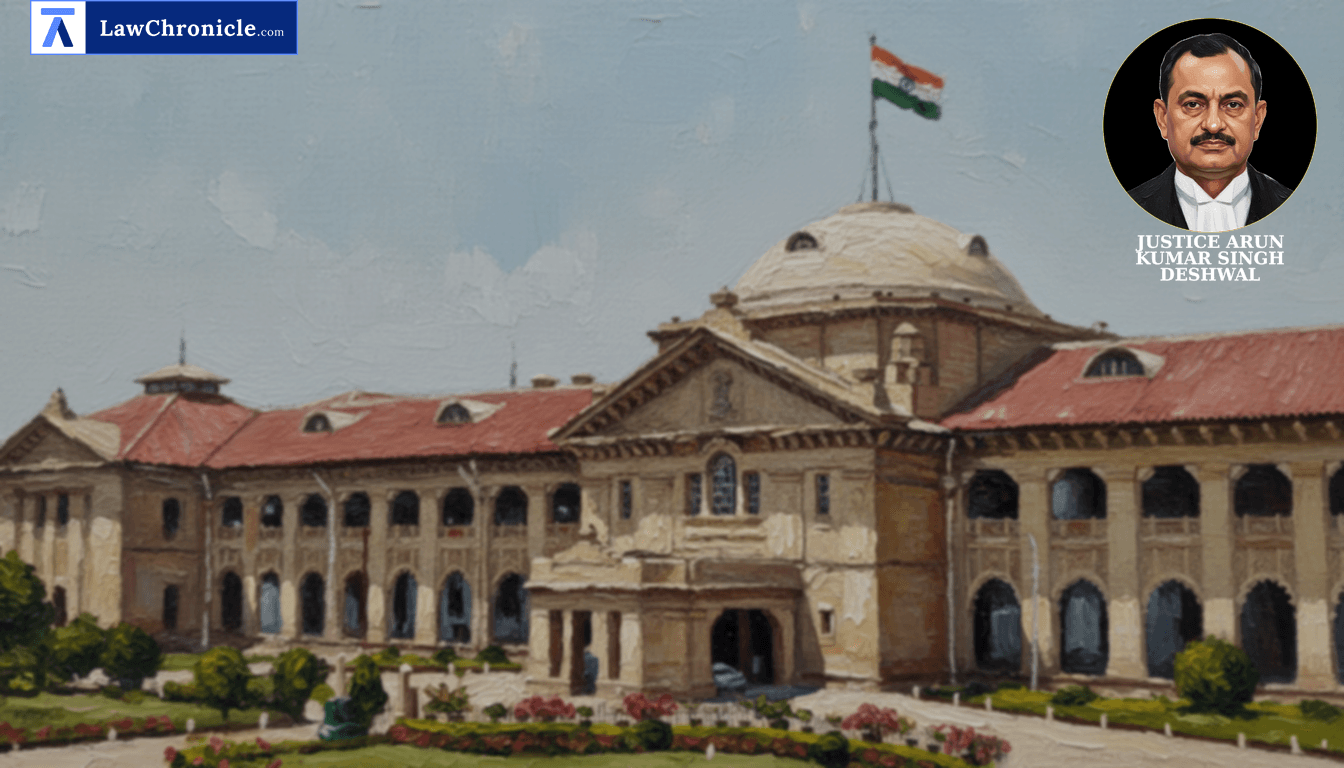
In a decisive move to curb investigative malpractice, the Allahabad High Court has directed the Director General of Police, U.P. to consider making audio-video recording of witness statements mandatory under the Bharatiya Nagarik Suraksha Sanhita, 2023 to ensure transparency and prevent the fabrication of evidence by police officers. The Court observed that Investigating Officers often bypass optional recording provisions to shield themselves from allegations of copying First Information Reports verbatim rather than conducting genuine examinations.
A single-judge bench of Justice Arun Kumar Singh Deshwal issued these directions while hearing a bail application concerning a dowry death case. The Allahabad High Court expressed serious concern over the misuse of discretionary powers by Investigating Officers who fail to utilize modern electronic tools, thereby compromising the integrity of criminal investigations.
Key Takeaways
Mandatory Digital Evidence
Recording of witness statements under Section 180 of [Bharatiya Nagarik Suraksha Sanhita, 2023 should ideally be digitized to prevent police from self-writing statements.
End to Suggested Incriminating Material
Investigating Officers are strictly prohibited from suggesting incriminating facts to witnesses and must focus on clarificatory questioning.
Fairness to Accused
Police are duty-bound to consider any evidence of innocence produced by the accused during the investigation phase itself.
Judicial Oversight of Investigation
Failure to follow DGP circulars regarding audio-video recording may lead to adverse judicial inferences during bail and trial proceedings.
Is it mandatory to record statement under section 180 BNSS by audio video electronic means?
The Allahabad High Court noted that investigation is a process of truth-seeking, not a mechanism to create material for conviction. It emphasized that under Para 107 of the U.P. Police Regulations, an officer is not a "mere clerk" for recording statements but must use expert observation to check the evidence. The Bench observed that "The purpose of investigation is to collect the material not to create the material regarding the offence in question and in several cases, the I.Os. themselves suggested the incriminating material to the first informant or witnesses... the basic purpose of investigation is to collect the evidence to bring out the truth of the case and not to collect the evidence with the prejudice against any person to hold him guilty."
Directions for DGP on Mandatory Audio-Video Recording of Witness Statements
The Allahabad High Court issued the following directions mandating audio-video recording of statements of witnesses by the Police:
"i. Immediately after receiving information about the cognizable offence, Investigating Officer should rush to the place of incident and record the statement of first informant and other witnesses as expeditiously as possible without any delay and audio-video of statement should also be prepared preferably with E-Sakshya App and same should be available to the concerned court on its demand.
ii. During investigation, the Investigating Officer not only record the statement of complainant, victim and other persons associates to him but should also try to record the statement of independent witnesses to extract the truth regarding incident in question.
iii. In case of rape and sexual assault, the statement of victim should be recorded at her place of residence or as per her convenience by the women police officer (Second proviso of Section 180(3) of BNSS). In such cases, the victim should be sent to the registered practitioner for her medical examination with her consent within 24 hours from the time of receiving information relating to the commission of such offence (Section 184(1) BNSS, 2023)
iii. Where the offence is punishable with imprisonment for 10 years or more, then the police officer should produce the witnesses before the concerned Magistrate to record his statement and in case of offence of rape or sexual assault, the victim should be produced before the Magistrate to record her statement as soon as commission of offence is brought to notice to the police. In such cases, there should not be unnecessary delay which may some time result in tutoring the victim by her family members. (Section 183(6) of BNSS, 2023).
iv. Where there is allegation of preparing of obscene video in case of sexual assault, in such cases, the I.O. should collect the mobile phone of the accused and if require, the same should be sent to FSL to retrieve data. If there is allegation of making viral of obscene video of the victim, in such cases assistance of Cyber Cell and FSL should also be taken.
v. Where location of accused or any other persons as well as conversation with another person is relevant, in that cases CDR of mobile phone of that person should also be collected to extract the truth.
vi. Where the victim does not know the accused but only recognize him, in those cases, test identification parade must be conducted as per the procedure mentioned in para 116 of U.P. Police Regulation.
vii. Similarly when identification of recovered property from the suspect allegedly stolen, is required then in such cases identification of article of property should be conducted as per the procedure mentioned in para 117 of U.P. Police Regulation i.e mixing the recovered property with other articles of similar nature before conducting the identification of property."
Ratio
Investigation must be unbiased, honest, and aimed at bringing out the truth rather than merely obtaining a conviction. Investigating Officers are legally obligated to consider exculpatory evidence provided by the accused and must utilize audio-video electronic communication for recording statements to ensure the transparency and integrity of the evidentiary record.
Background
The case arose from a bail application filed by a mother-in-law accused under Sections 85, 80(2), 352, 115(2), and 351(3) of the Bharatiya Nyaya Sanhita, 2023 and Sections 3/4 of the Dowry Prohibition Act, 1961. The applicant contended she was falsely implicated following her daughter-in-law's suicide, which allegedly occurred after a petty household dispute. During the proceedings, the Court summoned the Assistant Commissioner of Police, Agra, who admitted to not recording the witness statements via audio-video, despite DGP circulars recommending the same.
The Allahabad High Court relied on State of Uttar Pradesh vs Bhagwant Kishore Joshi to define the steps of investigation and Vinay Tyagi vs Irshad Ali alia Deepak and others ( "(2013) 5 SCC 762": 2012 CaseBase(SC) 863) to emphasize that a "fair and proper investigation" is a twin paradigm of criminal jurisprudence. Furthermore, the Court cited Kapil Wadhawan vs Central Bureau of Investigation ( "2025 SCC Online SC 3038": 2025 CaseBase(SC) 5446) and Maya Tiwari vs State of U.P. regarding bail guidelines. Noting that the applicant was a woman with no criminal history and that general allegations were made, the Allahabad High Court granted bail while directing the DGP to formalize stricter investigative protocols in line with Policy Strategy for Grant of Bail, In Re: Suo Motu Writ Petition (Crl.) No. 4 of 2021 and Pila Pahan @ Peela Pahan and others vs State of Jharkhand and another.
Case Details:
Case No.: CRIMINAL MISC. BAIL APPLICATION No. - 30325 of 2026
Case Title: Smt Chandrakanta Versus State of U.P.
Appearances:
For the Petitioner(s): Himanshu Mishra, Advocate
For the Respondent(s): Ashish Kumar Srivastava, G.A.; Virendra Kumar Srivastava, Advocate; D.P.S. Chauhan, A.G.A.
Source: 2026 CaseBase(ALL) 896
Similar Articles
 Breaking News


