


Allahabad HC Upholds Exclusion of Shiksha Mitras from Special TET Examination
 Copy Link
 Share
 Save
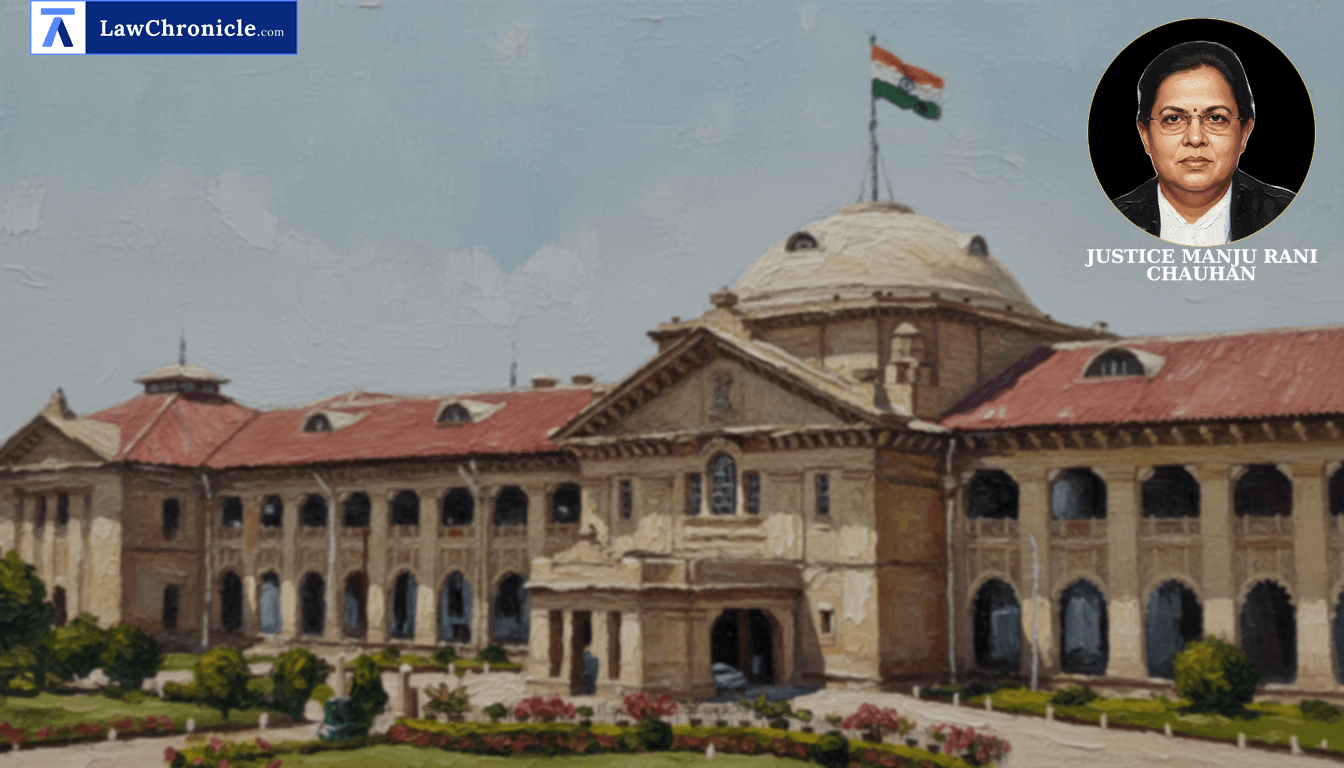
The Allahabad High Court restricted Shiksha Mitras seeking to participate in the Special Teacher Eligibility Test (TET), ruling that contractual staff cannot claim parity with regular in-service teachers who entered service before the mandatory qualification regime. The Bench held that transitional mechanisms designed to protect pre-existing regular employees do not create an automatic right of inclusion for other categories of teaching staff.
Justice Manju Rani Chauhan, presiding over the Single Bench, adjudicated the challenge brought by 221 Shiksha Mitras against the exclusion from a special qualifying examination. The Allahabad High Court emphasized that a clear distinction exists between teachers holding substantive posts prior to the Right of Children to Free and Compulsory Education Act, 2009 notification and those engaged under separate contractual schemes, even if they perform similar teaching functions.
Key Takeaways
Distinct Legal Status
Contractual staff like Shiksha Mitras occupy a fundamentally different legal field compared to regular Assistant Teachers, preventing any claim of parity for special qualifying exams.
Judicial Mandate Implementation
Government orders issued to facilitate compliance with Supreme Court directions are transitional measures, not new recruitment avenues or general opportunities for all aspirants.
No Article 14 Violation
Reasonable classification based on the status of appointment and the timing of entry into service satisfies the constitutional test of equality, as unequals cannot be treated equally.
Scope of Judicial Review
High Courts exercising power under Constitution of India, 1950 cannot modify or nullify executive actions that are faithful implementations of binding Supreme Court directions.
Court Observations on Reasonable Classification
The Allahabad High Court observed that the impugned Government Order was a remedial measure following the Supreme Court's ruling in Anjuman Ishaat-e-Taleem Trust v. State of Maharashtra and others ( "2025 SCC OnLine SC 1912": 2025 CaseBase(SC) 1000). The Bench noted that the "Special TET" is not a recruitment process but a transitional bridge for a specific class of teachers whose continuation in service was jeopardized by the retrospective application of the TET requirement.
The Allahabad High Court explained the foundation of parity rules that "The constitutional guarantee of equality is not a mandate for indiscriminate uniformity. Constitution of India, 1950 permits reasonable classification, while Article 16 of the Constitution of India guarantees equality of opportunity in matters of public employment amongst persons who are similarly situated... The distinction in the present case is neither artificial nor adventitious. The teachers covered by the impugned Government Order constitute a distinct class of pre-existing in-service teachers who had entered service before TET was subsequently prescribed as a mandatory qualification."
The Allahabad High Court further clarified that the petitioners had the opportunity to appear in the regular TET conducted in July 2026 and their failure to do so does not entitle them to a second opportunity meant for a specific class.
Ratio
Existing teachers whose continuance in service is subject to the acquisition of TET pursuant to binding judicial directions occupy a legally distinct position from persons not in regular service. A transitional qualifying measure intended for such in-service teachers does not constitute hostile discrimination against other categories under Constitution of India, 1950 or Article 16 of the Constitution of India, as the classification rests on an intelligible differentia with a rational nexus to the object of facilitating statutory compliance.
Background
The petitioners, 221 Shiksha Mitras, challenged a Government Order dated September 2, 2026, and a notification dated September 3, 2026, which organized a 'Special TET' for in-service teachers to comply with the Right of Children to Free and Compulsory Education Act, 2009. They argued that their exclusion was arbitrary since they have been teaching for nearly 26 years and performed duties equivalent to regular Assistant Teachers. They relied on Budhan Choudhry and others v. State of Bihar ( "(1954) 2 SCC 791": 1954 CaseBase(SC) 193) and D.S. Nakara v. Union of India ( "(1983) 1 SCC 305": 1982 CaseBase(SC) 49) to argue that Article 14 prevents such discrimination and Amita v. Union of India and others ( "(2005) 13 SCC 721": 2005 CaseBase(SC) 412) regarding equality of opportunity.
The State and the Commission argued that the Special TET was a result of the Supreme Court's directions in Anjuman Ishaat-e-Taleem Trust v. State of Maharashtra and others ( "2025 SCC OnLine SC 1912": 2025 CaseBase(SC) 1000) and subsequent review orders (Review Petition Diary No. 53434 of 2025). They maintained that Shiksha Mitras, being contractual workers, could not be equated with regular Assistant Teachers appointed before the TET regime. The Allahabad High Court followed the principles of State of Kerala and another v. N.M. Thomas and others ( "(1976) 2 SCC 310": 1975 CaseBase(SC) 286) and Union of India and others v. Atul Shukla and others to uphold the classification, noting that regular Assistant Teachers were subject to TET as a post-entry requirement, whereas Shiksha Mitras were engaged under a separate contractual framework.
Case Details:
Case No.: WRIT - A No. - 15461 of 2026
Case Title: Vaseem Ahamad and 220 others Versus State of U.P. and 3 others
Appearances:
For the Petitioner(s): Zain Abbas, Advocate
For the Respondent(s): C.S.C., Kushmondeya Shahi, Vaibhav Tripathi, Advocates
Source: 2026 CaseBase(ALL) 1184
Similar Articles

 Breaking News


