


Allahabad High Court Quashes Death Penalty, Acquits Mother in Triple Murder Case
 Copy Link
 Share
 Save
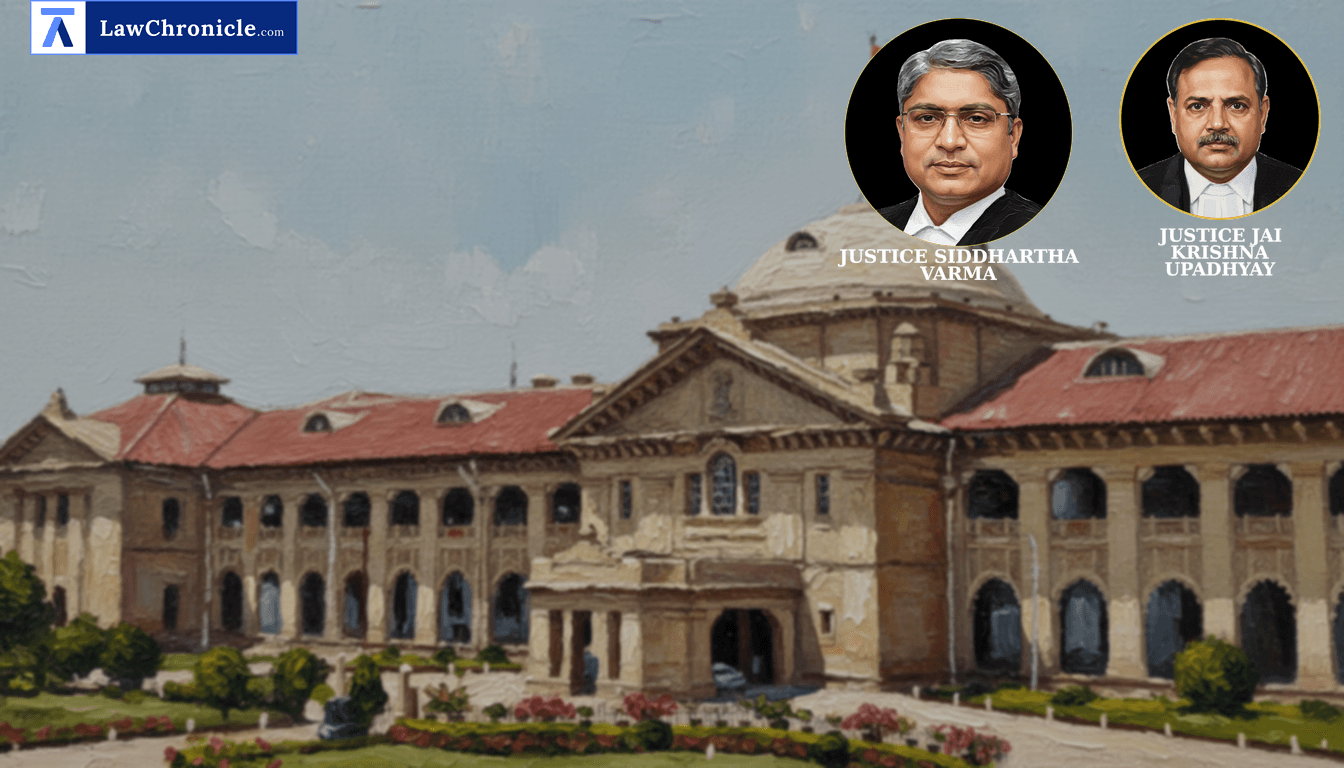
The Allahabad High Court has delivered a stinging rebuke to the prosecution's reliance on 'tutored' child testimony, setting aside the death penalty of a mother accused of drowning her three children and ordering the immediate release of both accused for lack of credible evidence.
Justice Siddhartha Varma and Justice Jai Krishna Upadhyay overturned a trial court order that had sentenced a woman to death and her alleged paramour to life imprisonment. Allahabad The High Court found the entire case against the appellants, Priyanka and Ashish @ Daini, to be riddled with investigative gaps and improbable narratives.
Key Takeaways
Child Testimony Scrutiny
Evidence of a child witness must be approached with extraordinary circumspection as they are highly vulnerable to external suggestions and tutoring by relatives.
Adverse Inference Rule
When the prosecution deliberately withholds a material witness who could unfold the true genesis of the incident, the court is bound to draw an adverse inference against the State.
Investigative Integrity
Glaring defects in investigation, such as delayed recording of statements and conflicting site-plan narratives, strike at the very root of the prosecution's credibility.
Natural Human Conduct
The court will test prosecution narratives against the touchstone of natural human probabilities under Section 114 of the Indian Evidence Act, 1872.
Child Witness Competency
The Allahabad High Court analyzed Section 118 of the Indian Evidence Act, 1872, noting that while a child is not automatically disqualified from testifying, their credibility is a question of fact requiring rigorous judicial scrutiny. The Bench emphasized that children are impressionable and easily swayed by surviving relatives or police officers. Commenting on the credibility of child witness, the Allahabad High Court stated that "A child of tender age can easily be swayed by surviving relatives, police officers, or village elders into believing or reciting a specific narrative. Consequently, the testimony of a child witness must be approached with extraordinary circumspection and care... the internal contents of the child's deposition unequivocally demonstrate that the child was an easy prey to tutoring and was swayed by the influence of adult relatives."
Referring to the precedent in Rameshwar v. State of Rajasthan ( "AIR 1952 SC 54": 1951 CaseBase(SC) 30), the Bench noted that while competency is presumed, it is desirable for trial judges to record preliminary opinions on the child’s understanding of the truth. In this instance, the Court found the child's narrative "artificially structured" and lacking "natural spontaneity."
Failure to Produce Material Witnesses
The Allahabad High Court took a grim view of the prosecution's failure to examine the Gram Pradhan, who was the first person to inform the police. Citing Tomaso Bruno And Another versus State of Uttar Pradesh, the Court held that withholding the best evidence necessitates an adverse inference.
Ratio
Where the prosecution case relies exclusively on a single child witness whose testimony is riddled with contradictions and clear hallmarks of tutoring, and where material witnesses are withheld without explanation, the resulting evidentiary gaps entitle the accused to an honorable acquittal based on the rule of caution.
Background
The case originated from an incident on June 27, 2024, where three children were found dead in the Sengur River. The prosecution alleged that the mother, Priyanka, in collusion with her brother-in-law Ashish, drowned her children to continue an illicit relationship. A fourth child, Sonu, purportedly escaped and informed the Gram Pradhan and his uncle.
During the trial, the prosecution relied heavily on the testimony of the surviving child (PW-2). However, the High Court noted significant discrepancies: the FIR was lodged nearly 14 hours after the incident, the child's statement was recorded by the police only after a delay of eight days, and the uncle (PW-1) gave contradictory versions regarding how he received the information.
The Allahabad High Court further highlighted that the mother allegedly sparing the eldest child while killing the three younger ones defied logic. Relying on principles in Pradeep v. State of Haryana ( "(2023) 19 SCC 221": 2023 CaseBase(SC) 614) and Mangoo v. State of M.P. ( "AIR 1995 SC 959": 1995 CaseBase(SC) 298) regarding the corroboration of child witnesses, and Takhaji Hiraji v. Thakore Kubersing Chamansing ( "(2001) 6 SCC 145": 2001 CaseBase(SC) 1061) regarding the duty to examine material witnesses, the Allahabad High Court found the trial court's findings perverse and set aside the convictions under Section 302 and Section 120-B of the Indian Penal Code.
Case Details:
Case No.: CAPITAL CASES No. - 14 of 2025 With Reference No. 11 of 2025
Case Title: Priyanka Versus State of U.P. and Another
Appearances:
For the Petitioner(s): Saghir Ahmad (Senior Counsel/Amicus Curiae), Gunjan Sharma, Rajarshi Gupta, Babita Upadhyay
For the Respondent(s): Amit Sinha (Additional Government Advocate)
Source: 2026 CaseBase(ALL) 1167
Similar Articles


 Breaking News


